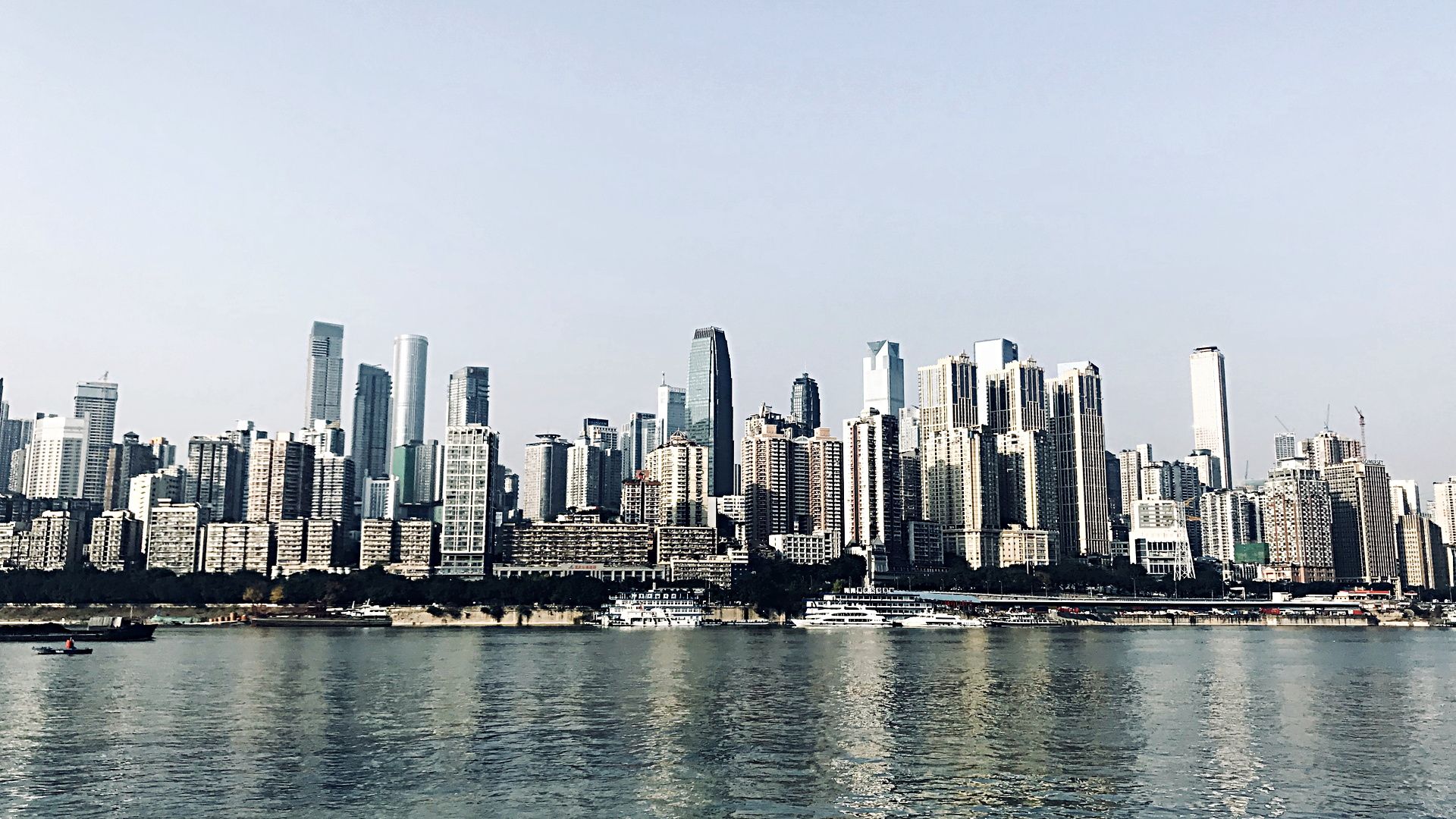
From 15 July to 30 August the city is in the heat its residents plan around. On 17 August 2022 the Shapingba station reached 43.2°C, past its old mark. The night did not give it back. On the morning of 19 August the lowest reading was 34.9°C, and for all but three minutes that day the station stayed at or above 35. The same week, Beibei reached 45°C. That is the municipal record, not Shapingba. Over a full August the 30-year picture is milder than that week: afternoons near 34°C, nights near 25°C. In the middle of summer, sleep on a mountain or on the river.
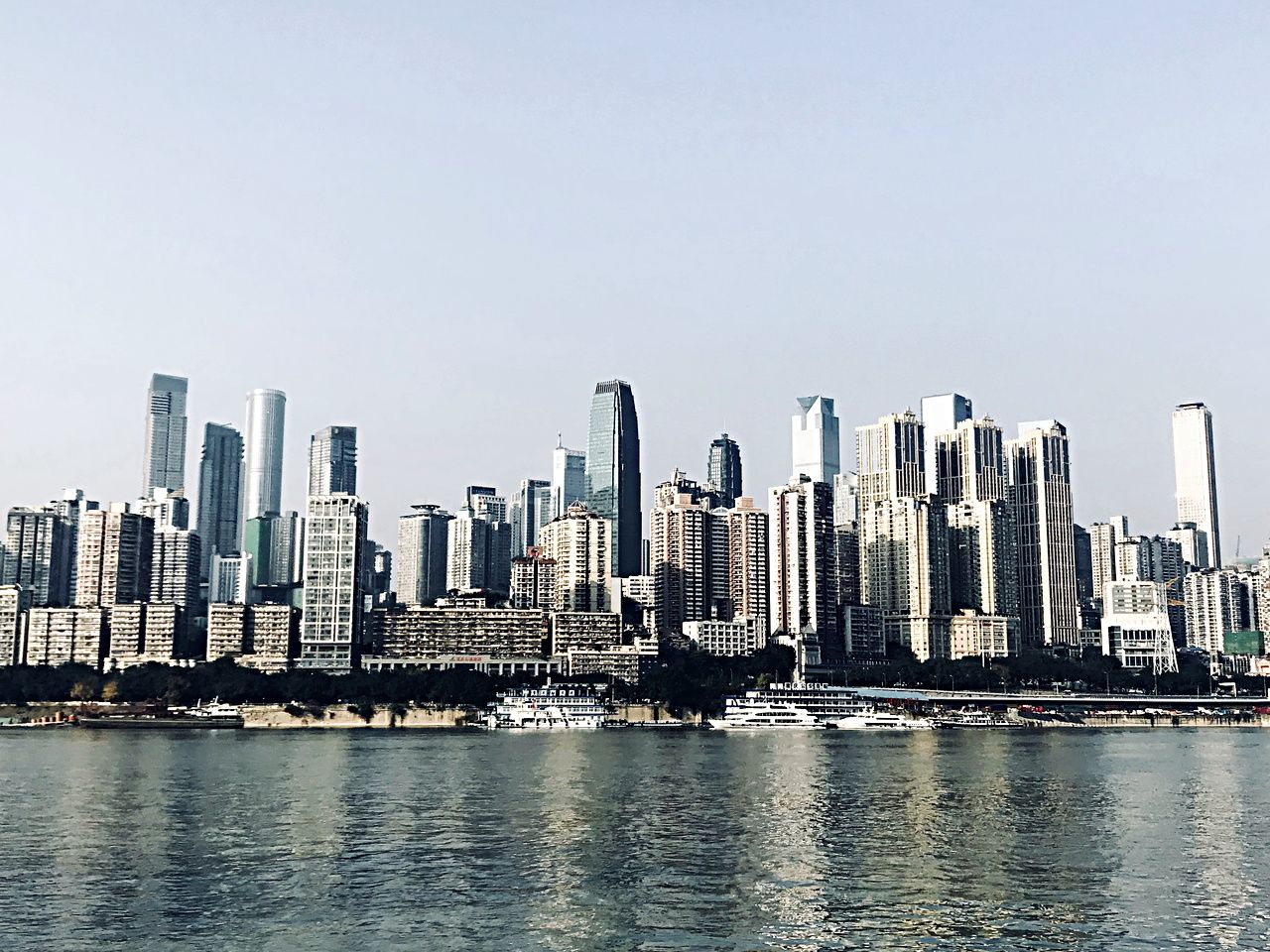
Chongqing stands up. The peninsula is a ridge between the Jialing and the Yangtze, and the buildings climb it. The ground floors are not on one level. The road you are on may be the roof of the block below. A map makes it look like one city. Your legs learn it is several, stacked.
The shape
The municipality is 82,400 square kilometres, a little smaller than Austria, with about three and a half times the people. At the end of 2025 the resident population was 31.87 million. That figure is still preliminary. The old city is the part on the ridge. The rest is mountains, river towns, and counties that take a day to reach.
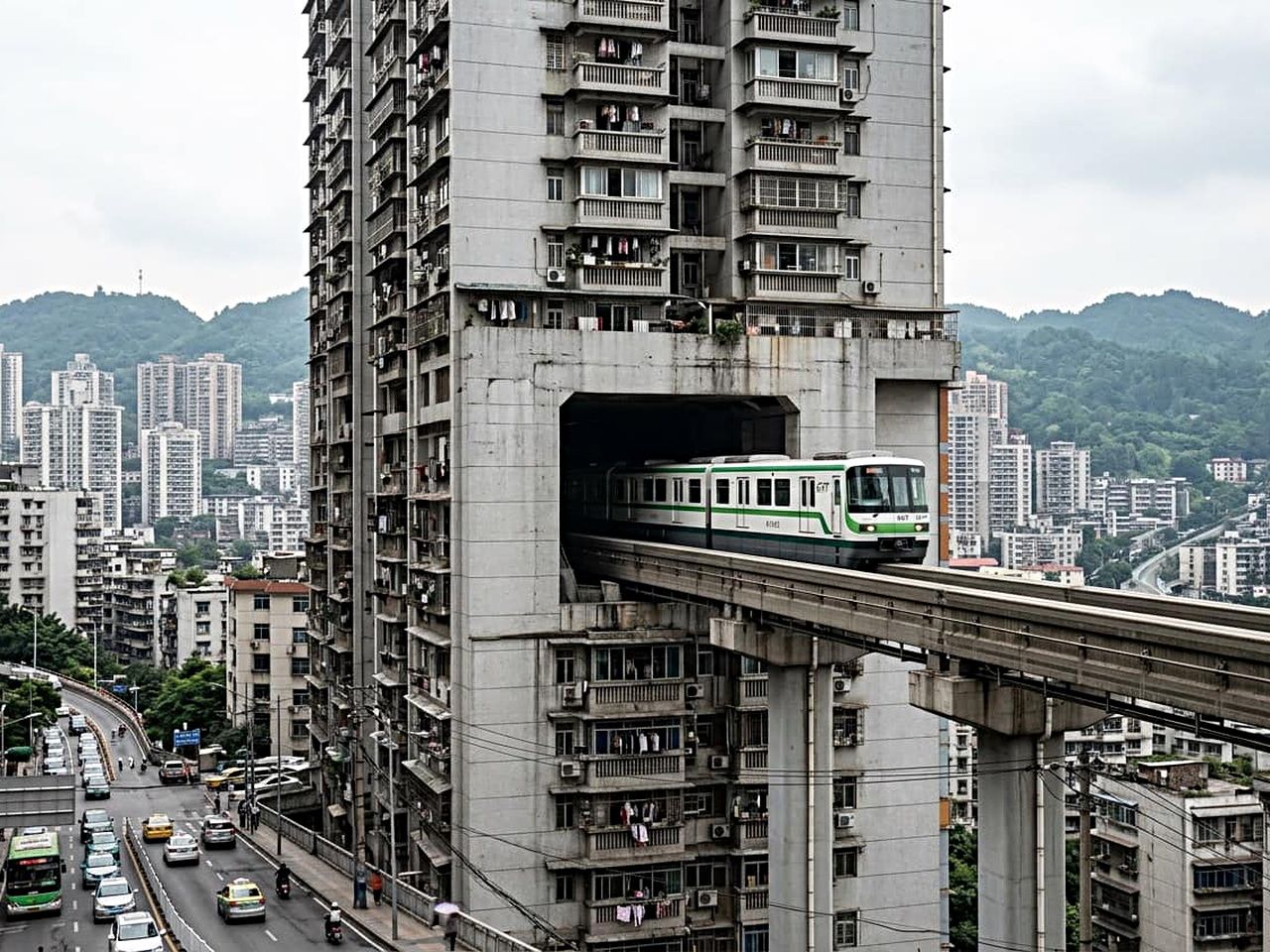
The ridge is why a lane can end in a staircase, and why a station can open onto a floor that is not the ground. Liziba is the one visitors stop for. A train passes through a residential building. The ride is the point, and it is over in about thirty seconds. Photograph it and leave. The building is still somebody's home.
Jiefangbei is the flat piece, a pedestrian square of about 200 metres. It is where you buy what the mountain towns do not stock. It is not where the city is most itself. Ciqikou, on the Jialing, is an old market street. Go in the morning. By noon the lane is a queue. The guild halls near the river, Huguang among them, are the cooler rooms: wood, courtyards, and a city that made its money moving goods by boat.
The cableway across the Yangtze has run since 1987. The span is 1,166 metres. Take it once, from the peninsula toward the south bank, and look back. That is the view of the city standing up. Do not walk into Hongyadong. The lights are the photograph. From the far bank or from the bridge you can see them. Walk in and you see the back of the person ahead of you.
What you actually do
You eat, and you change levels.
Breakfast is xiaomian, a small bowl of wheat noodles in a hot, clear, numbing broth, with peas, minced pork, and a spoon of chili oil if you ask. Order two liang, which is 100 grams, and be there before half past seven. After that the good shops are full, and the broth has been standing. Lunch can be the same thing again, or a rice bowl. Dinner is the hotpot, and it is not a quick meal. A split pot, one side mild and one side the red broth, takes two hours if you are talking. The table is the evening. Do not plan a show afterwards.
The other thing you do is go up and down. Escalators, stair streets, and elevators cut through buildings the way lanes do in a flat city. A taxi across the peninsula can be twenty minutes or fifty, depending on whether the bridge you need is moving. The light rail is clearer when you already know which floor the station is on. For a first visit, a car and a guide who treats the stairs as normal will save the afternoon.
Give the centre two full days, or three if the hotpot runs long and the next morning starts late. That is enough for the cableway, one guild hall, Ciqikou before the buses, Liziba, and a night when you are not watching a clock. The zoo, the galleries, and a second old street are for a fourth day, not for the afternoon you already spent on the ridge.
The year
The city has about 1,156 hours of sunshine a year. The number sounds low until you stand in it in July. Cloud and haze sit on the rivers. The heat does not need a clear sky.
April afternoons run near 24°C. October is near 22°C. Both are the months when the centre is pleasant and the river is not in flood season's low water or in the high water of autumn. June is the wet month people underestimate. At Shapingba the 1991–2020 normal is about 212 millimetres. A day can be hot and then suddenly grey, with the stairs running with water. Pack a light shell even when the forecast says heat.
From 15 July to 30 August, do not book the centre as the place you sleep. The 2022 week is the reason, not a one-off story. Afternoons near 34°C are the ordinary August. Nights that do not fall through 25°C are the part visitors miss when they read a daytime forecast. The air is wet. A room without good cooling is not a rest.
Two ways out sit close enough to use. One is up. Jinfo Mountain, in Nanchuan, has a ridge called Fengchui at 2,238 metres. Fairy Mountain, in Wulong, sits at about 1,850 metres on average. Both are far enough above the basin that the night is a different season from Jiefangbei. The other way out is the river, downstream, which is its own section below. A hotel in the centre with a stronger air conditioner is not the same thing. You are still in the heat the city plans around. You have only moved it indoors for the sleeping hours.
November through February is the other good window, if you can take grey days and a wind on the bridges. Chinese New Year fills the square and the old streets. Book the room before you book the hotpot. The weeks on either side of that holiday are the ones to aim for.
Three refusals
Wulong and back in a day. The karst is real, and the Natural Bridges are worth the time. The drive is about two and a half hours each way in ordinary traffic, and the bridges want half a day of their own. A car that leaves after breakfast and is back for a hotpot has turned the place into a window. Stay the night up there, or leave it for another trip.
The northeast as an afternoon. Chengkou, Wuxi, Kaizhou, Yunyang, Fengjie, and Wushan are not suburbs. By road that country is its own week. By water it is the door of the gorges, which is why the cruise exists. Do not add one of those towns to a city day and call it the river.
A show after the pot. The hotpot is the evening. A ticket at eight means you eat with an eye on the phone. Let the table run. Chongqing at night is the stairs and the far bank, not a second programme.
Then you go downstream
The Yangtze leaves from this city. Downstream, Chongqing to Yichang, is about four days and three nights. Upstream takes longer, about five days and four nights, because the ship is climbing. For a first time, go down. You see the gorges in daylight, and you step off at Yichang with the dam behind you.
The water you ride on is a schedule, not a mood. In the flood season the reservoir is held near 145 metres. From about September it is filled toward 175 metres and kept there through the winter. The same rock is a different wall in July and in November. Neither is a reason to skip the trip. It is a reason to know which one you booked.
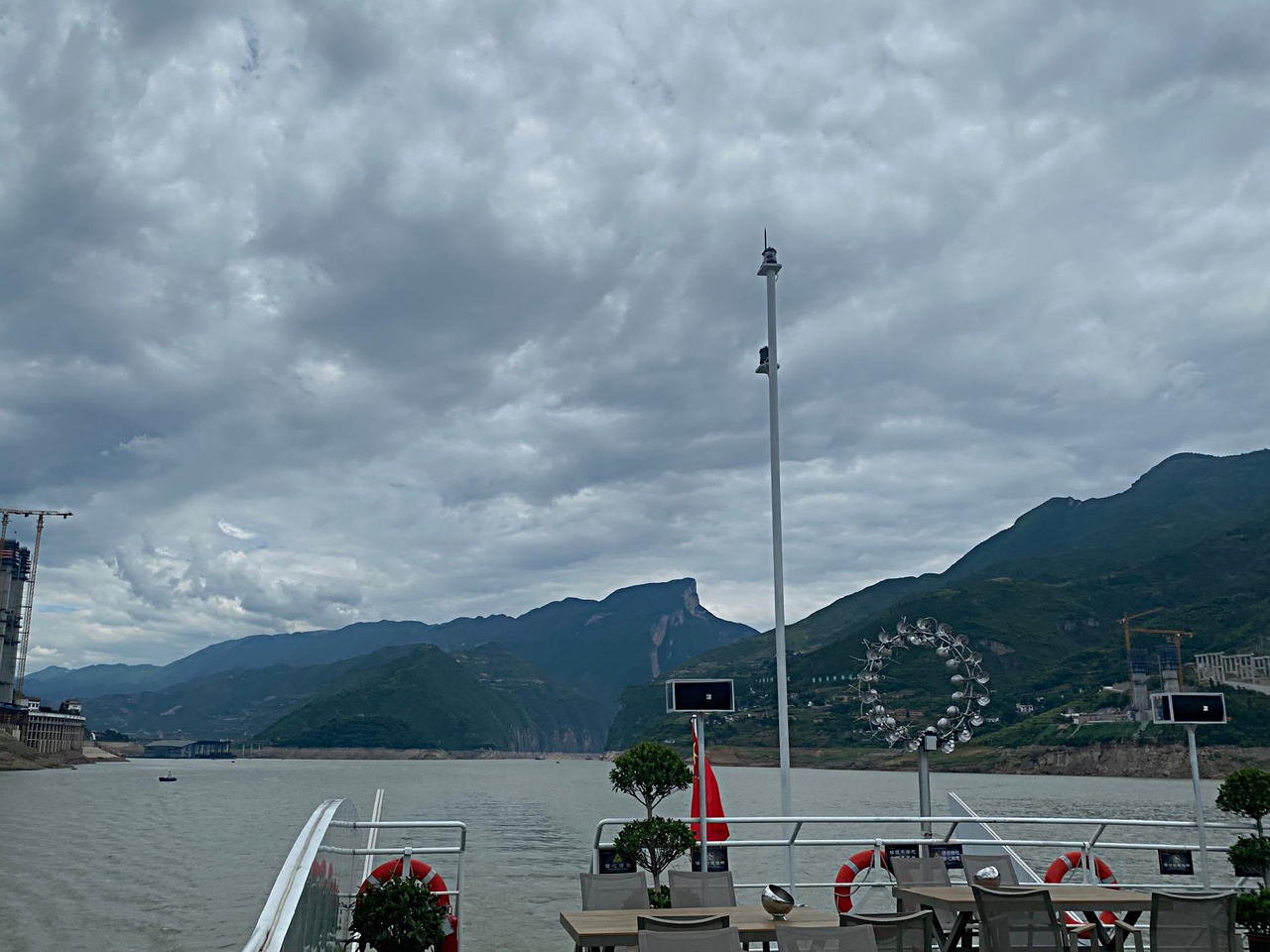
The gorges themselves run about 193 kilometres, from Baidicheng at Fengjie to Nanjinguan at Yichang. Qutang is the short one, about 8 kilometres, and the gate called Kuimen is the cliff on the ten-yuan note. Wu is about 45 kilometres. Xiling is about 66. Between them the river widens and the name on the map is just the river again. Be on deck for Kuimen. It does not last.
The dam at Yichang is the concrete fact at the end of the downstream trip. The greatest height is 181 metres. The crest is 185 metres, because the foundation sits lower than the water you see. The axis along the crest is 2,309 metres. A large cruise uses the lock, not the lift. The lock is a dual line of five steps, 6.4 kilometres from the first gate to the last, and a ship takes one chamber at a time. Passage is about three hours. The lift is for smaller vessels, up to 3,000 tonnes, rising 113 metres, with the full approach-to-exit around forty minutes. You watch one of these from the rail. You do not choose it.
See. The peninsula from the south bank, once in daylight and once after the lights come on. Liziba, then leave. One guild hall. Kuimen from the deck, before breakfast, when the rail is still empty.
Taste. Xiaomian at a shop that is already busy at seven. A split hotpot on a night with nothing after it. If someone orders a third round of meat, that is the meal working. Do not add a restaurant with a view on top of it.
East Marvel has planned private journeys in Asia since 1988. A route is written for the dates you have, then priced. Prices are quoted by email and do not move after that. Write to contact@eastmarvel.com.
What we recommend
The four-day city tour stays in Chongqing. It does not add Wulong and a drive back. From the middle of July, the nights belong on the mountain or on the river. The cruise page is the deck.