You have four days. On day one you stand in front of the painted maidservants at Jinci in Taiyuan. On day two you stand at a counter in Pingyao and read a paper note that draws silver in another city. On day three you look up at the wooden pagoda in Yingxian, then go to the Yungang Grottoes and watch the Buddhas’ faces change from cave to cave. On day four you leave the incense on Mount Wutai and go to two Tang halls below it. Three days end in Datong. Changzhi, Jincheng, and the third Tang hall at Ruicheng are a later trip.
Day 1. Jinci
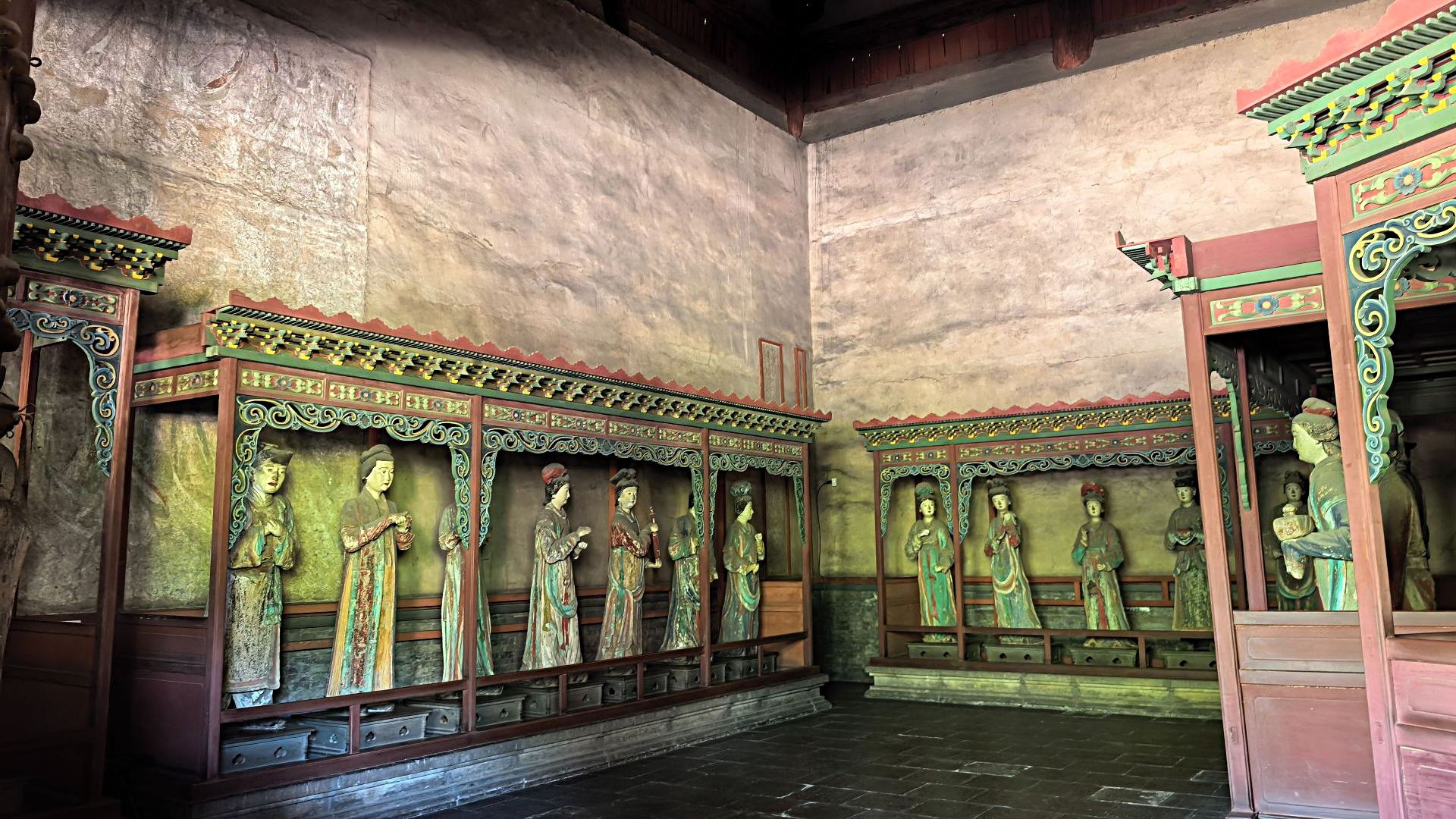
Jinci sits at the foot of Xuanwengshan, about forty minutes southwest of central Taiyuan. Go into the Hall of the Holy Mother first. The hall is Northern Song, dated to the Tiansheng reign, 1023–1032. Look at the maidservants’ hands. Some hang at the sides. Some are raised. The heads turn different ways.
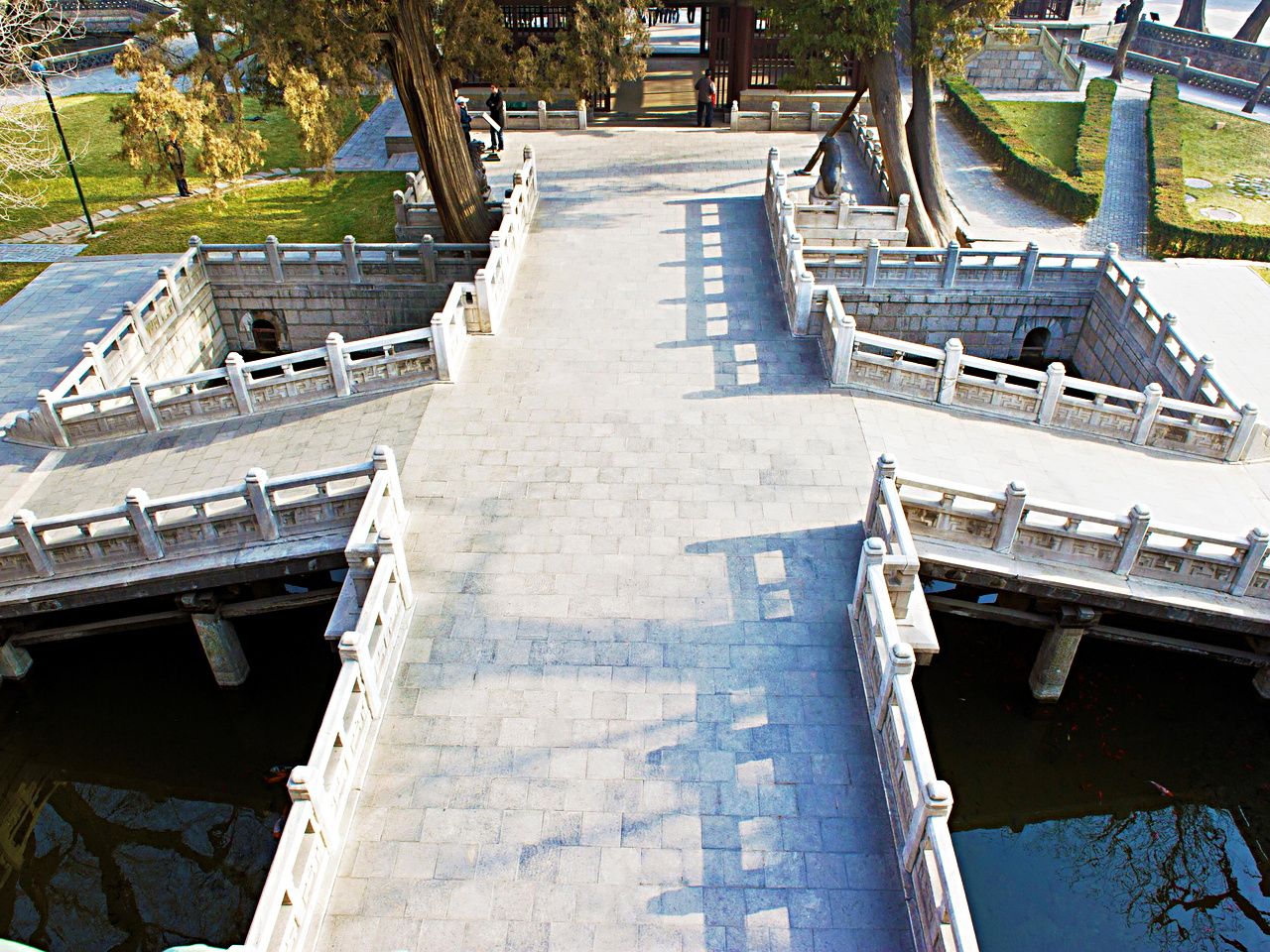
Outside is the Flying Bridge over the Fish Pond, a cross-shaped bridge over a square pool. Stand at the center. Water lies on four sides.
Beyond this courtyard the province is held in by mountains and a river. The Taihang stands on the east, the Lüliang and the Yellow River on the west, the Zhongtiao range on the south, and the Great Wall on the north. Old books call this biaoli shanhe, mountains and rivers on every side. The temples stayed in the basin. Over these four days, most of what you see still stands where it was built.
Day 2. Pingyao
You can walk the city wall. The brick is Ming and Qing. The place to stop is Rishengchang.
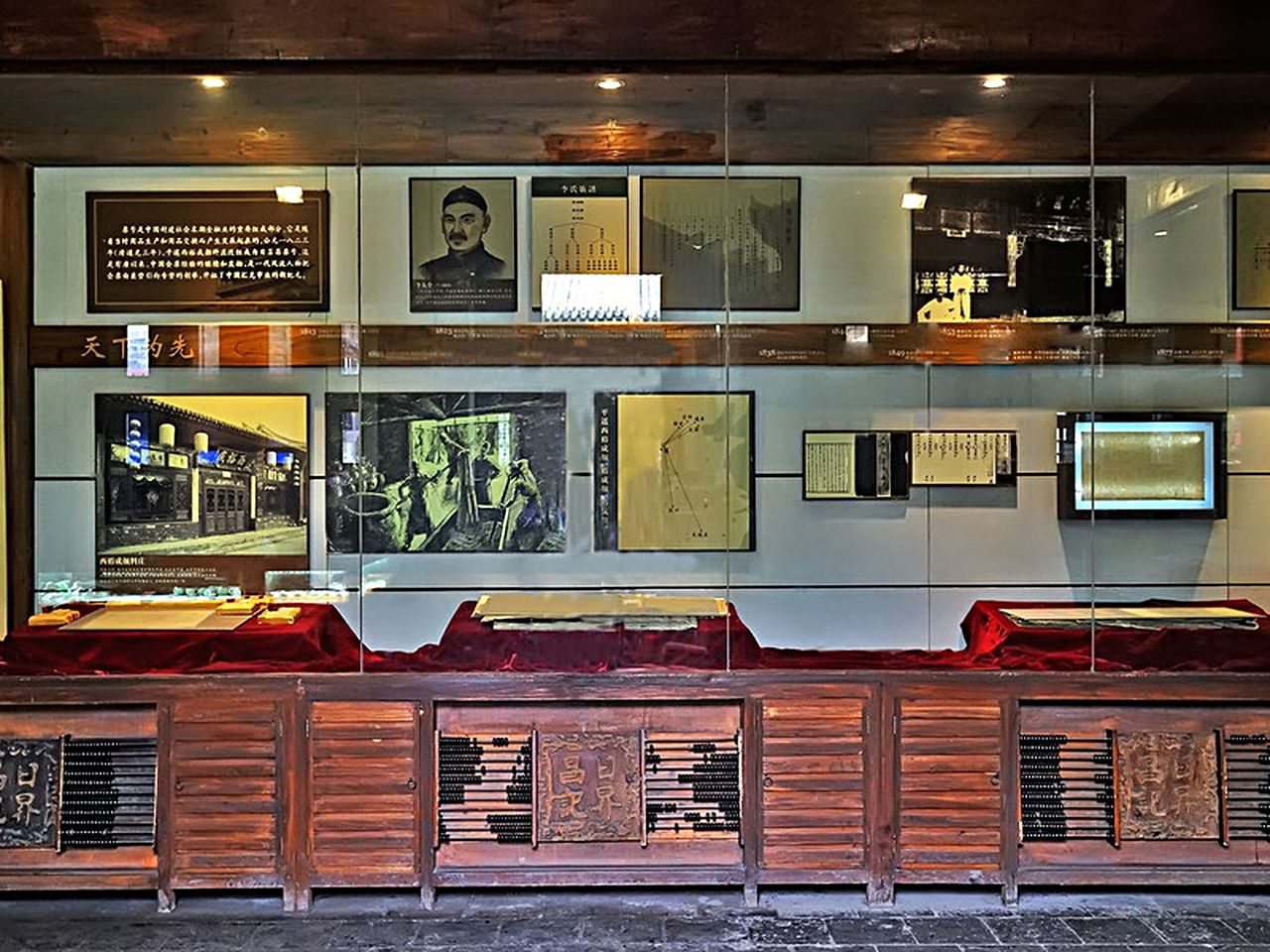
This remittance house opened in Pingyao in 1823, the first in China. Stand at the counter: a wooden counter, an iron abacus, and blue-cloth ledgers. Four characters hang above it, huitong tianxia, remittance reaching every city. A customer deposits silver here, takes a paper note, and draws the silver at a branch in another city. The silver stays. The paper travels. The paper is worth silver because both cities honor the same shop name.
Before any counter existed, Shanxi merchants walked their goods out through the passes. The west pass is Shahukou, toward today’s Hohhot and Baotou. The east pass is Zhangjiakou. Caravans left through Dajingmen and went north on the Zhangku road to Kulun, today’s Ulaanbaatar, about 1,400 kilometers. Tea came down from the Wuyi Mountains, by boat to Hankou, over the Taihang, and out through Yanmen Pass or Shahukou. Camel trains crossed the grassland. At Kyakhta the tea was traded to Russian merchants. On his southern tour, the Kangxi Emperor saw that many of the traders in the Jiangnan markets were from Shanxi. The goods moved first. The note on this counter came after.
On the way from Taiyuan to Pingyao you pass Qixian, where the Qiao family compound stands. If you want to see where a merchant set his house, stop here. Brick walls enclose wooden towers. The carvings show a fisherman, a woodcutter, a farmer, and a scholar. The Wang family compound in Lingshi needs another half day.
Day 3. The pagoda, the cliff, the caves
This is a long day in the car. Leave in the morning.
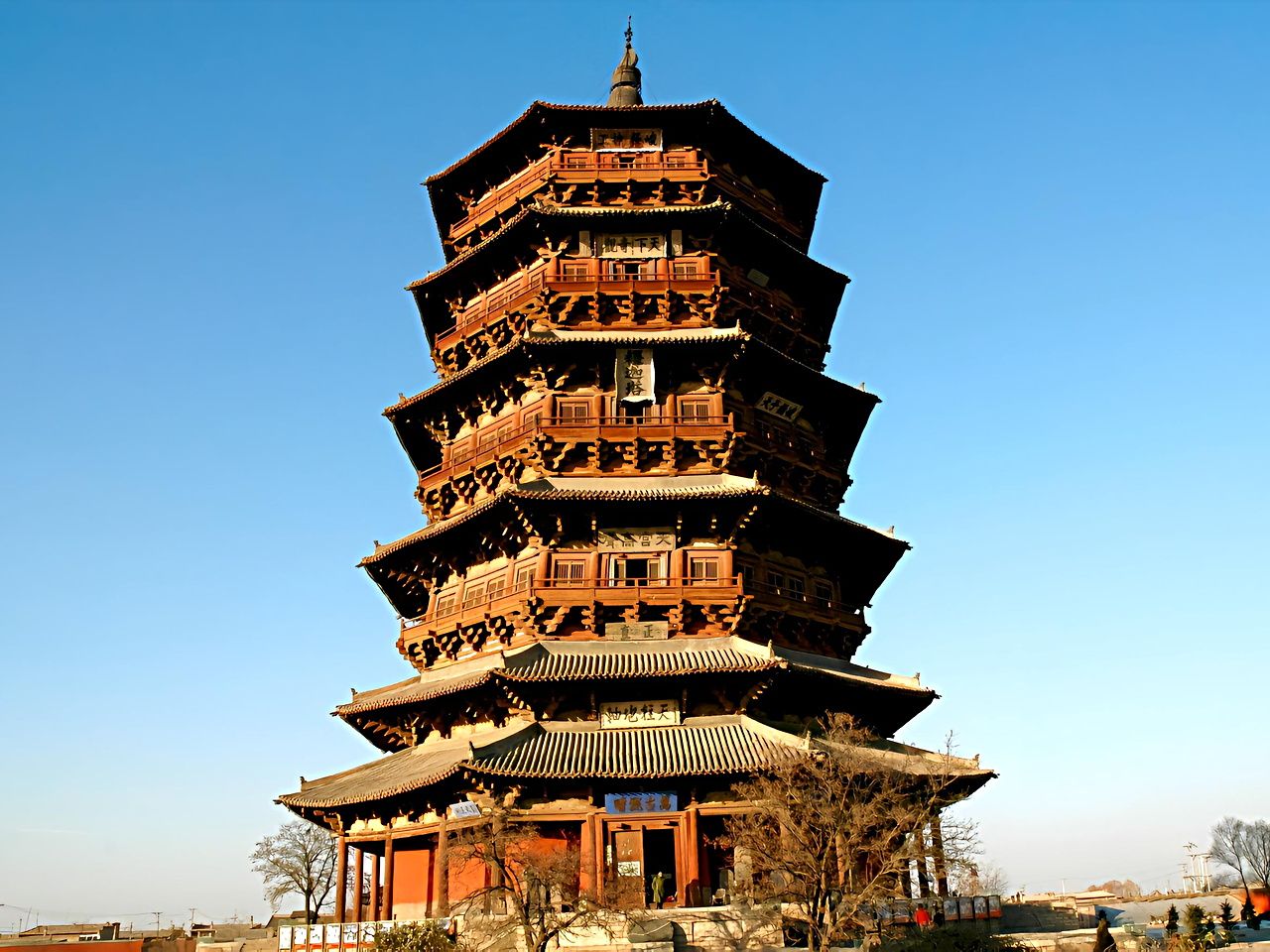
As you approach Yingxian, the pagoda is already ahead of you. In 1933 Liang Sicheng saw it from about ten kilometers out and wrote to Lin Huiyin that it was so fine he could not catch his breath. The pagoda was built in 1056, the second year of the Qingning reign of the Liao, and it stands 67.31 meters tall. Walk under it and look up. Eave sits above eave. Outside you see five stories. Four more levels are hidden between them. The body is wood. The base is brick and stone. The spire is iron. While measuring it, Liang counted thirty to forty different bracket sets. Earthquakes have shaken it. In the 1920s artillery hit it. It stayed standing. It has been repaired since. You are here to see that it is still there.
Then Hengshan. The car stops below the cliff. Look across first. The halls sit against the rock. Then climb. The beams are set into the stone. The Hanging Temple was first built in the Northern Wei. The wood under your hand was replaced in later repairs. In the top hall, Buddha, Laozi, and Confucius sit in one room.
Give the afternoon to Yungang. Start at Cave 20. This large Buddha stands in the open air. It belongs to the first five caves, begun around 460. The brow is high and the eyes are deep-set. Then go into the later caves. The faces are rounder, closer to the people of the Central Plains. One cliff, one afternoon, and you watch the face change.
Day 4. Foguang Temple and Nanchan Temple
The drive from Datong to Mount Wutai takes several hours. The summit is incense and crowds. The two halls are below the summit, through a different gate. Halls and summit on the same day make a rush. If the day has room for one visit, go to the halls.
Foguang Temple comes first. The East Hall stands in a mountain valley. It was built in 857, the eleventh year of the Dazhong reign of the Tang. In June 1937 Liang Sicheng and Lin Huiyin found it by following a map of Wutai painted on a Dunhuang cave wall. A Japanese scholar of that time had written that no Tang timber hall survived in China. Step inside. Four Tang works share the room: these beams, this group of statues, the paintings on the wall, and the ink names under the beam. Liang later wrote that the hall was truly China’s first national treasure.
Nanchan Temple is next. The hall is three bays wide, a village temple. The writing under the beam records a rebuild in 782, the third year of the Jianzhong reign of the Tang. It is older than Foguang Temple, and it is the oldest wooden building still standing. Craftsmen took it apart and repaired it in the 1970s. The main timbers are still Tang. The courtyard is quiet. You can stand there a long time.
The third complete Tang wooden hall is Guangrenwang Temple in Ruicheng, a Daoist shrine. It belongs on a later trip south.
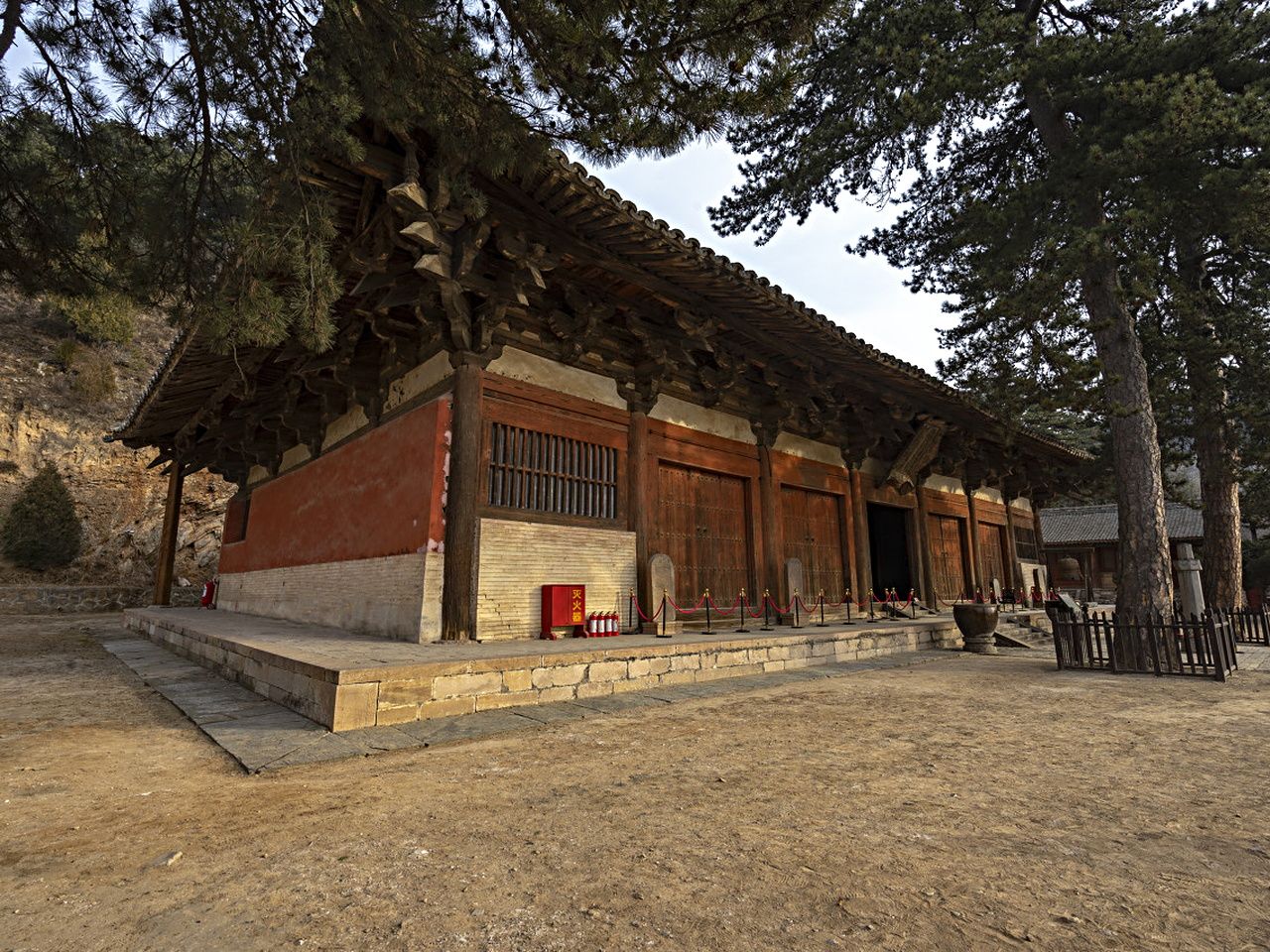
Three days
Three days cover Taiyuan, Pingyao, and Datong. The pagoda and the Hanging Temple remain on the third day’s road. Foguang Temple and Nanchan Temple are the fourth day.
Other halls
Other halls appear along the roads. Shanxi has 28,027 registered ancient buildings. It has 531 national protected sites, the most in the country. More than 80 percent of China’s wooden buildings from the Yuan and earlier are here. Changzhi and Jincheng are the next trip, for the density of those halls.
When to go, and tickets
April and May, or September to early October, suit these four days. During the week of May 1 and the week of October 1, the lines at Yungang and on Mount Wutai are long. Mount Wutai is cooler than Taiyuan. Bring a jacket.
Book Yungang, Mount Wutai, the Hanging Temple, and the Yingxian Pagoda under your passport name. Open the official booking page again before you travel. The rules change. Pingyao and Jinci sell tickets at the window and online.
Pay with WeChat or Alipay. A foreign card can be linked in either app. Carry some cash in RMB.
Write to contact@eastmarvel.com with the month you can travel, the number of people, and whether you have three days or four.
Opening hours and admission rules follow each site’s official announcement.
What we recommend
Yungang is booked under your passport name. Set up WeChat or Alipay before you fly.