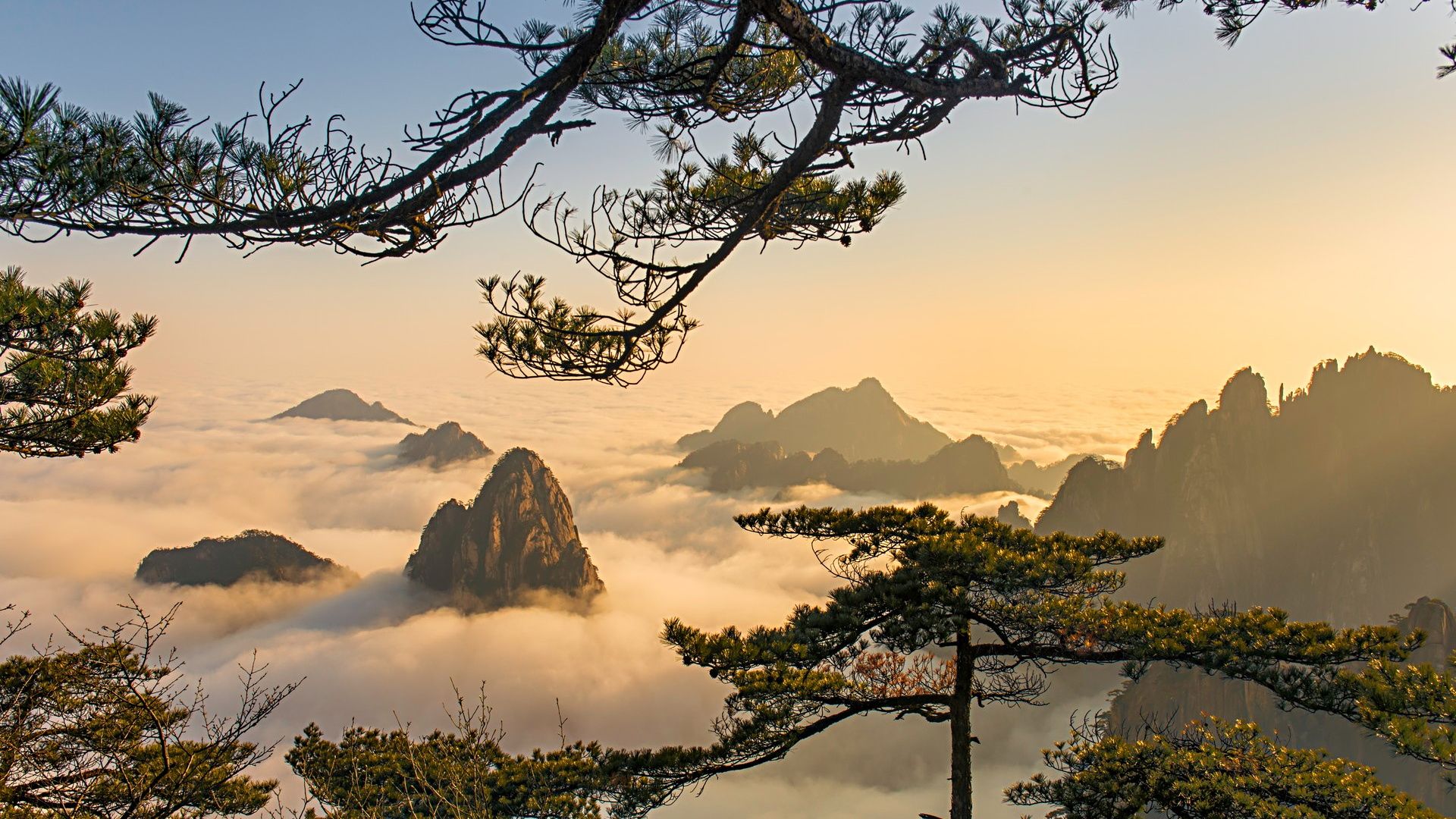
Granite, pine, and cloud
Step into the clouds. That is Huangshan.
It is a mountain of granite, pine, and cloud. Huizhou’s white walls, horse-head gables, and ancestral halls sit below it. Fermented mandarin fish and hairy tofu are on the table when you come down. This is the high stop on an east China route: see the peaks first, then the villages the mountain made possible.
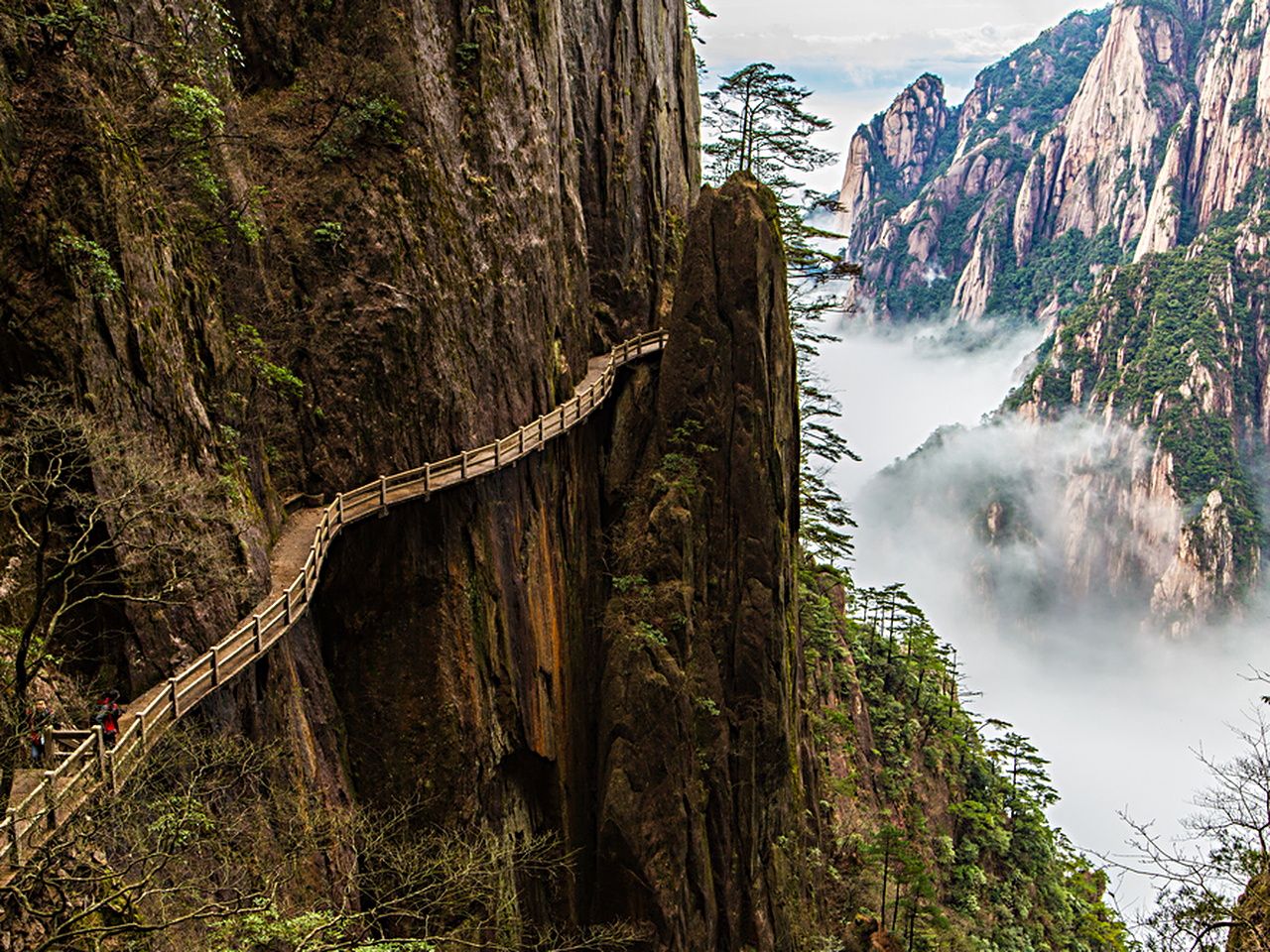
What is Huangshan like? Steep. Clean. Close. All mountain temperament. It has been a mixed cultural and natural UNESCO World Heritage site since 1990. Of the three main peaks, Lotus Peak is 1,864.8 meters, Bright Summit is 1,840.4 meters, and Tiandu Peak is 1,810 meters. The height is not the walk. The walk is the granite under your feet, and the cloud that takes the next bend away. Pines come out of cracks in the rock. The paths are narrow, and you walk slowly.
Up on the mountain
Same stretch of southern Anhui, two ways to walk it.
Up on the mountain, the Greeting Pine still stands at Yuping. The line there is long. West Sea Canyon cuts through the granite peaks. The path goes down to the valley floor and back up, and the canyon is not open every week. When clouds roll in, the trails vanish. You walk what is in front of your shoes.
A cable car skips part of the climb. The paths above it are still the walk. You enter by the gate printed on the ticket. Lotus Peak and Tiandu Peak close in turns for restoration. The notice on the day you go is the one that counts. If you want the morning on the ridge, sleep on the mountain. One day up and down leaves the cloud for the bus window.
Down in the villages
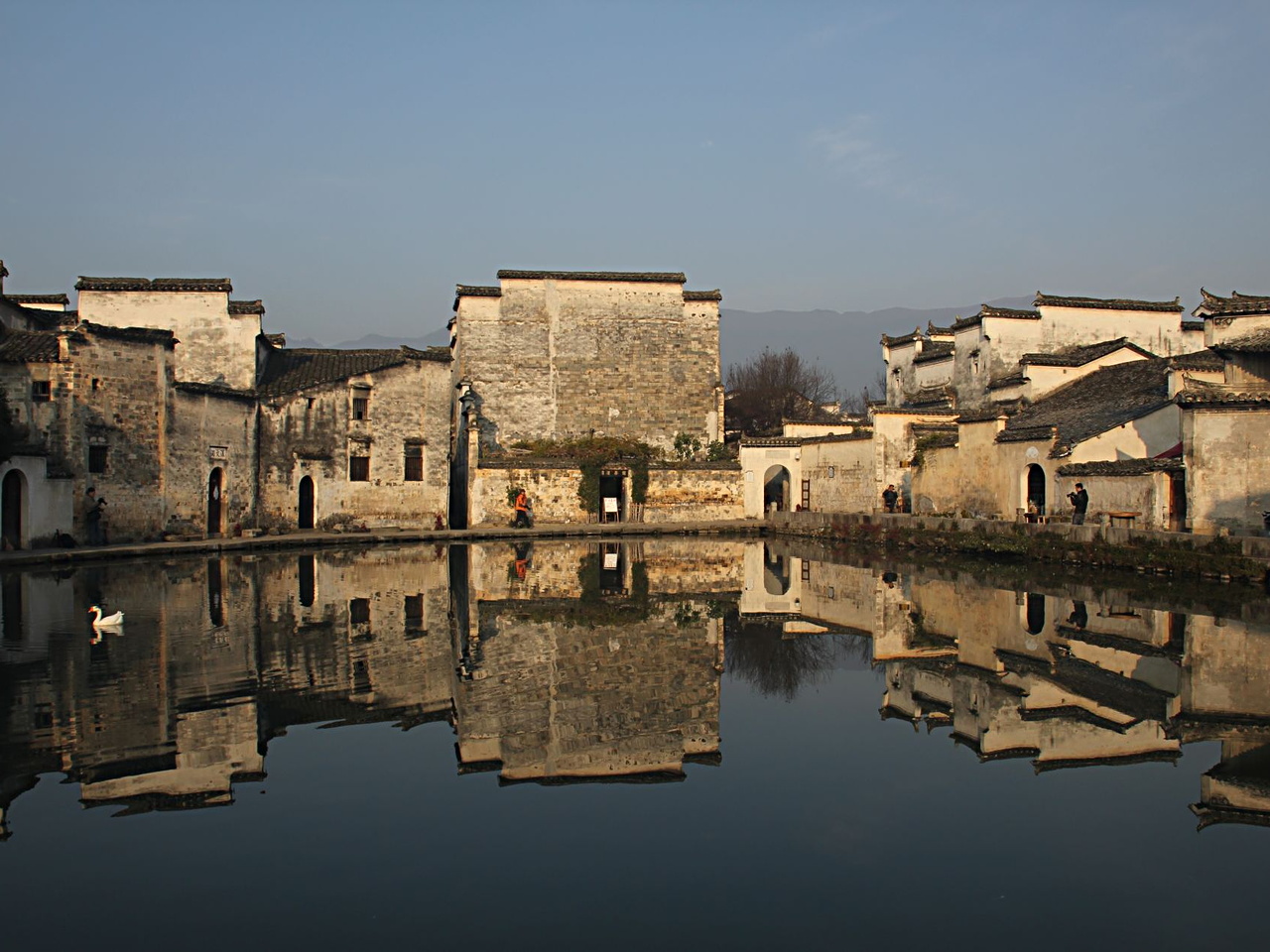
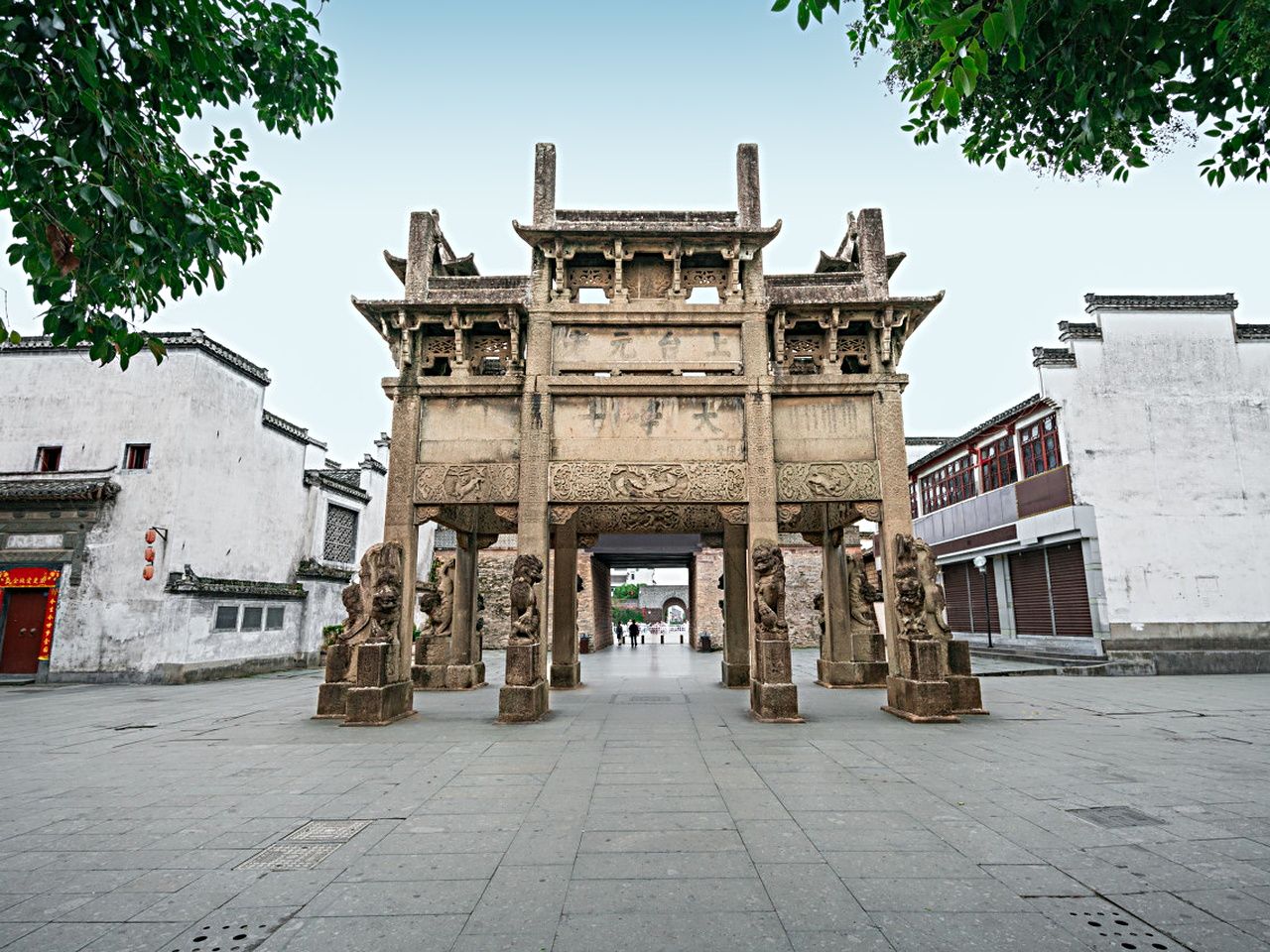
Down in the villages, Hongcun gathers the whole settlement around Moon Pond. Channels bring the water to the pond and on to South Lake. The white walls come down to the water. Xidi’s memorial archway stands at the lane. It is Hu Wenguang’s, from the Ming. The halls behind it open onto courtyards that catch the sky. You see the title at the gate. Then you see the house.
The mountain takes its own day. The lanes take the next. Do not put Yuping and both villages on the same morning.
Salt, tea, and the hall
Huizhou merchants built these houses. They left home to trade salt and tea, and to run pawnbroking businesses. They sent the money home for ancestral halls and archways. Commerce and the pursuit of scholarship sat in the same compound.
The lane sees a white wall. The horse-head gables step up so a fire does not cross to the next house. Inside, a skywell lets the rain fall into the family’s own court. The carving stayed on the beams. The shop was somewhere else. The village was the face the shop kept at home.
Shexian
Farther east is Shexian, the seat of the old Huizhou prefecture. The Xu Guo Archway still stands at the junction. Xu Guo reached the Grand Secretariat in the Ming, and the emperor allowed him this one arch. Hui ink and She inkstones are still made here. Buy an inkstone you can wet, so you can see the grain, or a stick of ink marked with a workshop. A sealed gift box at the first door is not that.
A half day is enough. An archway is for standing and looking. It does not belong between two rushed stops.
Fish, then the cable car
Taste the fermented mandarin fish, then a Huizhou claypot. The cable car takes you into the clouds. The lanes are for after you come down.
Give the ridge a day, and the villages the next. Yuping and West Sea Canyon belong to the mountain day. Hongcun’s Moon Pond and Hu Wenguang’s archway belong to the village day. Shexian is half a day: the Xu Guo Archway, the ink, and the inkstone. Salt, tea, and pawnbroking paid for those houses.
Huangshan is not a view from the window. It is a mountain, and the houses its wealth built.