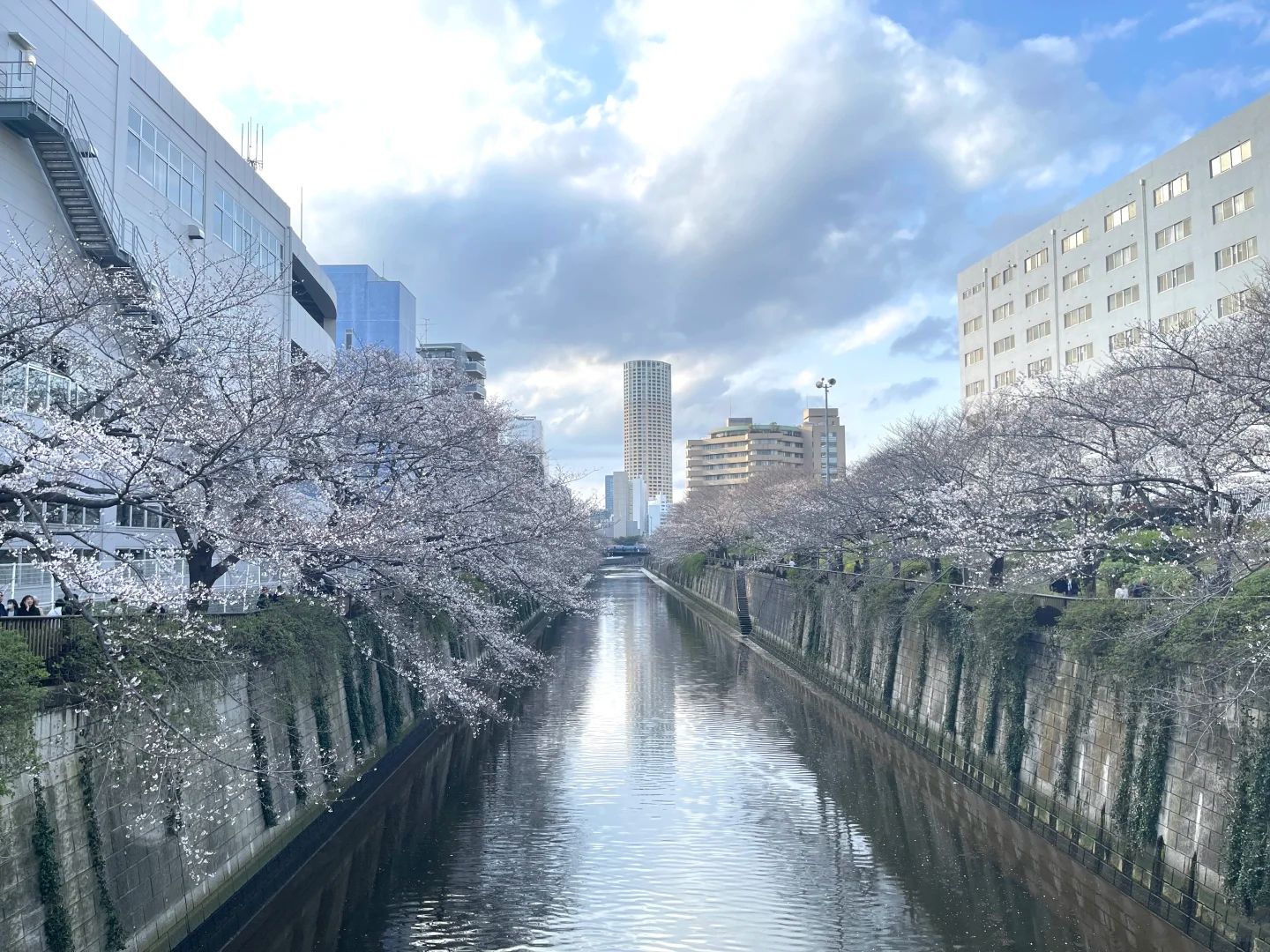
East Marvel · Japan Checked November 10, 2026. No 2027 notice was out. Dates below are 2026. Where the advance notice and the shutdown notice disagree, both are labeled.
The cherries at Nakameguro are a river, and the river runs three clocks.
Most pages collapse them into one line: late March to early April, lit from 5 to 8 p.m., as if the whole stretch were lit every night for two weeks. It is not. The stalls are a weekend. The lanterns were announced for fifteen days and then reported off on March 31. The riverside lighting was scheduled to stop on March 31 from the start. Book any one of those clocks past its end and the night is a dark river.
The three clocks
Stalls, stage, dancing. Announced for March 28–29, 10 a.m.–5 p.m. The Nakameguro festival is at the confluence playground. The guidance map also lists Dendo Hiroba Park and Fureai Bridge for that weekend. In 2026 it was those two days. A separate food-truck park at the boat quay, Funairi-ba, was listed March 27–April 5, 11 a.m.–8 p.m. A truck is not a lantern.
Lanterns, about 3,500. Announced for fifteen days from the day Tokyo's first bloom was announced, 5–8 p.m., Ikejiri-Ohashi to Nakazato Bridge. Tokyo's announcement was March 19, so fifteen days pointed at April 2. A March 22 note from the shopping arcades said the lanterns would stay on through April 2. Meguro Tourism Association, quoting the organizer, said the lanterns ended on March 31, with the river lighting.
Riverside lighting, Nanbu Bridge to Saikachi Bridge. Announced from the bloom announcement through March 31, 5–8 p.m. It ended March 31. The association confirmed it.
The arcades' closing note calls the 40th festival March 19 to April 2. That is the span of the event. It is not a promise that a bulb was on every night inside it. April 1 and April 2 still sit inside that span. On the association's notice, the lights were already off.
The line worth remembering: do not book a night against "early April still has lights." In 2026 the lit nights stopped on March 31. An April 4 booking, on that record, is a dark river.
There is a second small festival the same weekend, the Meguro East Area festival, March 28–29, 10 a.m.–5 p.m., near Ikejiri-Ohashi. Same two days. Still not the lanterns.
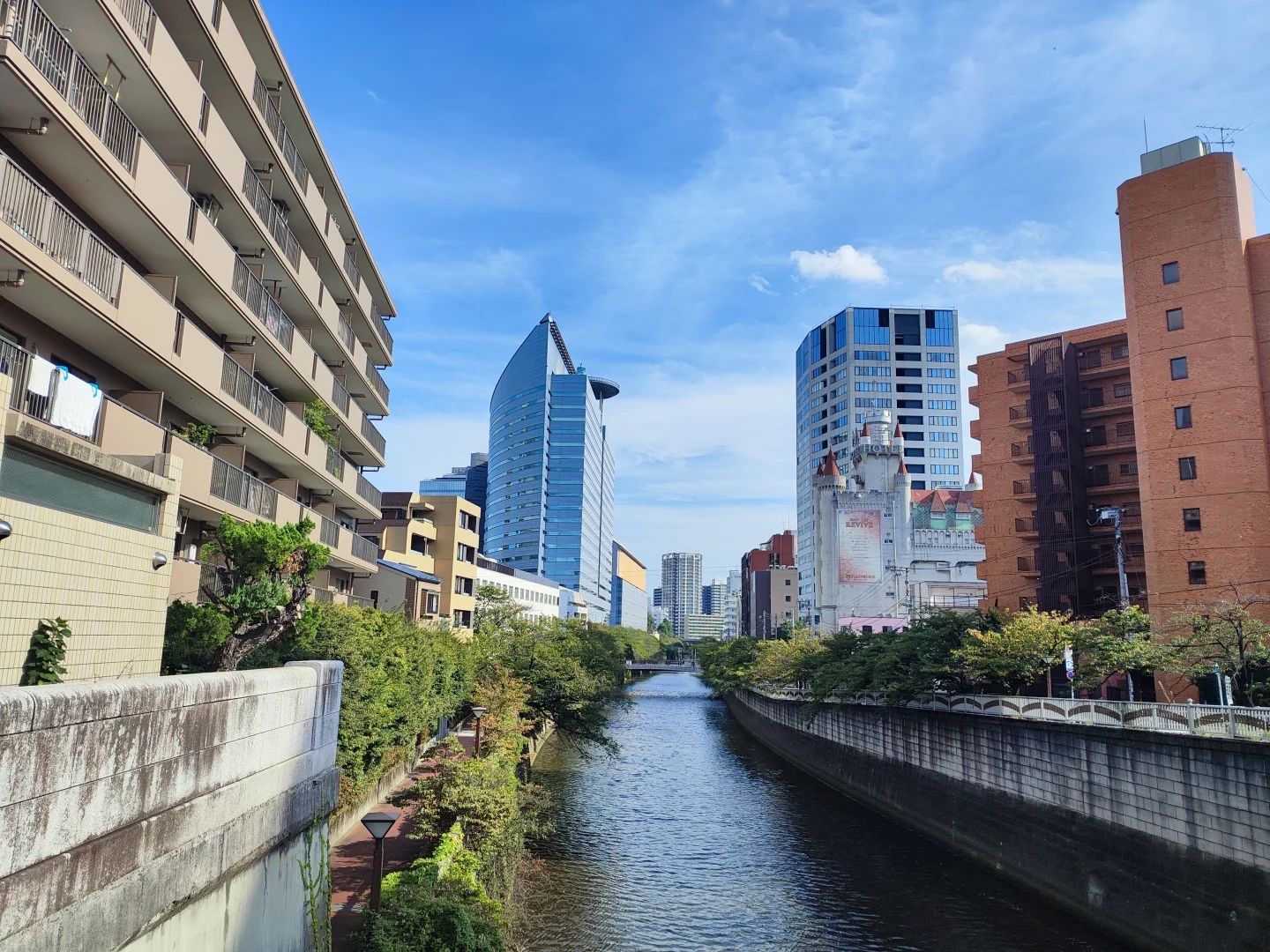
The lights go out at eight
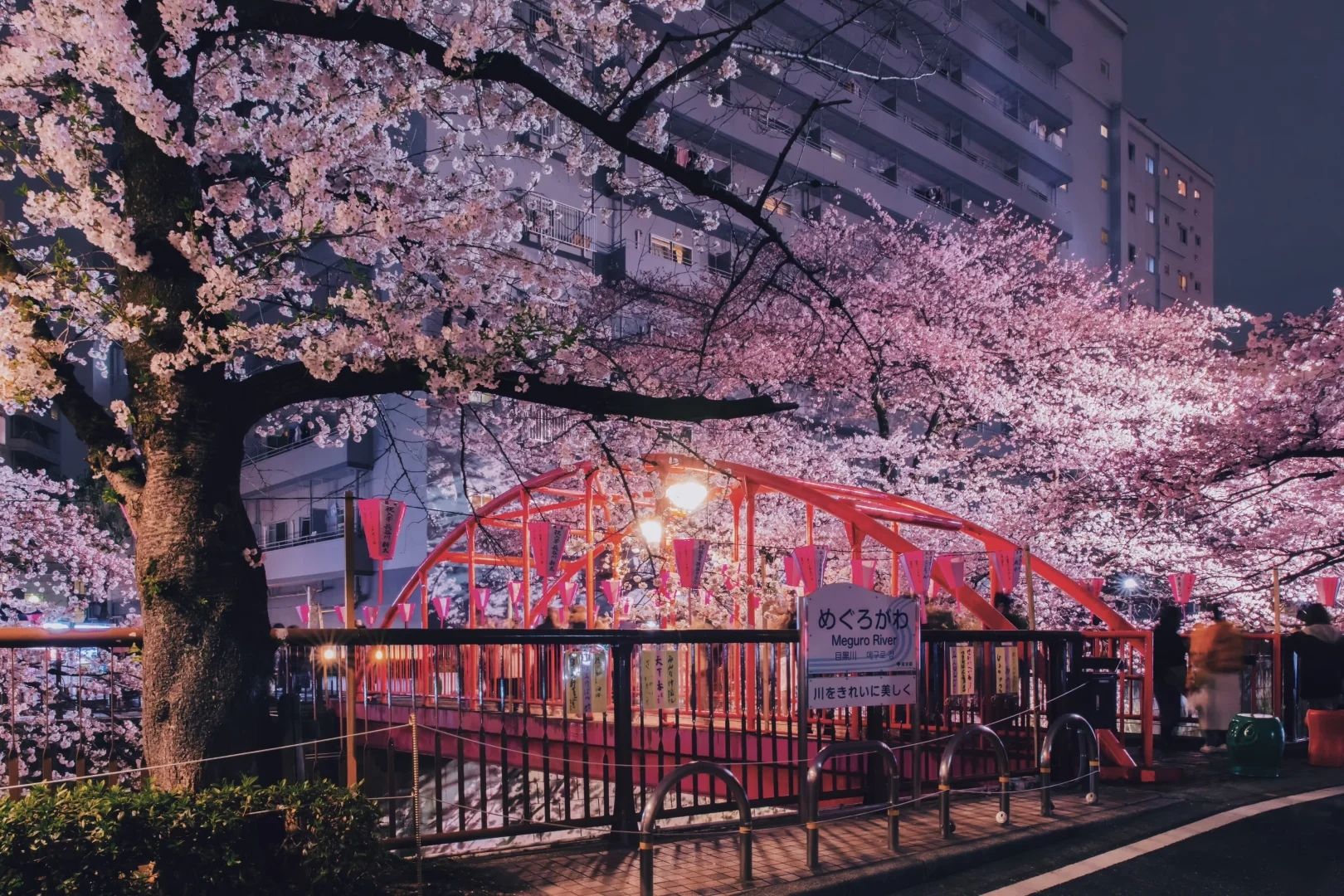
The lanterns come on at 5 and go out at 8. An hour earlier than most visitors have been told. Arrive after eight and you are looking at street lamps.
Be at Ikejiri-Ohashi around 5:15. Walk toward Nakameguro Station, and be done before 8. You start at the quieter end of the lantern run and finish at the crowded one. The frames are already taken by the time the station mouth fills.
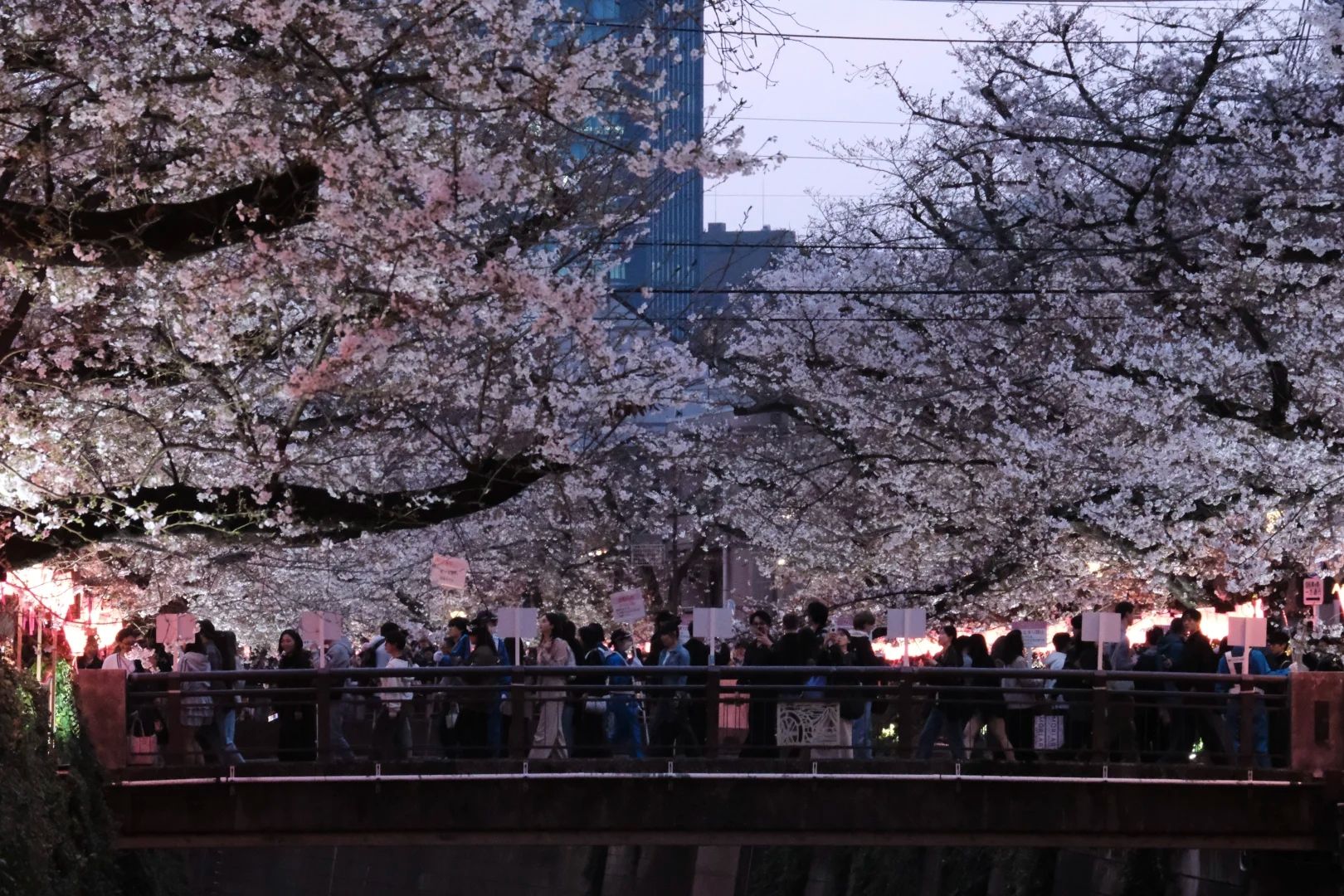
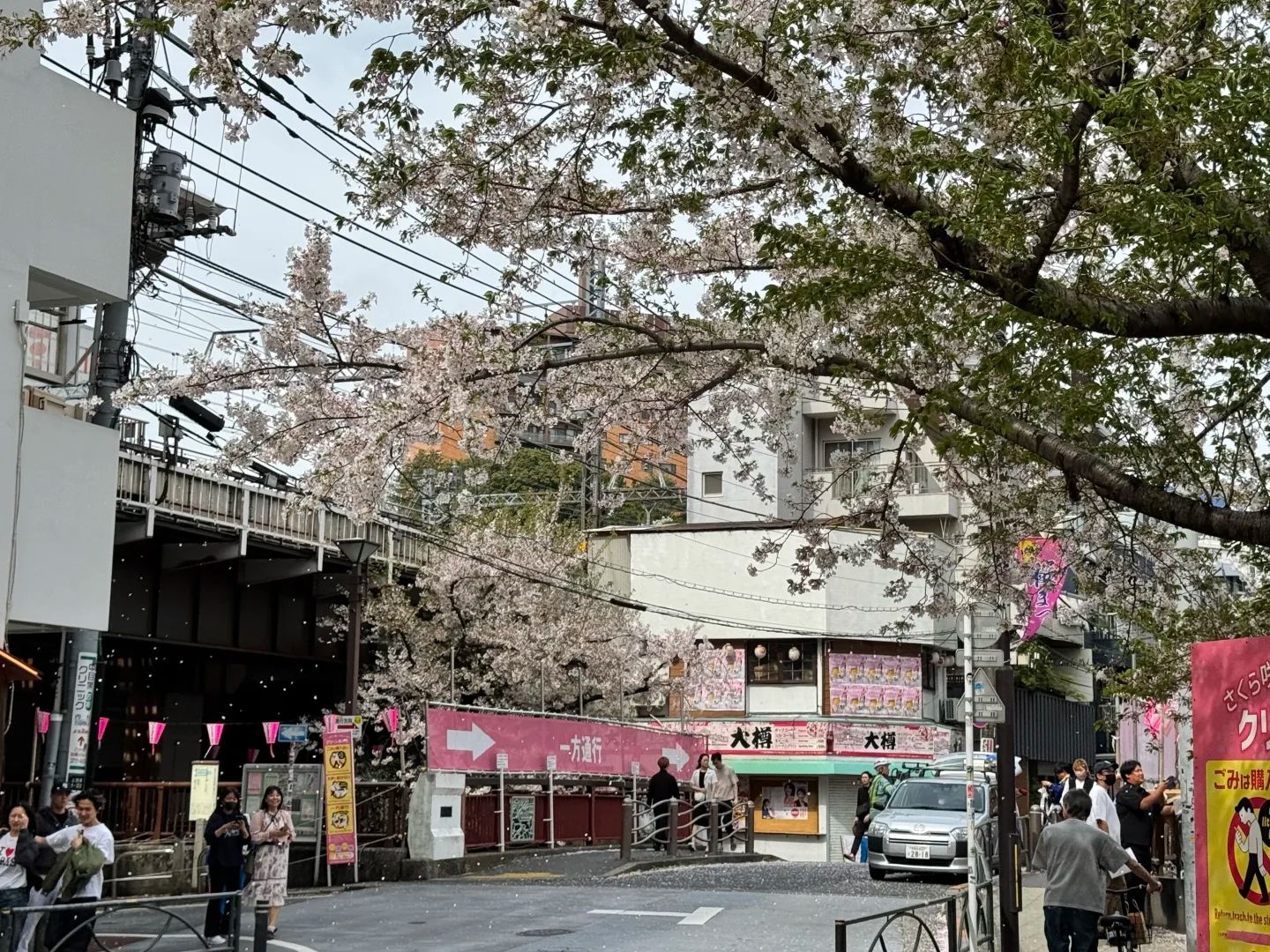
Starting at Nakameguro Station spends the best light in the densest part of the river. The first stretch outside the wickets is the crush. Hinode Bridge, just there, is where people stop, and where the ward does not want them to. In 2026 the bridge carried banners telling people not to linger, and staff moved the crowd along. Between Chitose Bridge and Hinode Bridge the guidance map says follow the arrows, follow the staff, and keep moving. The 2023 map described that same stretch as one-way, counterclockwise, so you face the cars. If a staff member turns you around, that is the route.
Do not plan the picture as a stop on the bridge. The picture is the walk.
Four kilometers, and the photograph is one stretch of them
The Meguro ward stretch is about 4 kilometers, about 2.5 miles, with about 800 trees. That is the figure on the 2026 guidance map. The ward's own sakura plan measured about 800 trees on 3.8 kilometers. The "about 700" on other pages is Shinagawa ward, the next stretch downstream, about 3 kilometers. It is a different walk, wider, and it is not a second count of the Nakameguro trees.
The station stretch is the photograph. Cafes and shops on both banks, the densest lanterns, the densest crowd. Twenty minutes covers it, if the path is moving.
The Ikejiri end is where you enter, because you can still walk. It is the same lantern run. It is not a secret grove upstream of the lanterns, and the two ends do not ripen together. On March 30, 2026, a local report still called the station area at full bloom and already saw leaves coming in at Ikejiri. The Agency's Tokyo specimen tree had been full on March 28. For this river, read a river report. March 31 is the day the lights were reported off. It is not a published full-bloom date.
The full Meguro ward length is about an hour. In a lit evening the extra distance does not add the picture. Shinagawa, if you want that quieter wider river, is daylight and a different plan.
When the path is actually walkable
7–9 a.m. Nearly empty. Soft light. No lanterns. Use it for daylight photographs.
9–11 a.m. Filling, and still moving. Walk.
Late morning through midafternoon. The path and the restaurants are both full. Noon is the queue. Eat before noon, or later in the afternoon.
5–8 p.m. The only lit hours, and the second peak. Enter from Ikejiri-Ohashi.
After 8 p.m. Dark. Leave.
A Saturday night is a different river from a Wednesday night. March 28 and 29, the festival weekend, are the heaviest of all. No one has published a multiplier, and you do not need one.
On the ten-day cherry blossom route we use, March 26 to April 4, the Tokyo nights are Friday the 26th, Saturday the 27th, and Sunday the 28th. Sunday is Easter. In 2026, Sunday was also a festival day. Friday works only if you are already on the ground in time to be at Ikejiri-Ohashi by 5:15. A late Haneda landing misses it. Narita misses it. If Friday is gone, Saturday is the night, and you take the crowd that comes with it. Holding the evening for a weekday in April is how you arrive after the lights.
Getting there
Ikejiri-Ohashi, Tokyu Den-en-toshi. About 2 minutes to the river. The entrance. One stop from Shibuya, about 3 minutes.
Nakameguro, Tokyu Toyoko and Hibiya. About 2 minutes to the river. The photograph, and the crowd. From Shibuya, two stops on the Toyoko, about 4 minutes, with Daikanyama in between. Do not get off at the first one.
Meguro, JR Yamanote and the subway lines. About 10 minutes to the river. The downstream trees. The arch you came for is back upstream.
How to handle 2027
The dates are not announced. In 2026 the arcades posted the holding notice on January 30, with the hours filled in later. Expect the sheet between January and March. The lantern count is tied to the day Tokyo's first bloom is announced, and in 2026 that count was then cut short on March 31. Wait for the notice, then pick the night. A night chosen in November, against "early April," is the booking this river punishes.
What you can book now is the hotel, the flight, and a restaurant. The lights have no ticket and no gate. The promenade is a public street. The ward has said it cannot put an admission on it, because people live and trade along it. That is also why the manner map asks you not to drink on the path, not to eat while walking, and not to spread a sheet. It is a neighborhood that is in bloom, not a park that has been closed for a party.
Questions we get
Is there a ticket? No. No gate, no admission.
Is it worth moving the trip for? No. It is one Tokyo evening inside a lit window. It does not replace a morning at Chidorigafuchi or Shinjuku Gyoen, and it is not a reason to slide the ten days.
With children? The station mouth between 5 and 7, with a stroller, does not move, and the bridges are where staff ask people not to stop. Start at Ikejiri-Ohashi and follow the arrows.
If it rains? The guidance map says events can be canceled for weather. Bring an umbrella. A wet evening is quieter. We do not promise the lanterns stay up through a storm.
Where we draw the line
We do not promise a full-bloom date, and we do not speak for the organizers on a 2027 hour that has not been posted. The 2027 dates follow the shopping arcades and Meguro Tourism Association. The figures here — about 3,500 lanterns, a fifteen-day announcement, 5 to 8 p.m., and a March 31 shutdown — are the 2026 record, including the place where that record disagrees with itself.
What we do is put this evening on a Tokyo night the notice still calls lit, in from Ikejiri-Ohashi, finished before eight, and not saved for April.
Sources
Checked November 10, 2026.
Nakameguro shopping arcades, nakamegu.com: the January 30, 2026 notice for the 40th festival (river lighting through March 31, 5–8 p.m., Nanbu Bridge to Saikachi Bridge; lanterns for fifteen days from the bloom announcement, 5–8 p.m., Ikejiri-Ohashi to Nakazato Bridge; the festival on March 28–29 at the confluence playground). Their March 22 note said the lanterns would run through April 2. Their April 8 closing note calls the festival March 19–April 2 and gives about 3,500 lanterns.
Meguro Tourism Association, news no. 54 and the matching event notice: the organizer reported that riverside lighting and lanterns inside Meguro ward ended on March 31.
2026 Meguro River guidance map, issued with the Shinagawa and Meguro tourism bodies: Meguro ward about 4 km and about 800 trees; Shinagawa about 3 km and about 700; festival hours on March 28–29, 10 a.m.–5 p.m.; Funairi-ba listed March 27–April 5, 11 a.m.–8 p.m.; follow the arrows from Chitose Bridge to Hinode Bridge; events can be canceled for weather. The 2023 map describes that stretch as one-way, facing the cars. Meguro City's sakura plan: about 800 trees on 3.8 km.
Tokyo's first bloom was announced March 19, 2026, and the specimen tree was full on March 28 (Japan Meteorological Agency). A March 30 local report (Jorudan) still called the station area at full bloom and noted leaves at the Ikejiri end. That is not an Agency date for the river.
Station walks on the same guidance map's companion listings: about 2 minutes from Nakameguro and from Ikejiri-Ohashi, about 10 minutes from Meguro Station. Toyoko and Den-en-toshi ride times are ordinary timetable figures, about 4 minutes and about 3 minutes from Shibuya.
Meguro ward's request that visitors keep to one direction and not stop on the bridges is the mayor's March 11, 2024 message, repeated in the season's crowd control. As of November 10, 2026, no 2027 dates or hours had been published.