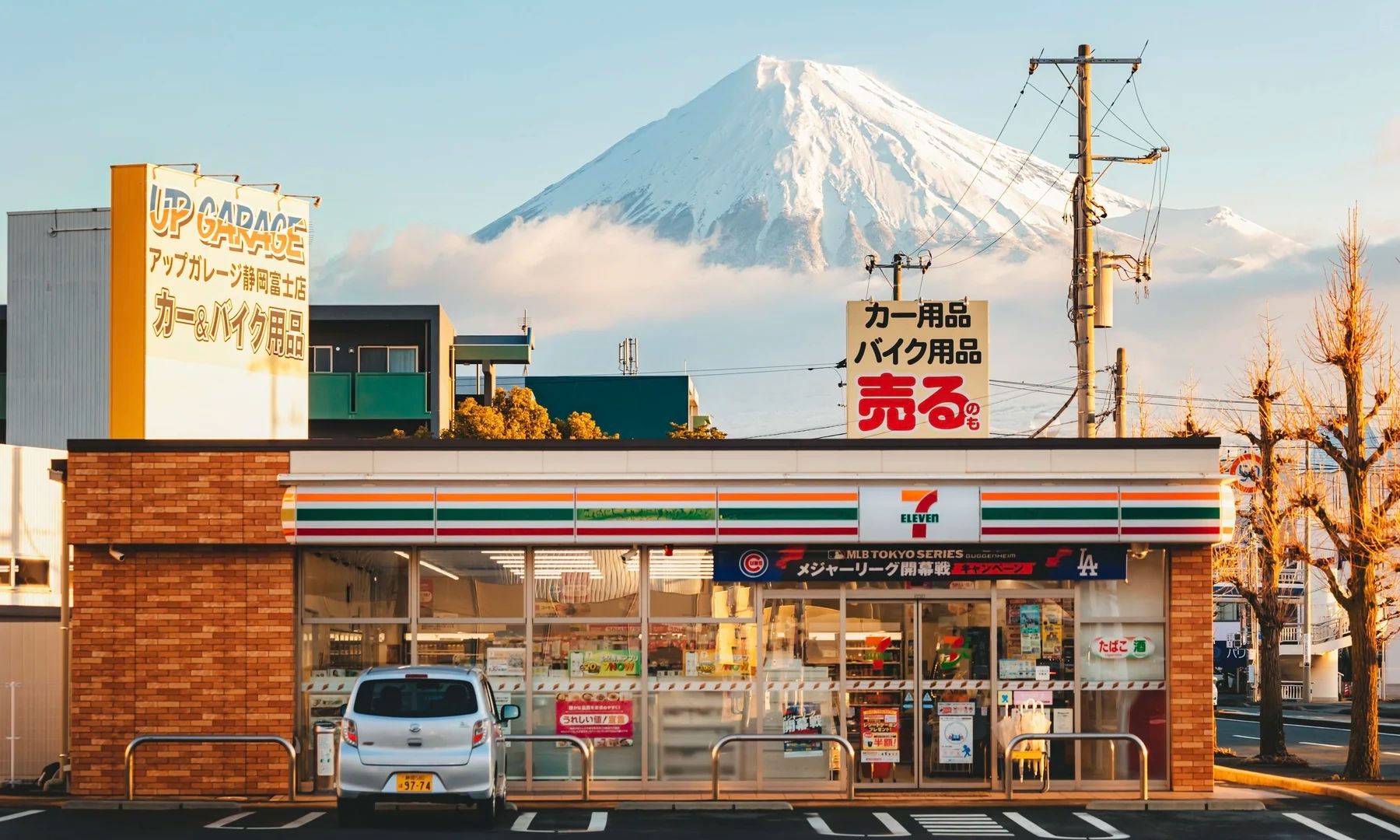
East Marvel · Japan Checked November 10, 2026. Fuji City started this watch in May 1990. The book it publishes runs from 1991 through 2025, thirty-five years. One building, three looks a day, one year at a time. The counts choose a month. They are not a forecast for a morning in 2027, and they are not a promise for Kawaguchiko or Hakone.
Mount Fuji is Japan's symbol. The mornings it stands clear cluster in a few months.
For the whole mountain, put the trip in November through February, sleep at Kawaguchiko, and use the second morning around 8 a.m. From June through August, leave the mountain off the list of reasons to go.
The long book, at 8 a.m.
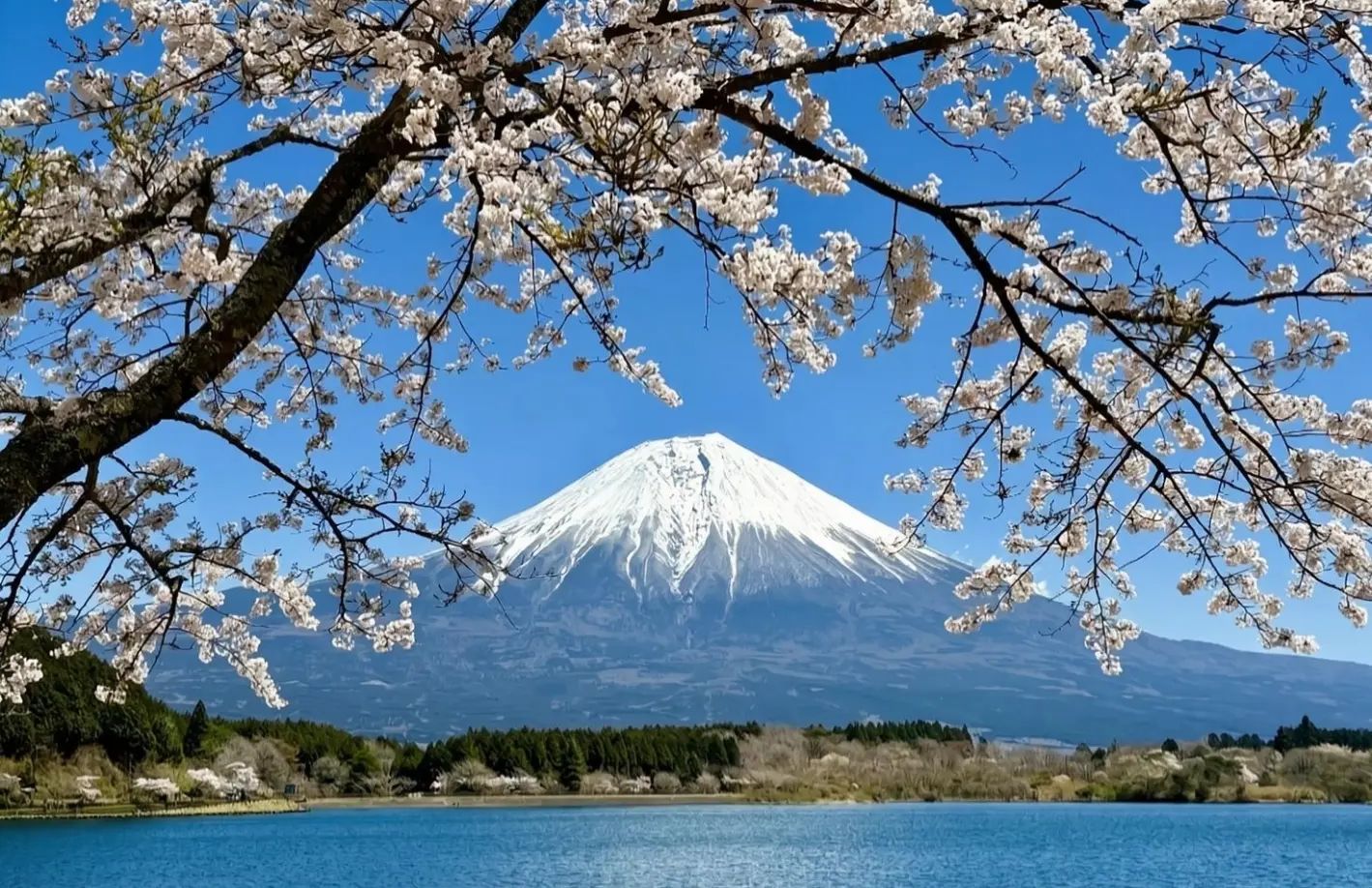
From 1991 through 2025, Fuji City recorded 12,784 mornings. The whole mountain was there on 4,684 of them, 36.6 percent. Whole or part, 58.9 percent. On the other mornings the window showed nothing, about two in five.
The same thirty-five years, the share of mornings with the whole mountain:
January. Whole mountain at 8 a.m.: 60.0%.
February. Whole mountain at 8 a.m.: 52.6%.
March. Whole mountain at 8 a.m.: 40.7%.
April. Whole mountain at 8 a.m.: 36.3%.
May. Whole mountain at 8 a.m.: 30.2%.
June. Whole mountain at 8 a.m.: 12.4%.
July. Whole mountain at 8 a.m.: 9.9%.
August. Whole mountain at 8 a.m.: 14.6%.
September. Whole mountain at 8 a.m.: 27.2%.
October. Whole mountain at 8 a.m.: 41.1%.
November. Whole mountain at 8 a.m.: 53.9%.
December. Whole mountain at 8 a.m.: 61.7%.
December is the high month in the book, then January. July is the low month. In July the mountain was absent at 8 a.m. on 75.4 percent of mornings. June was absent on 66.2 percent, August on 64.4 percent. The city's own line matches the table: more visible days from November through February, fewer from June through August, spring haze from March through May, and a lower share in September, which is typhoon season.
A single year swings around that line. Calendar 2024, a leap year, had the whole mountain on 150 mornings and any part of it on 248. Calendar 2025 had 136 and 231. December 2024 had the whole mountain on 27 of 31 mornings, a high for this record, reported when the city released that year. December 2025 had 19 of 31, 61.3 percent, sitting on the 61.7 percent line. A record December is a year to remember. It is not the plan for 2027.
Where the window is
The watch is Fuji City Hall, on the Shizuoka side, south of the mountain. It was the sixth floor when the environmental office kept it. It is the eighth floor now. Three times a day: 8 a.m., noon, and 4 p.m. A person looking, plus a fixed camera. Three classes: the whole mountain, part of it, nothing. The city says the split is visual, and that it is not an exact cut of the slope.
Kawaguchiko is north of the mountain. Hakone is west, in its own hills. A clear morning in Fuji City says the season often allows the mountain. It does not say the north shore had it that morning.
Across the thirty-five years, the whole mountain shows at 8 a.m. on 36.6 percent of days, at noon on 23.3 percent, and at 4 p.m. on 22.5 percent. The step down is from morning to noon. Noon and 4 p.m. sit close to each other. In 2025 the same shape was 136 mornings, 96 noons, and 91 afternoons. All three clocks caught the whole mountain on 62 days. Most clear mornings do not hold.
There is no 6 a.m. observation in the book. It cannot support "almost cloudless from six to eight." By 8 a.m. the day's best official look has already happened. By noon the mountain is less likely to be there.
2025, morning by morning
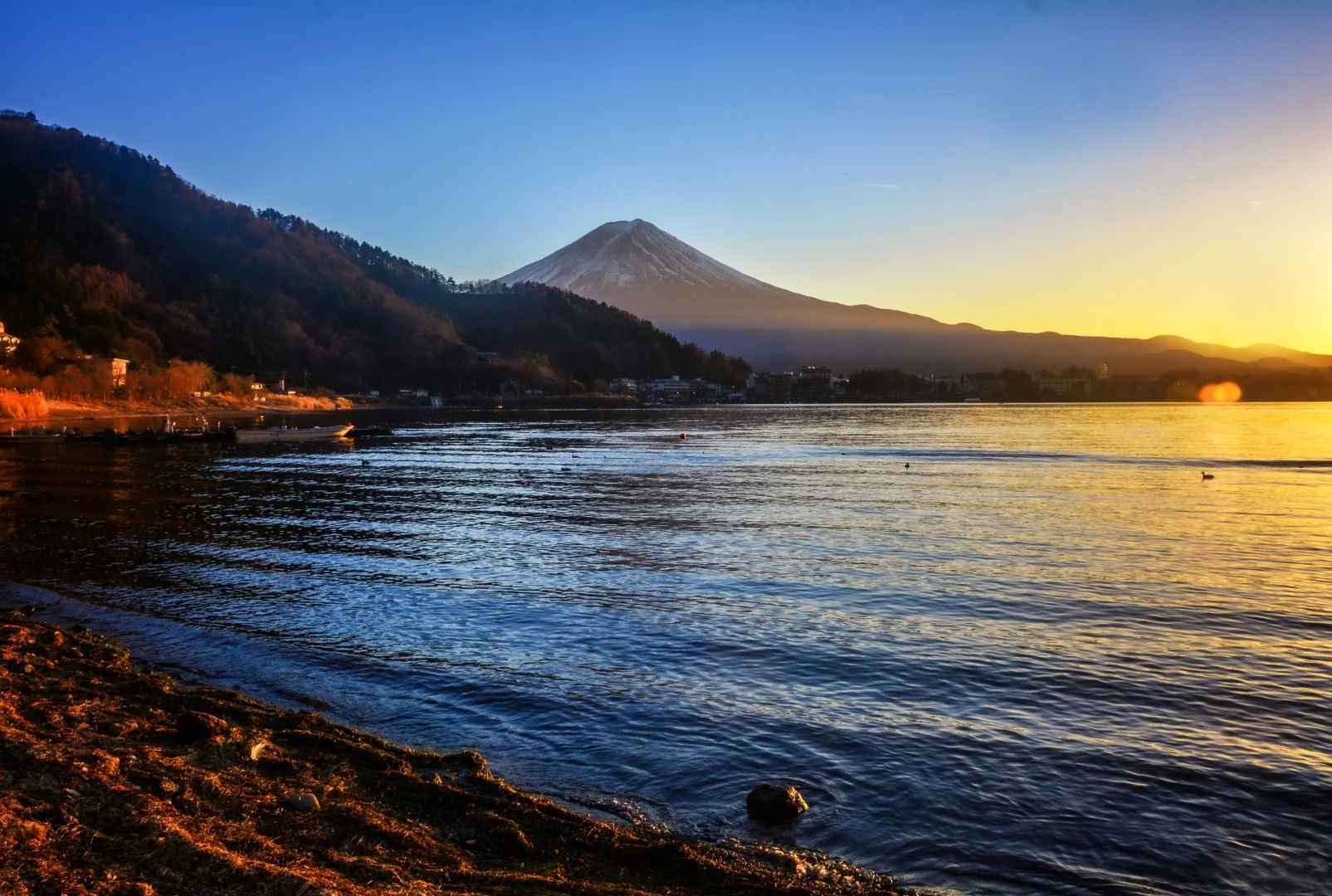
Whole mountain, part of it, nothing, at 8 a.m.
January. Whole / part / none: 19 / 9 / 3.
February. Whole / part / none: 22 / 4 / 2.
March. Whole / part / none: 13 / 7 / 11.
April. Whole / part / none: 9 / 9 / 12.
May. Whole / part / none: 9 / 10 / 12.
June. Whole / part / none: 2 / 9 / 19.
July. Whole / part / none: 5 / 4 / 22.
August. Whole / part / none: 3 / 8 / 20.
September. Whole / part / none: 6 / 11 / 13.
October. Whole / part / none: 10 / 8 / 13.
November. Whole / part / none: 19 / 9 / 2.
December. Whole / part / none: 19 / 7 / 5.
February 2025 had the whole mountain on 22 of 28 mornings, 78.6 percent, well above the 52.6 percent line. June had 2. The next year can reverse either one.
A clear day on the plain is a different count. In August 2025 the city logged 16 clear days and 3 whole-mountain mornings. The city says a clear sky does not mean the mountain is visible. Cloud and fog around the peak can hide it, and over the thirty-five years that gap is widest from June through August.
Using the months
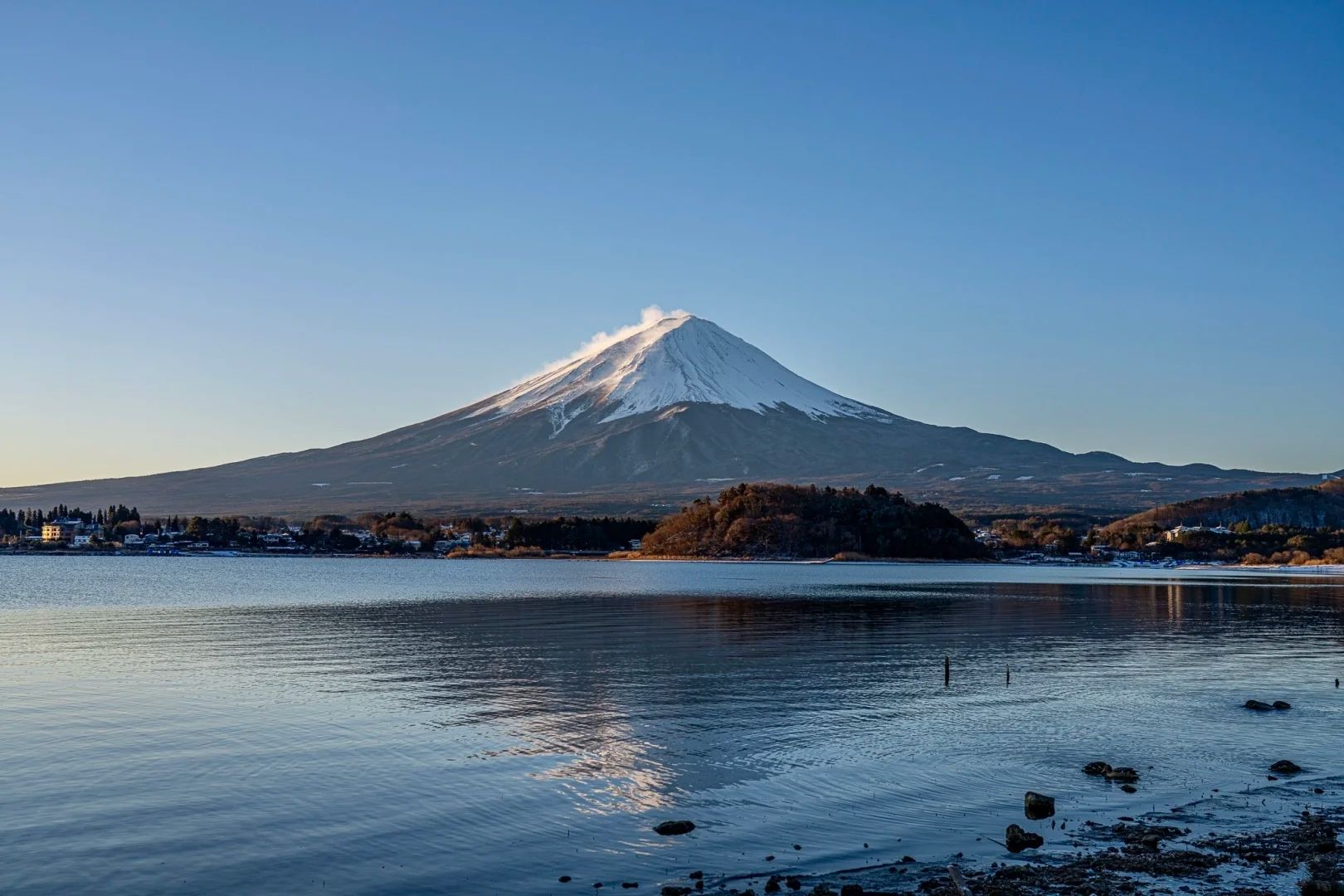
November through February. This is the stretch the long book gives you. If the trip exists for the mountain, put it here, sleep one night, and use the second morning. Expect the baseline, not December 2024.
March. The share steps down from February as the spring haze begins. The whole mountain still shows on a large minority of mornings.
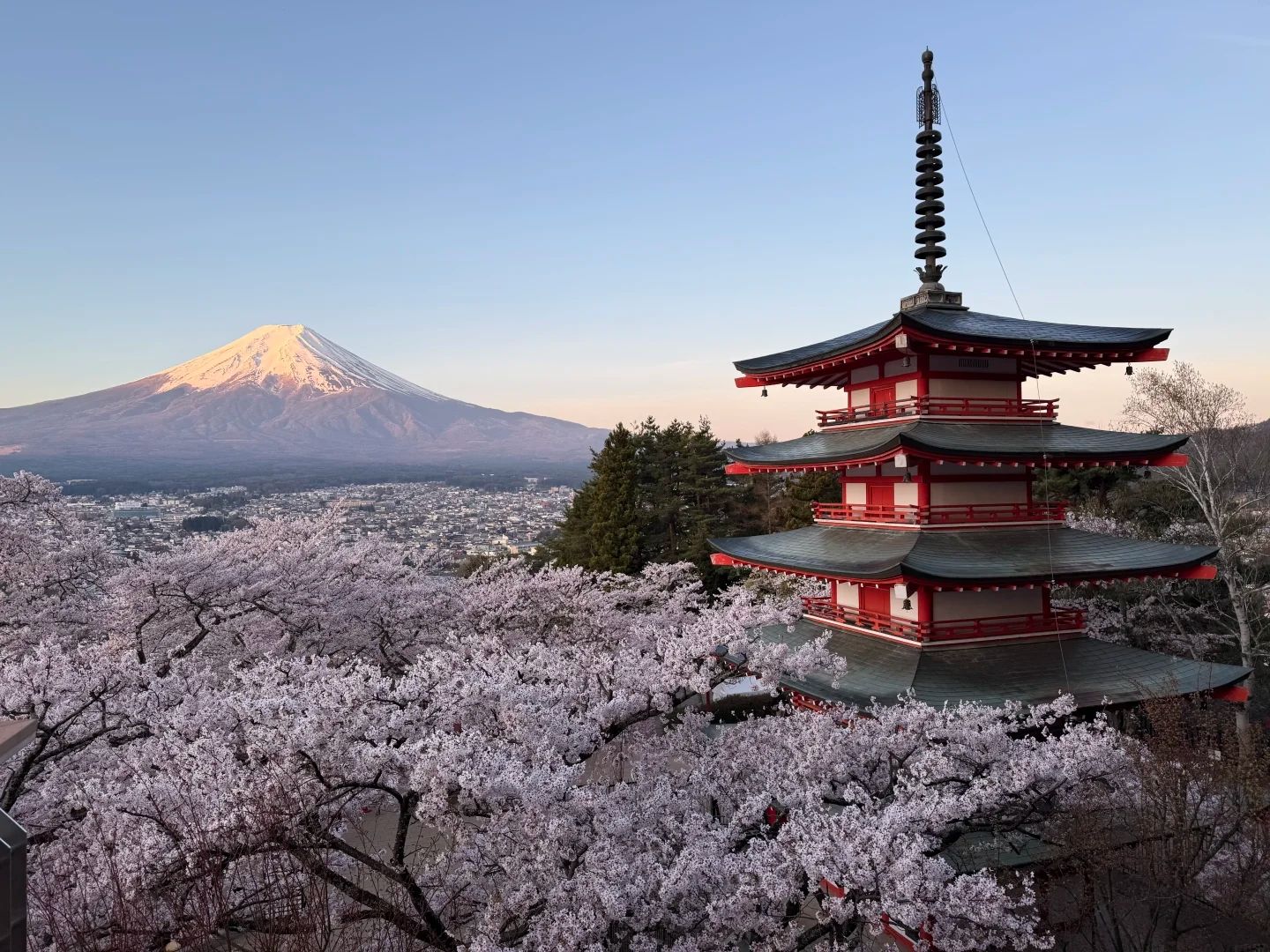
April. In the long book this is an average month, 36.3 percent, close to the 36.6 percent for all mornings. It is also the month when blossoms and the five-story pagoda can share one frame, and 2025 gave that frame 9 mornings. People go to Kawaguchiko for the picture. Sleep by the lake and be at the Arakurayama Sengen Park viewpoint before 9 a.m. If the morning is clear, the mountain is there. April is not Fuji's clearest month.
May. The long book says 30.2 percent. 2025 had 9 mornings.
June through August. The trough. On the 1991–2020 normals, the rainy season begins around June 6 in Tokai and around June 7 in Kanto-Koshin, and both end around July 19. The Agency dates those turns with "around," because the change itself takes about five days. Fuji City sits in Tokai. The lake sits in Kanto-Koshin. August is after that normal end, and the mountain can still be hidden. If the mountain is the reason for the trip, these three months come off the plan.
September. The long book says 27.2 percent. 2025 had 6 mornings. Typhoons are still in season. For the whole of Japan, typhoon approaches on the 1991–2020 normals peak at 3.3 in August and 3.3 in September. That is a national count. Near the mountain the local normals are lower: Tokai 0.8 in August and 1.2 in September, Kanto-Koshin the same pair. September, not August, is the busier of those two months locally.
October. Near the annual average in the long book, 41.1 percent. 2025 had 10 mornings. Better than summer, short of December.
The night, and the side of the mountain
Sleep at Kawaguchiko and go out on the second morning. A same-morning run from Tokyo spends the 8 a.m. hour on the road.
Before you leave the room, look at Fuji City's live camera and at a camera on the lake. The two sides do not have to agree. The camera is that morning's fact.
For the whole mountain, stay on the north shore. Arakurayama Sengen Park is where the mountain and the pagoda fit in one frame. Kawaguchiko has no Shinkansen station. Go to Otsuki first, or to Mishima, then take the Fuji Kyuko line or a bus. Count that leg on its own.
Hakone shows less of the mountain, and its own hills block it more often. The Hakone night is the onsen, the ropeway, and Owakudani. If the mountain appears, that is extra. On a short trip, choose between Hakone or Kawaguchiko; see our Japan tour packages. June through August at Hakone does not clear the peak. Hakone's reason is the bath.
What we can book
The season, the night, and the hour you leave on the second morning. Whether the whole mountain is in the window is decided that morning. 2024's December and 2025's February already show how far a year can stand from the line. 2027 will stand somewhere of its own.
Sources
Checked November 10, 2026.
Fuji City, Record of Mount Fuji Observations, Reiwa 7 report, City Promotion Division. The watch began in May 1990. The published book is 1991 through 2025. City hall, now the eighth floor, earlier the sixth. Three times daily, by eye or a fixed camera, in three classes. The city states that the visual split is not exact.
At 8 a.m. for those thirty-five years: 4,684 whole-mountain mornings out of 12,784, 36.6 percent; whole or part, 58.9 percent. Monthly shares are the city's table, as printed above. July's "nothing" share is 75.4 percent. By clock, the whole mountain is 36.6 percent at 8 a.m., 23.3 percent at noon (2,977 of 12,783), and 22.5 percent at 4 p.m. The city says the mountain gets harder to see as the afternoon goes on.
Calendar 2025 at 8 a.m.: 136 whole, 95 part, 134 none. Noon 96, 4 p.m. 91. All three clocks whole on 62 days, all three blank on 77. August 2025: 16 clear days on the plain, 3 whole-mountain mornings. The city states that a clear sky and a visible mountain do not move together.
Calendar 2024, from the same book's year list: 150 whole, 98 part, 118 none. Shizuoka Shimbun, February 21, 2025, reporting the city's release: the whole mountain at 8 a.m. on 27 December mornings, a high for the record.
Japan Meteorological Agency, 1991–2020 normals. Rainy-season onset around June 6 in Tokai and around June 7 in Kanto-Koshin; both end around July 19. Typhoon approaches to any station in Japan: 3.3 in August and 3.3 in September. Tokai, and Kanto-Koshin excluding the islands: 0.8 in August and 1.2 in September.