Ayutthaya scenery

Ayutthaya Travel Guide for Temples, Noodles & the River

The old royal city sits inside a loop of three rivers, about an hour and a half north of Bangkok. The morning is the brick chedis, lunch is a sweet boat-noodle bowl, and the late light belongs on the prang across the water. Use this guide to plan the island, the temples off it, and which evening you actually want.

01

Ayutthaya Food

The noodle bowl is sweet and dark. The roti is the sweet you eat today. Price a river prawn before it meets the fire.

Boat Noodles

01 — Kuay tiao reua

Boat Noodles

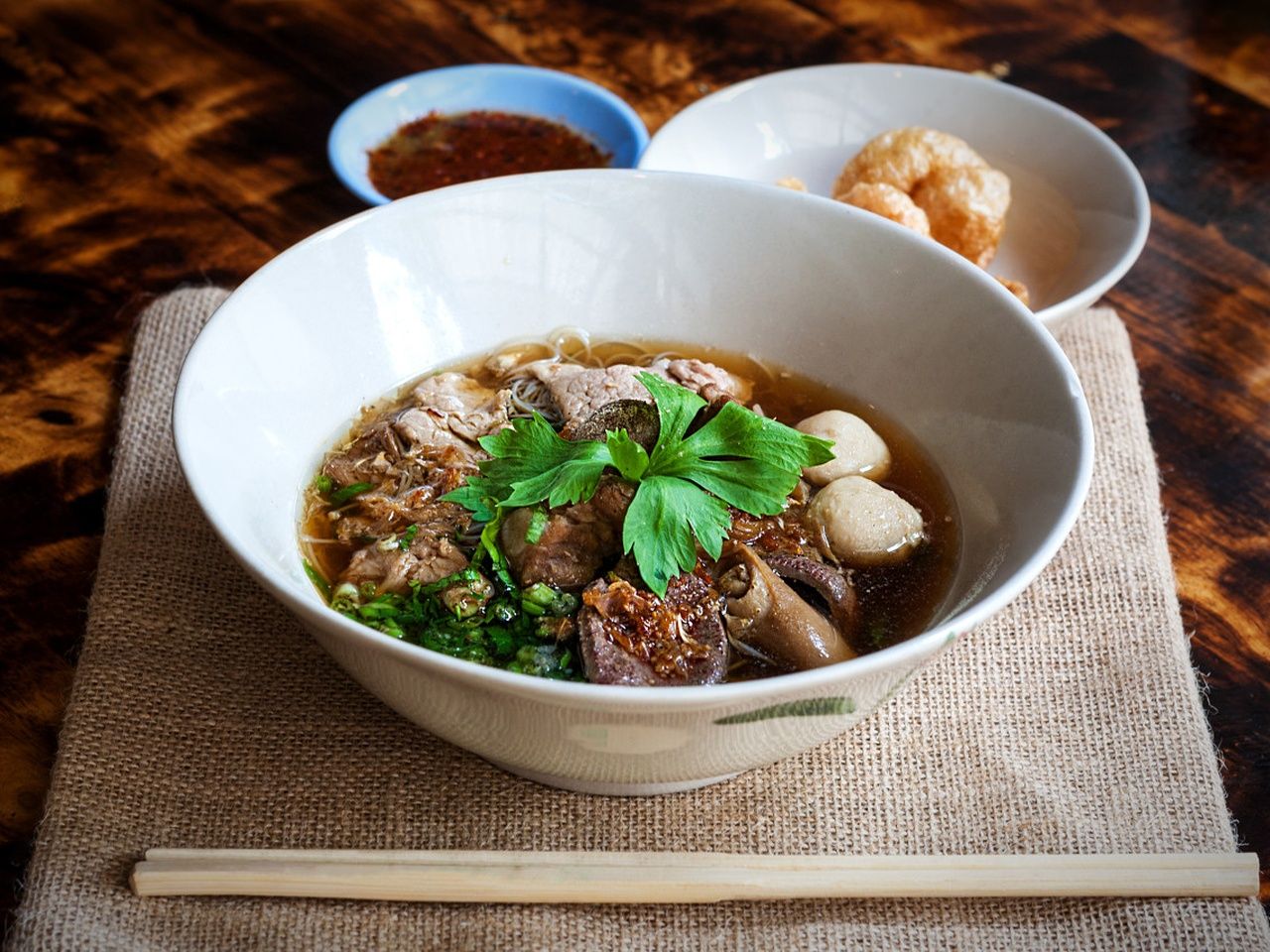
Ayutthaya’s boat noodles are rice noodles in a dark, sweet broth, with pork or beef, morning glory, and bean sprouts. The boats are gone. You eat the bowl in a shophouse. The broth often includes a little blood. Ask them to leave it out if you want. Sugar is part of the bowl. Ask for less if you want it.
Roti Sai Mai

02 — Ayutthaya sweet

Roti Sai Mai

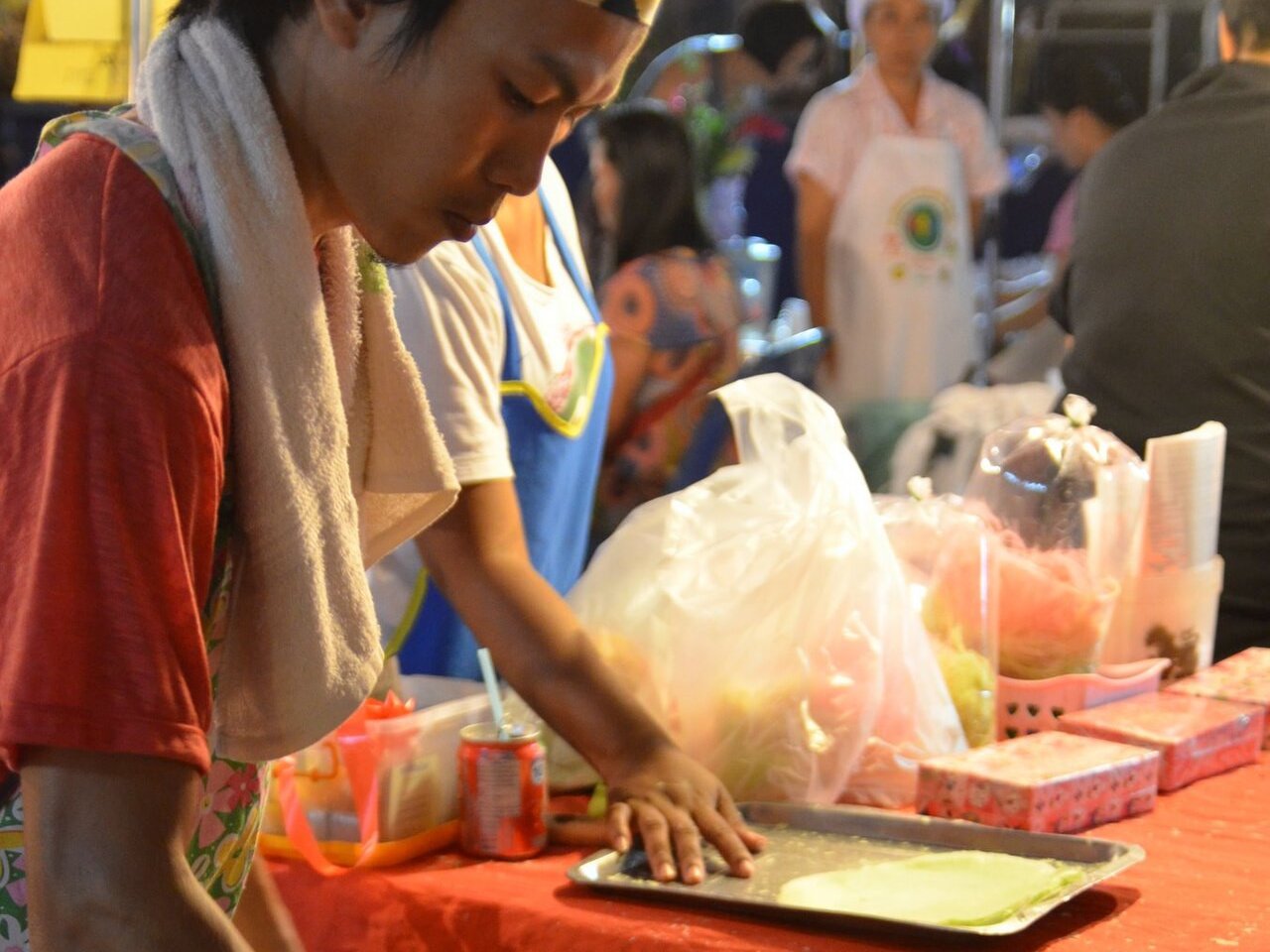
Roti sai mai is a thin crisp roti wrapped around candy floss. Shops sell it along the road beside the historical park. Eat it the day you buy it. The floss melts in a closed bag, and a stack for later is the disappointing way to carry it.

River Prawns

03 — Grilled prawns

River Prawns

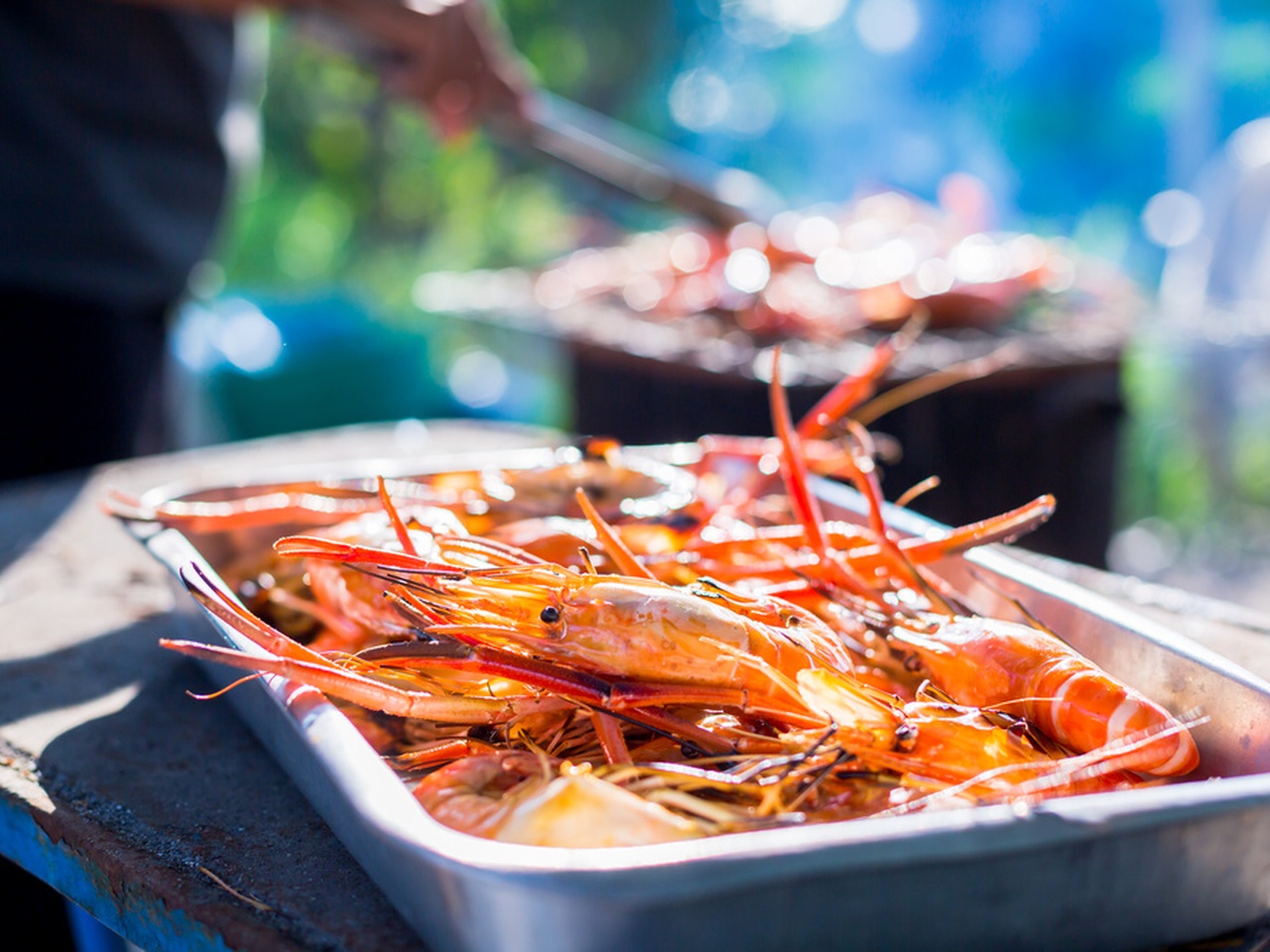
Restaurants along the river grill large freshwater prawns to order. Agree on the price for the size before the prawn goes on the fire. A platter of the biggest ones is the expensive order. If the price is by weight, watch them weigh it.

Bang Lan Night Market

04 — Night market

Bang Lan Night Market

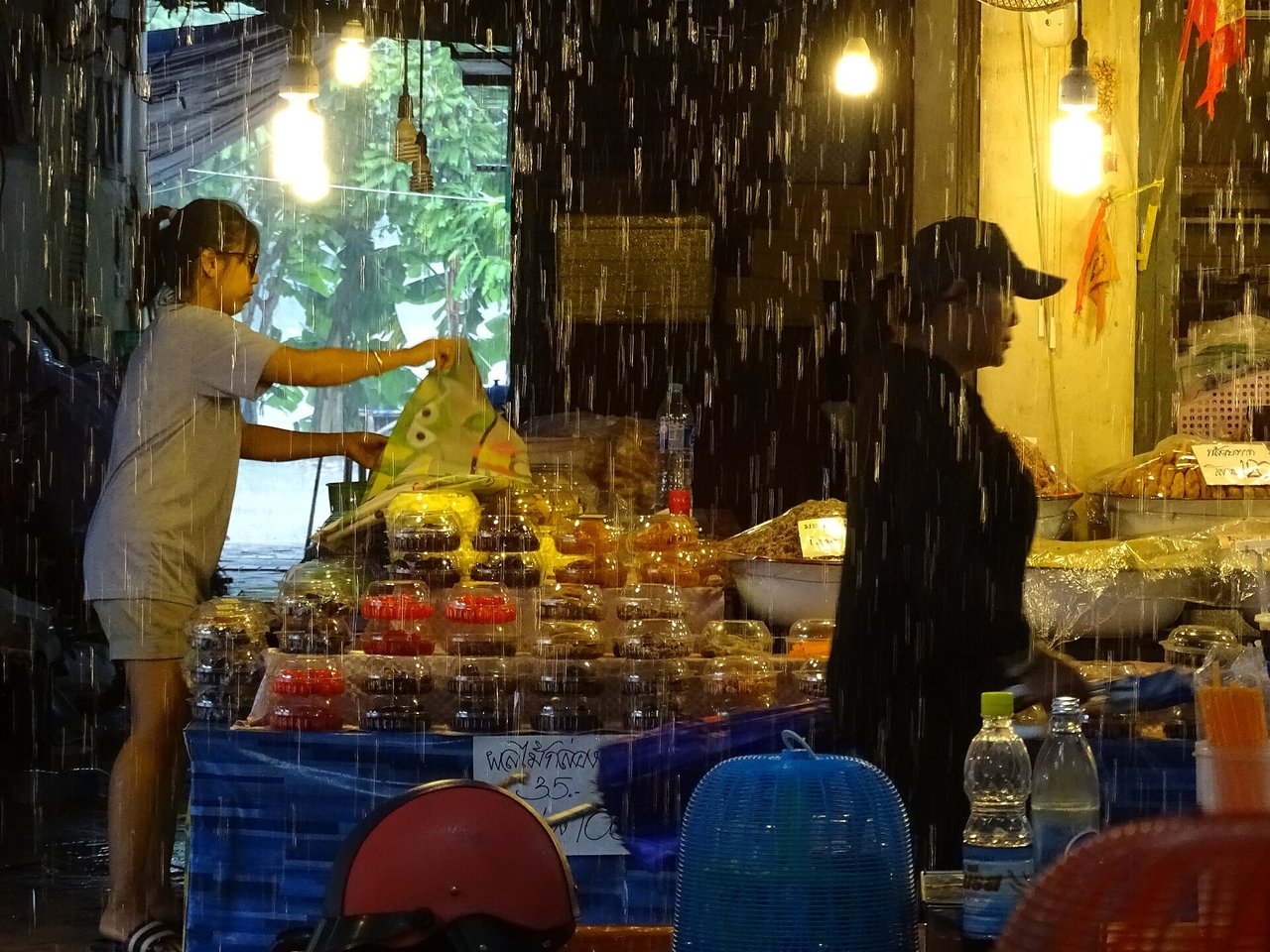
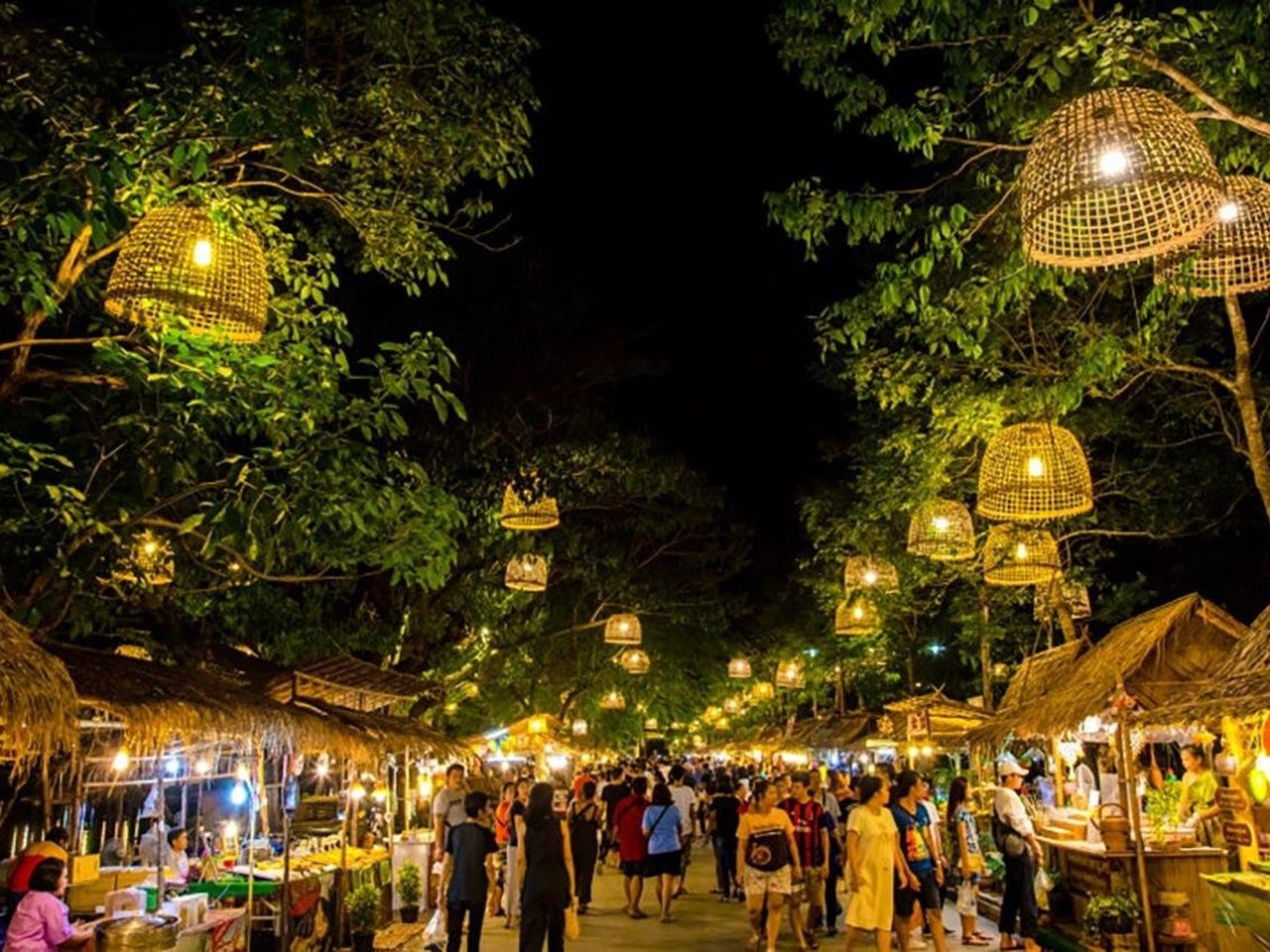
Bang Lan, also written Bang Ian, is the food market a short walk from Wat Mahathat. Stalls set up daily from late afternoon into the evening. Curry over rice, grilled meat, and noodles are the useful dinner after the ruins. Chao Phrom Market, next to it, is the daytime market. Go there in the morning, not after dark.

02

On the Old-City Island

Three rivers make an island. The royal chedis, the Buddha head in the tree, and the prang with a crypt are on that island. Start when the gates open. The brick has almost no shade by midday.

Wat Phra Si Sanphet

Royal chapel · Three chedis

Wat Phra Si Sanphet

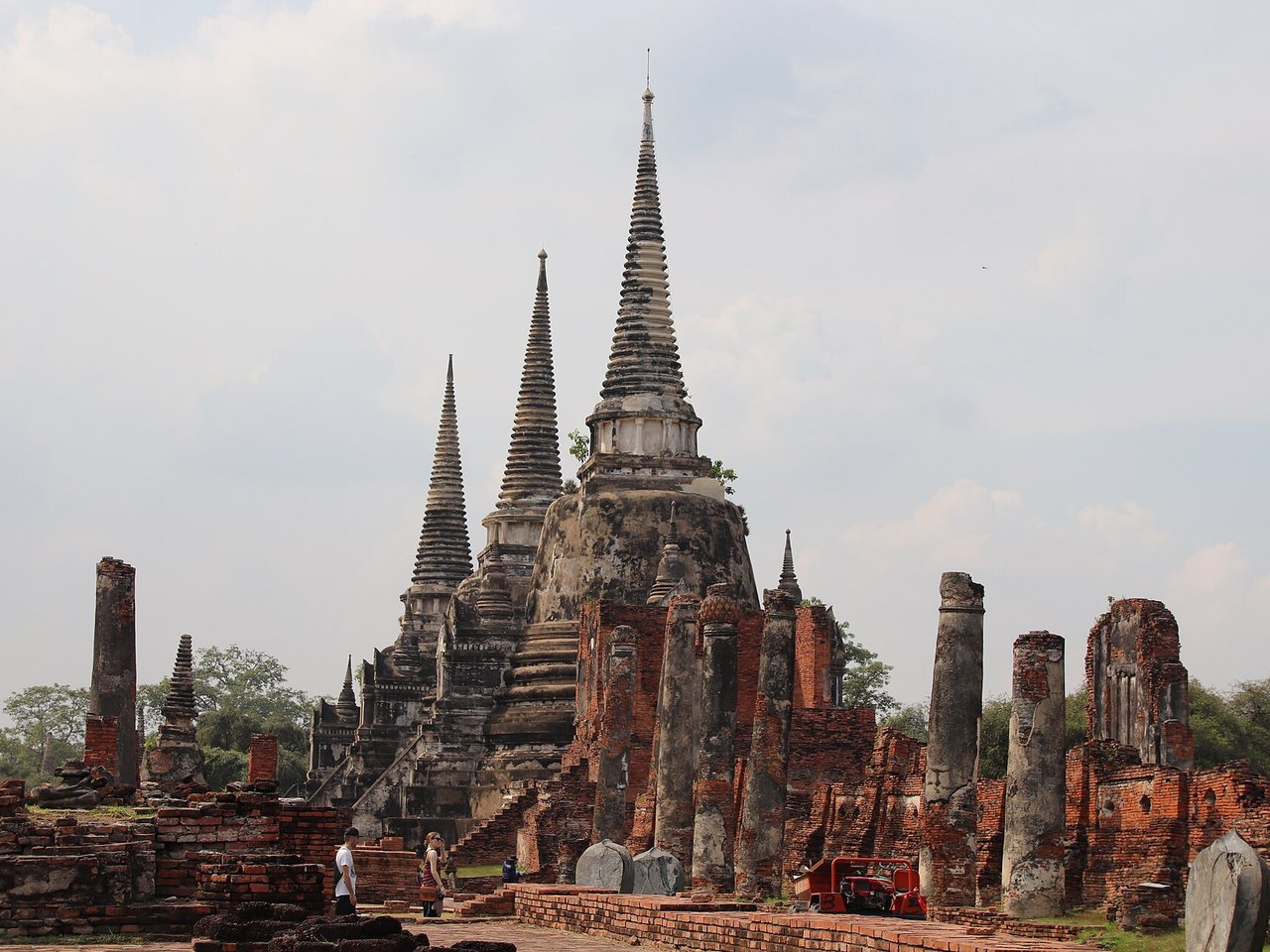
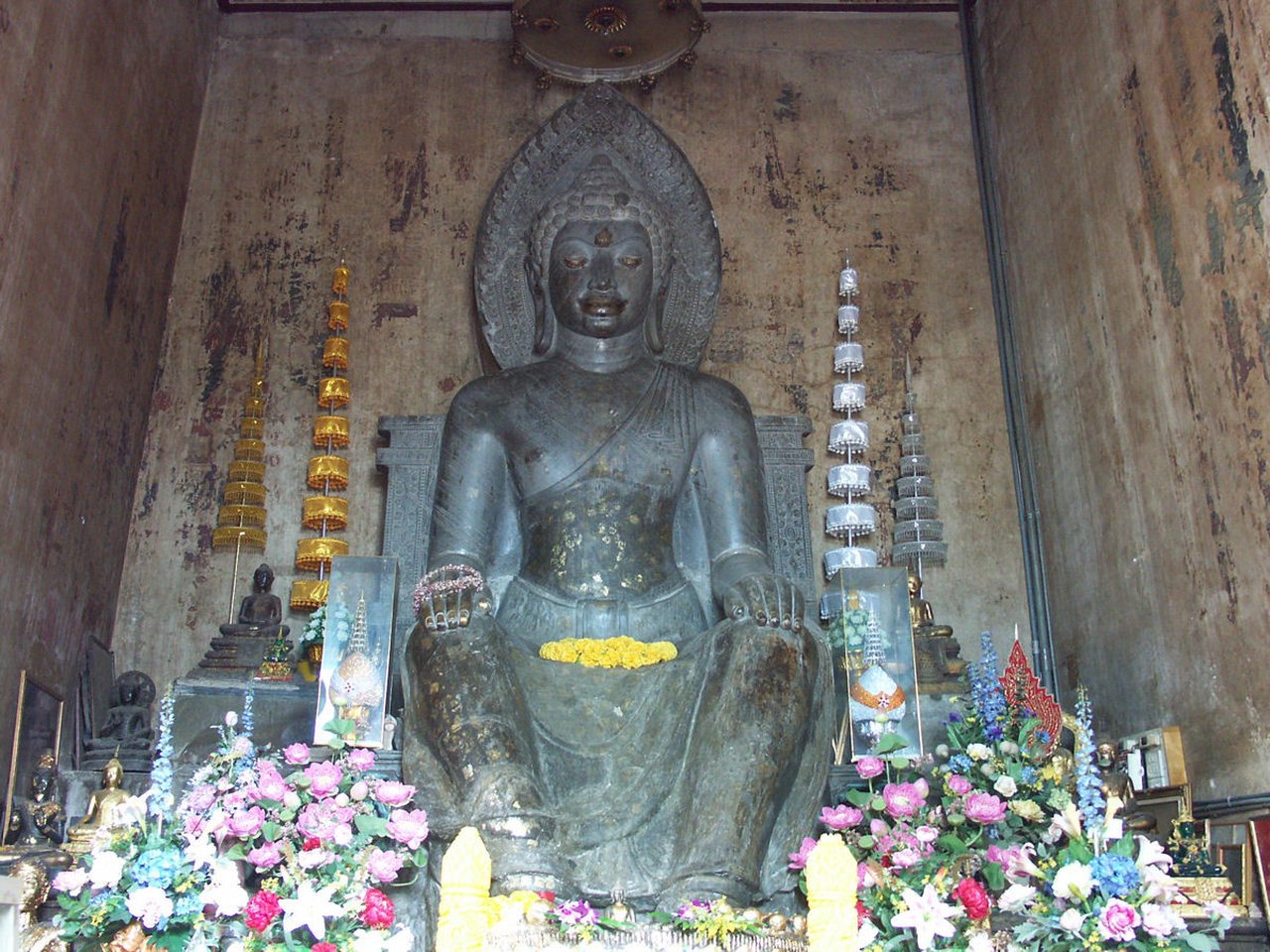
Wat Phra Si Sanphet was the royal chapel beside the palace, not a monastery with resident monks. Three chedis hold the ashes of three Ayutthaya kings. The palace next door is foundations. A gold-covered standing Buddha about 16 metres tall stood here until 1767, when the city fell and the gold was stripped. The bronze was later taken to Bangkok. The chedis you see are restored brick. Come at opening. A large seated bronze sits in the hall next door, Wihan Phra Mongkhon Bophit. That hall is later, and the image was heavily repaired. Cover shoulders and knees if you step inside it.

Wat Mahathat

Buddha head · Tree roots

Wat Mahathat

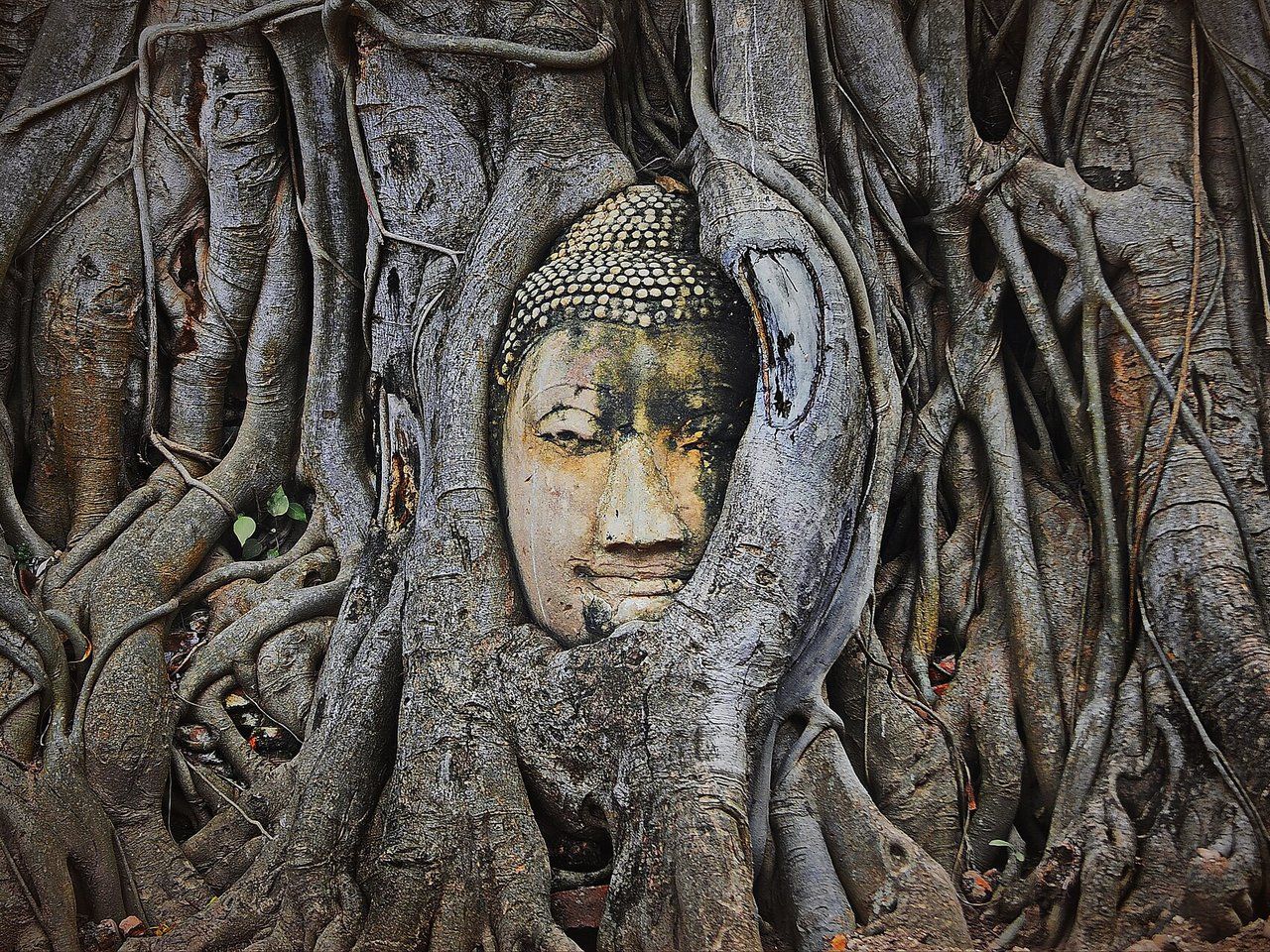
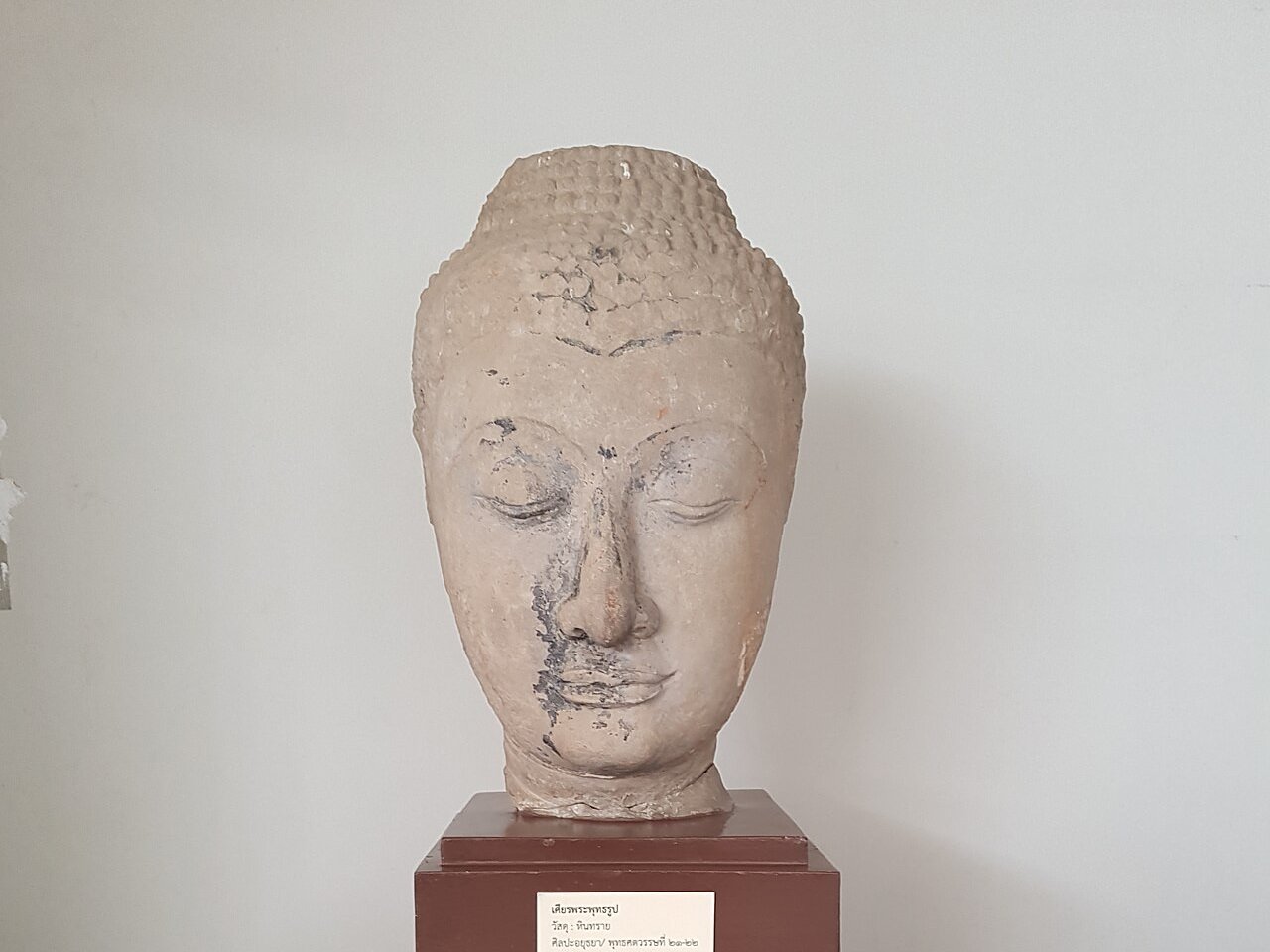
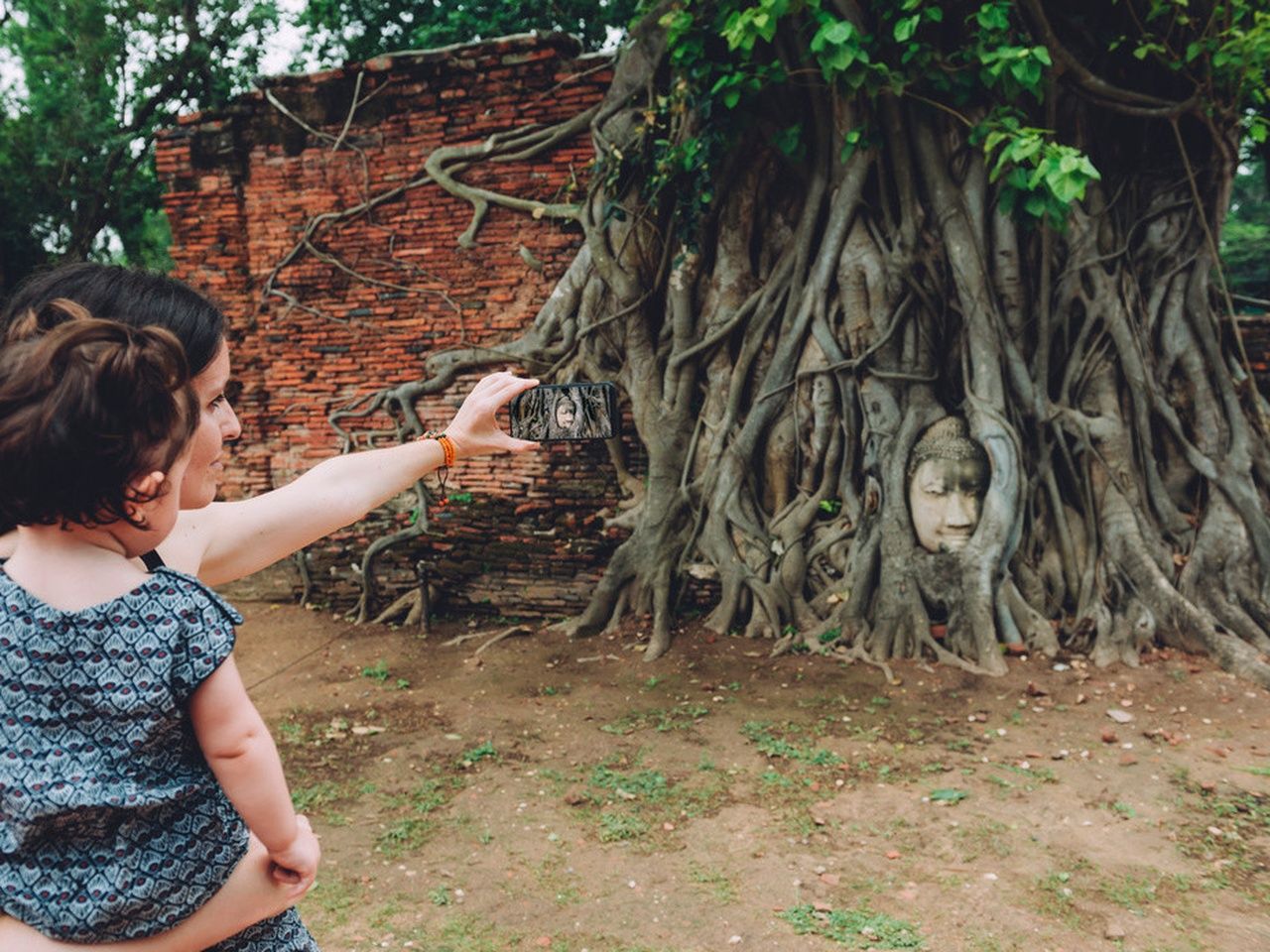
Wat Mahathat is the ruin of the city’s great royal monastery, a short ride from the three chedis. A Buddha head lies in the roots of a bodhi tree. The head fell. The tree grew around it. It was not carved into the trunk. Look from the path. Do not climb on the roots. The main prang is a broken tower, not a complete spire. Morning light is the hour, before the groups fill the courtyard.

Wat Ratchaburana

Prang crypt · Elephant duel

Wat Ratchaburana

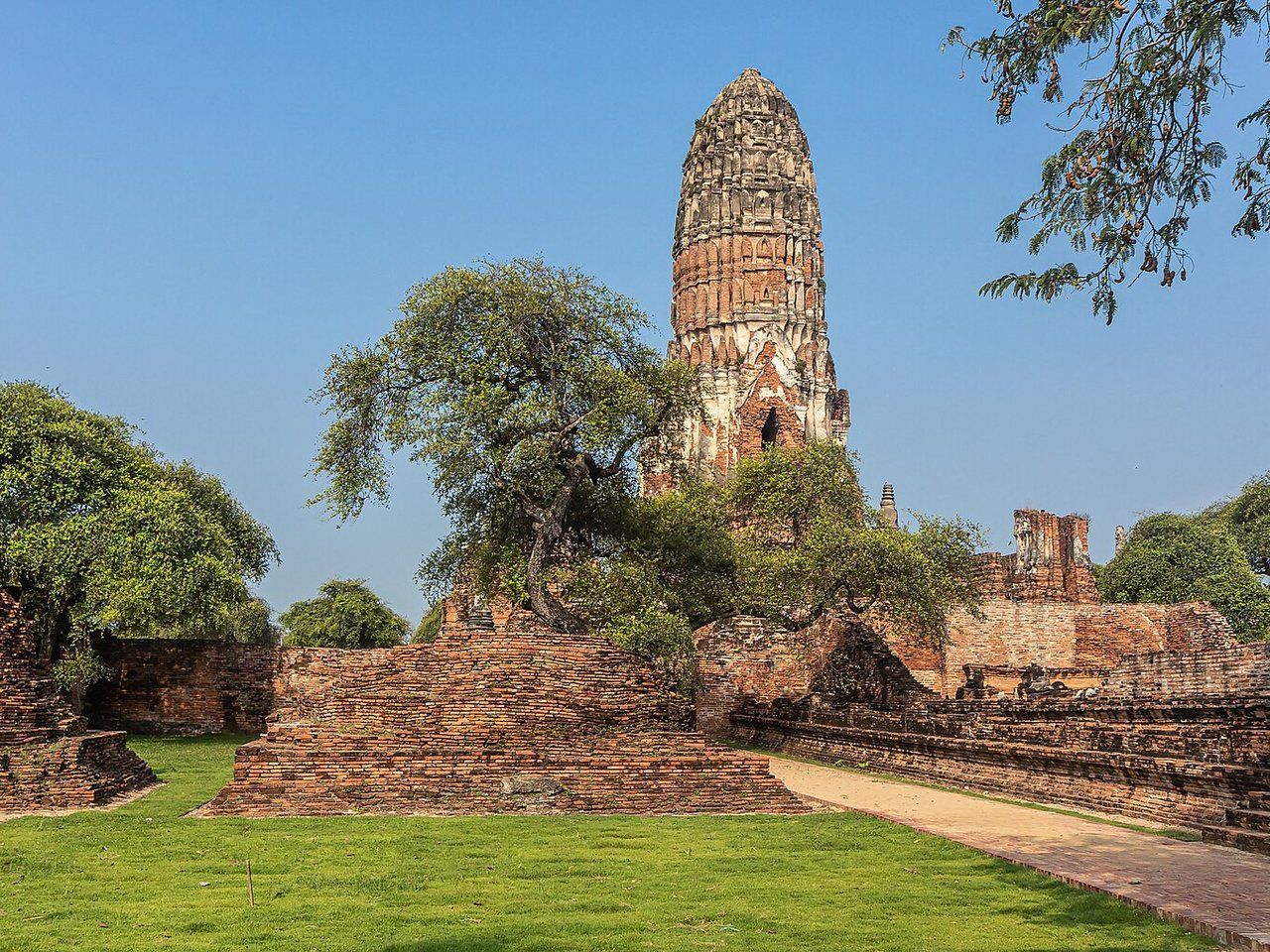
King Borommarachathirat II built Wat Ratchaburana in 1424 on the cremation ground of his two brothers, who died fighting each other on elephant-back. The prang is the stop. A steep stair goes down into the crypt, where early mural paint still sits on the walls. The steps are narrow. Skip the descent if you do not want a dark stair. In 1957 looters broke into the chamber. What the Fine Arts Department recovered, including a large weight of gold, is in the Chao Sam Phraya museum, not in the crypt.

Wat Lokayasutharam

Reclining Buddha · Open air

Wat Lokayasutharam

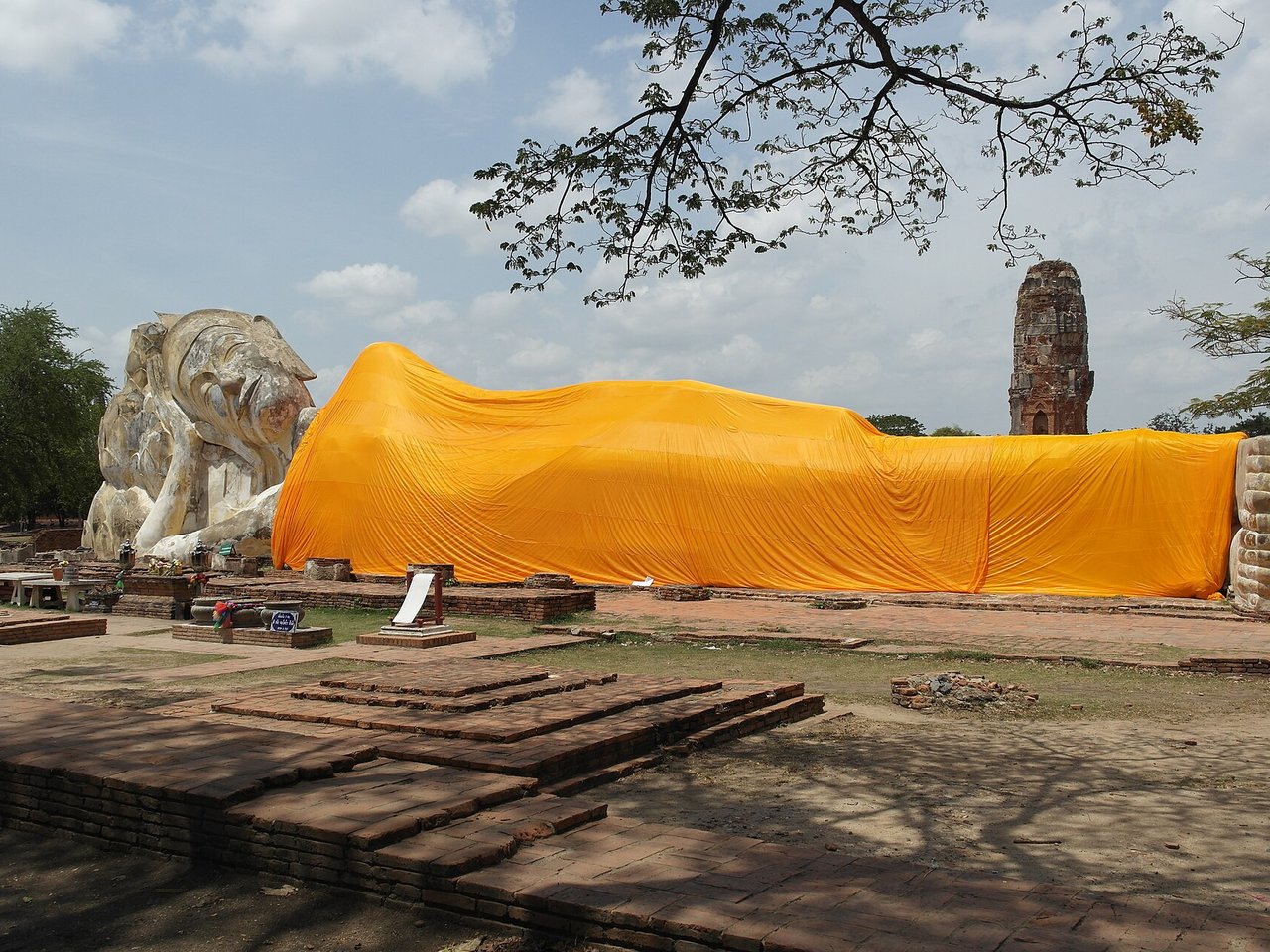
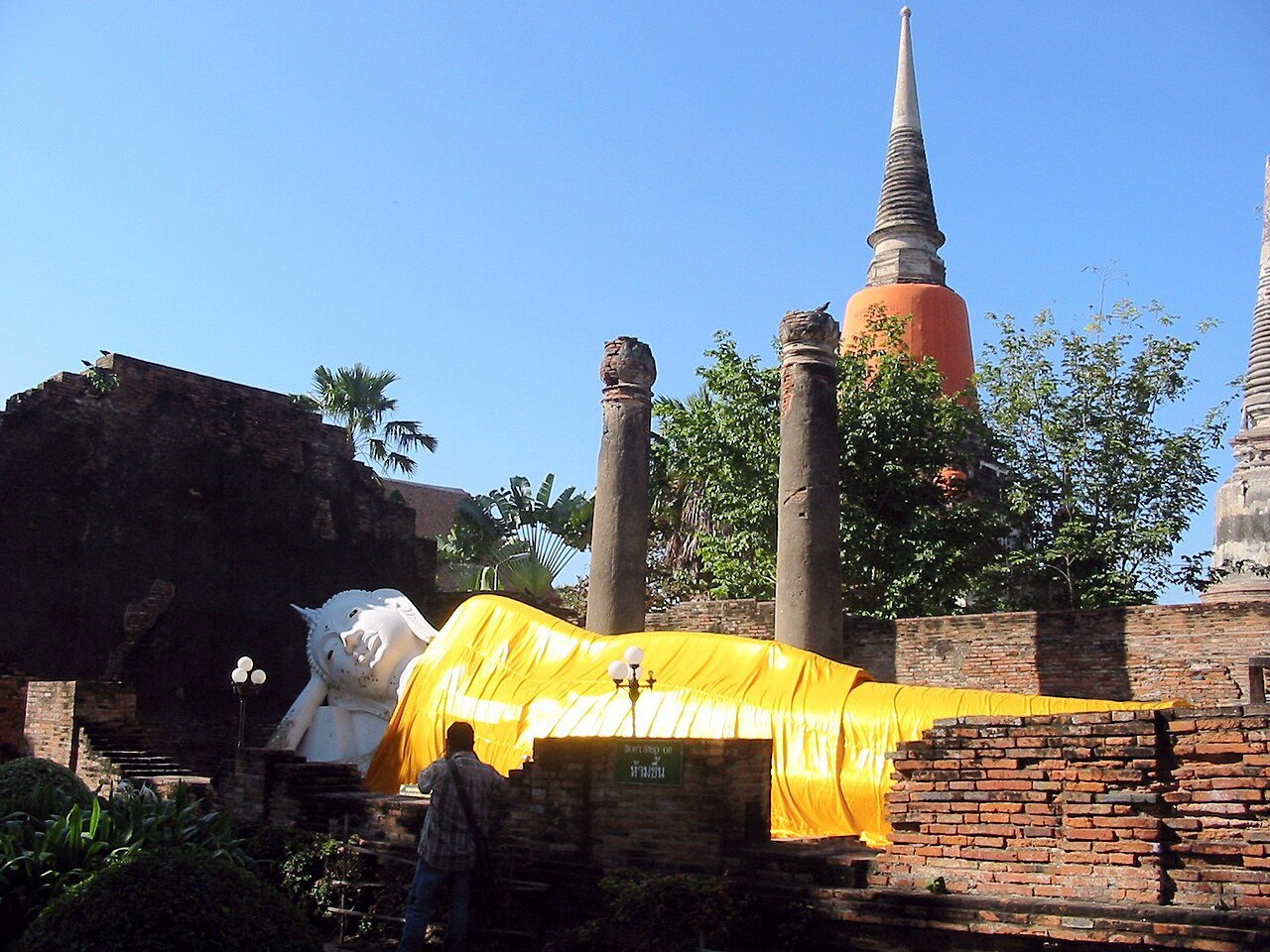
Wat Lokayasutharam keeps a long brick reclining Buddha in the open, on the western side of the island, with no hall over it. It is the quiet stop between the central ruins. Do not confuse it with the white reclining image at Wat Yai Chai Mongkhon, which is across the river and a later figure.

Chao Sam Phraya National Museum

Crypt gold · Midday shade

Chao Sam Phraya National Museum

The Chao Sam Phraya National Museum holds the gold and votive tablets from the Wat Ratchaburana crypt, with Ayutthaya Buddha images in the rooms around them. Use it in the hot hour, when the ruins have no shade. National museums here often close on Monday and Tuesday. Read the door before you count on it.

03

Across the River

These four are outside the old-city island. They do not fit the same morning as the three central ruins and a museum. A bicycle can reach them. A tuk-tuk is the easier loop.

Wat Chaiwatthanaram

Riverside prang · Restored

Wat Chaiwatthanaram

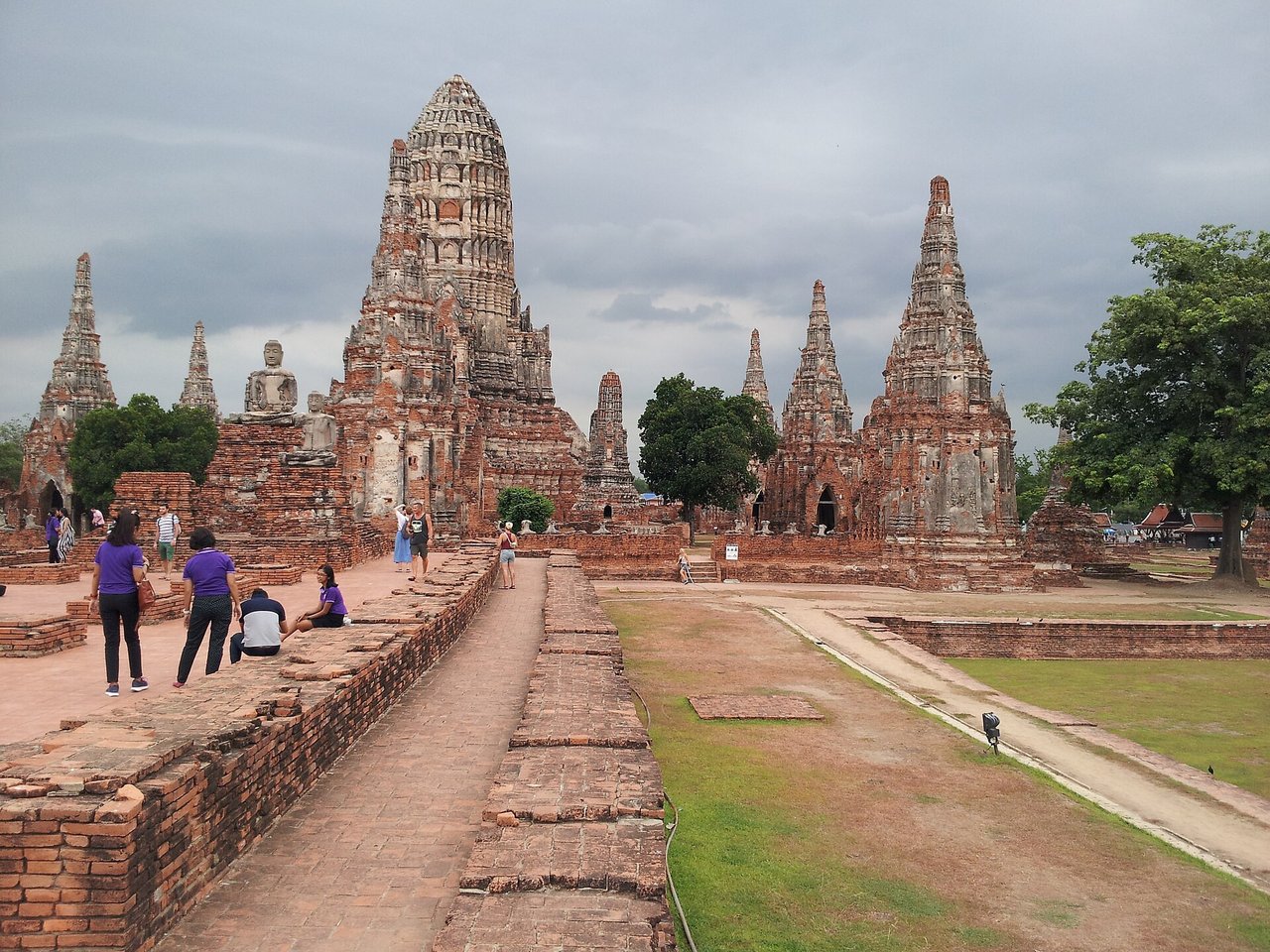
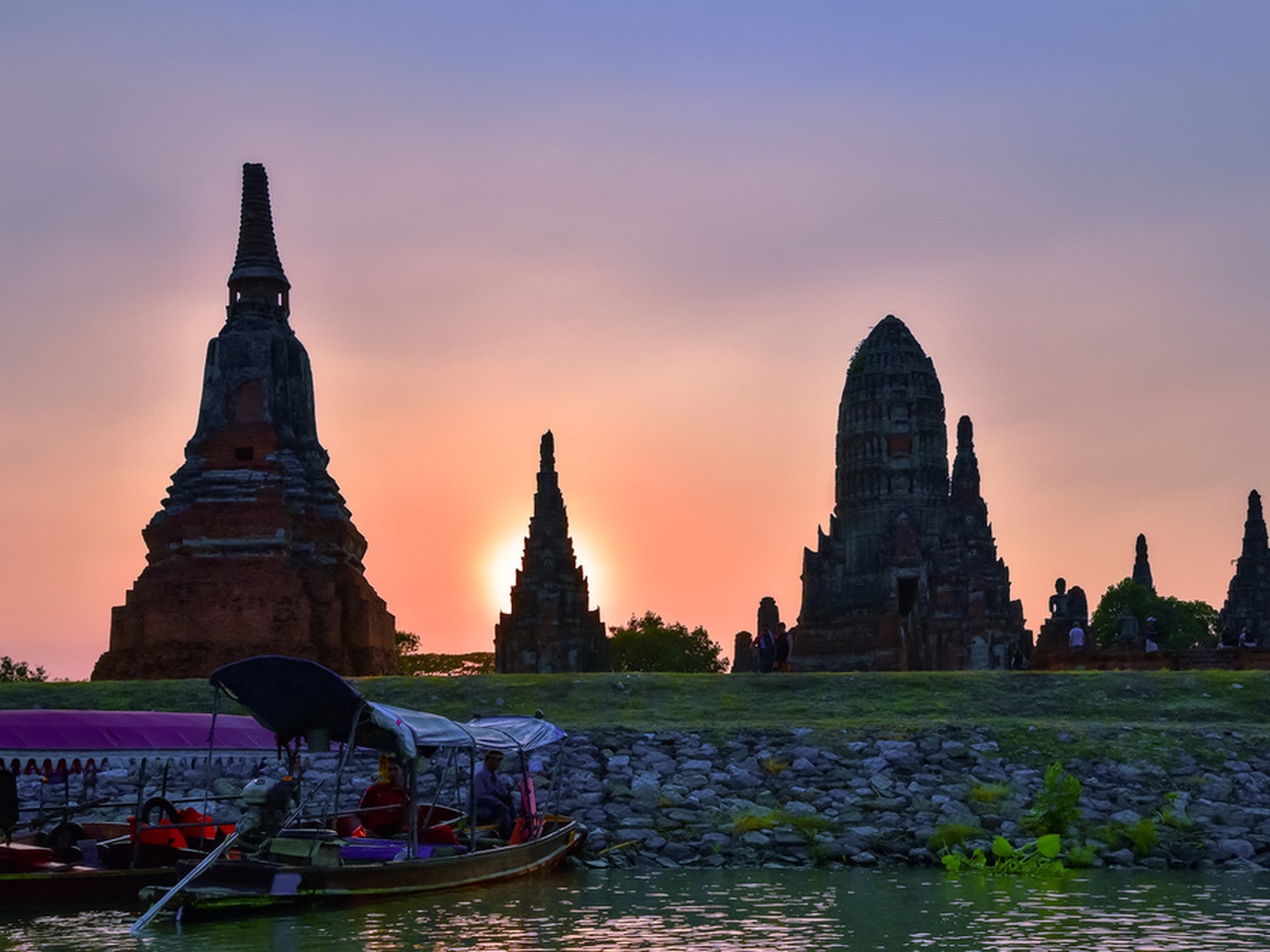
Wat Chaiwatthanaram stands on the west bank of the Chao Phraya, built in 1630 by King Prasat Thong. A central prang and a row of smaller towers follow an older Khmer plan. Much of the stucco was put back by the Fine Arts Department. You are looking at the 1630 layout with a restored surface, not an untouched ruin. Late afternoon is the light. It often sits on the same combined ticket as the central ruins. Pay the list printed at the booth that day.

Wat Phanan Choeng

Working temple · Seated Buddha

Wat Phanan Choeng

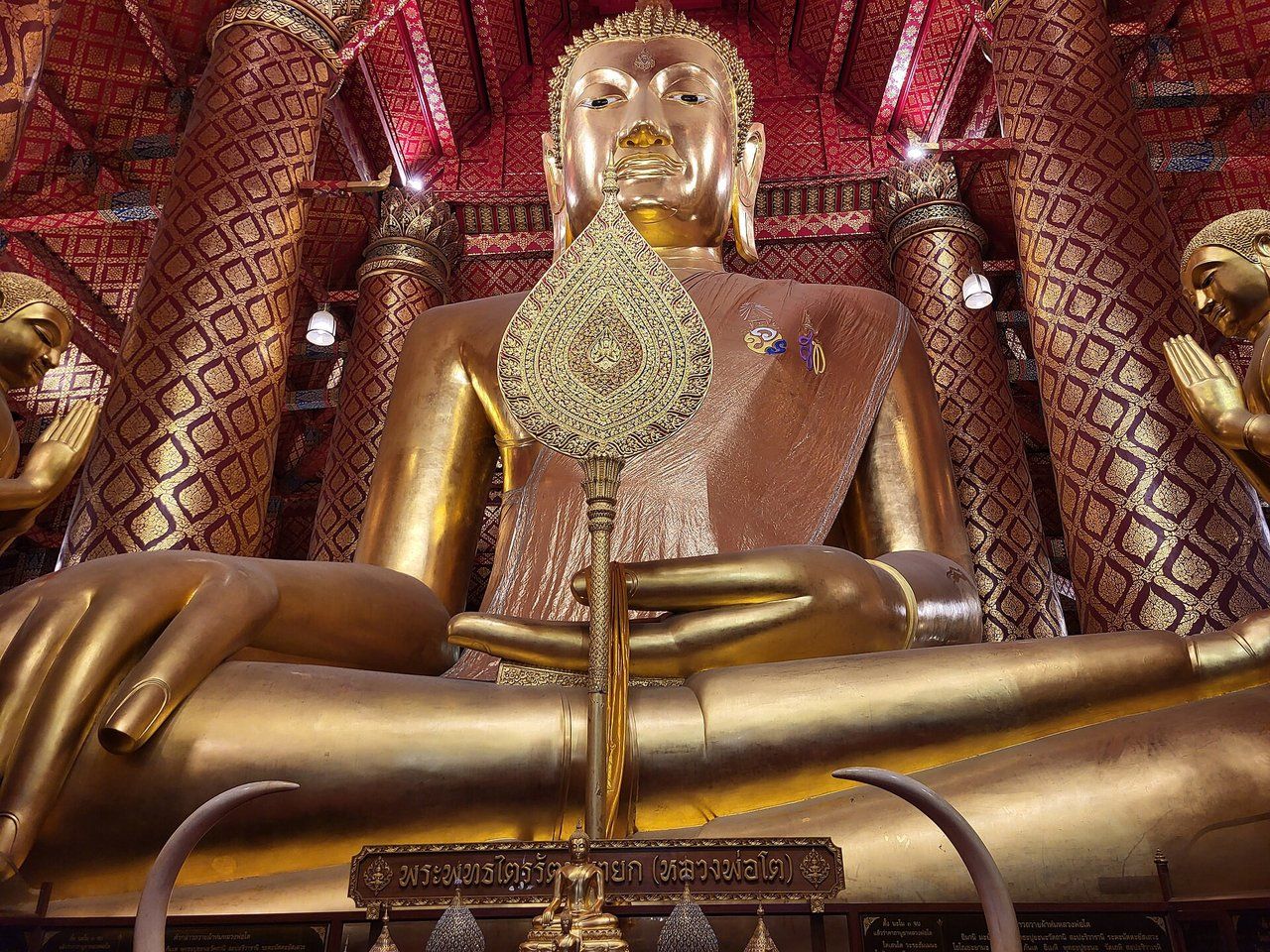
Wat Phanan Choeng is a working temple on the east bank, older than most of the island ruins. Luang Pho Tho, a seated Buddha about 19 metres tall, fills the hall. People come to make offerings, not to photograph an empty ruin. Cover shoulders and knees. It is not on the ruin ticket. Give it time of its own rather than a stop squeezed off a boat.

Wat Yai Chai Mongkhon

Great chedi · East of the river

Wat Yai Chai Mongkhon

Wat Yai Chai Mongkhon was built up after King Naresuan’s elephant-back victory in 1593. The big chedi is the reason to come, and you can climb it when the stair is open. A white reclining Buddha in the courtyard is a later image. This is not the brick reclining Buddha on the island. Cover shoulders and knees. The temple sells its own ticket.

Wat Na Phra Men

Survived 1767 · Crowned Buddha

Wat Na Phra Men

Wat Na Phra Men sits on the north bank, opposite the old palace. Burmese troops used it as a camp in 1767, which is why the hall still stands. The main Buddha wears a crown and royal dress. In the smaller hall, a stone Buddha from the Dvaravati period sits with both feet on the floor, older than Ayutthaya itself. Cover shoulders and knees. Ask at the door whether this stop is on your ruin ticket. Many days it is not.

04

Ayutthaya After Dark

A Boat from Hua Ro

Longtail · Late afternoon

A Boat from Hua Ro

Longtail boats leave from the pier at Hua Ro, on the northeast corner of the island. The usual late-afternoon run passes riverside temples and spends the last light at Wat Chaiwatthanaram. Agree on the price, and on which temples the boat actually stops at, before you board. A shared boat keeps the stops short. Hire your own boat if you want longer at one temple. Listings disagree on the fare, so pay the figure agreed at the pier.

Hua Ro Market

Riverside stalls · Local dinner

Hua Ro Market

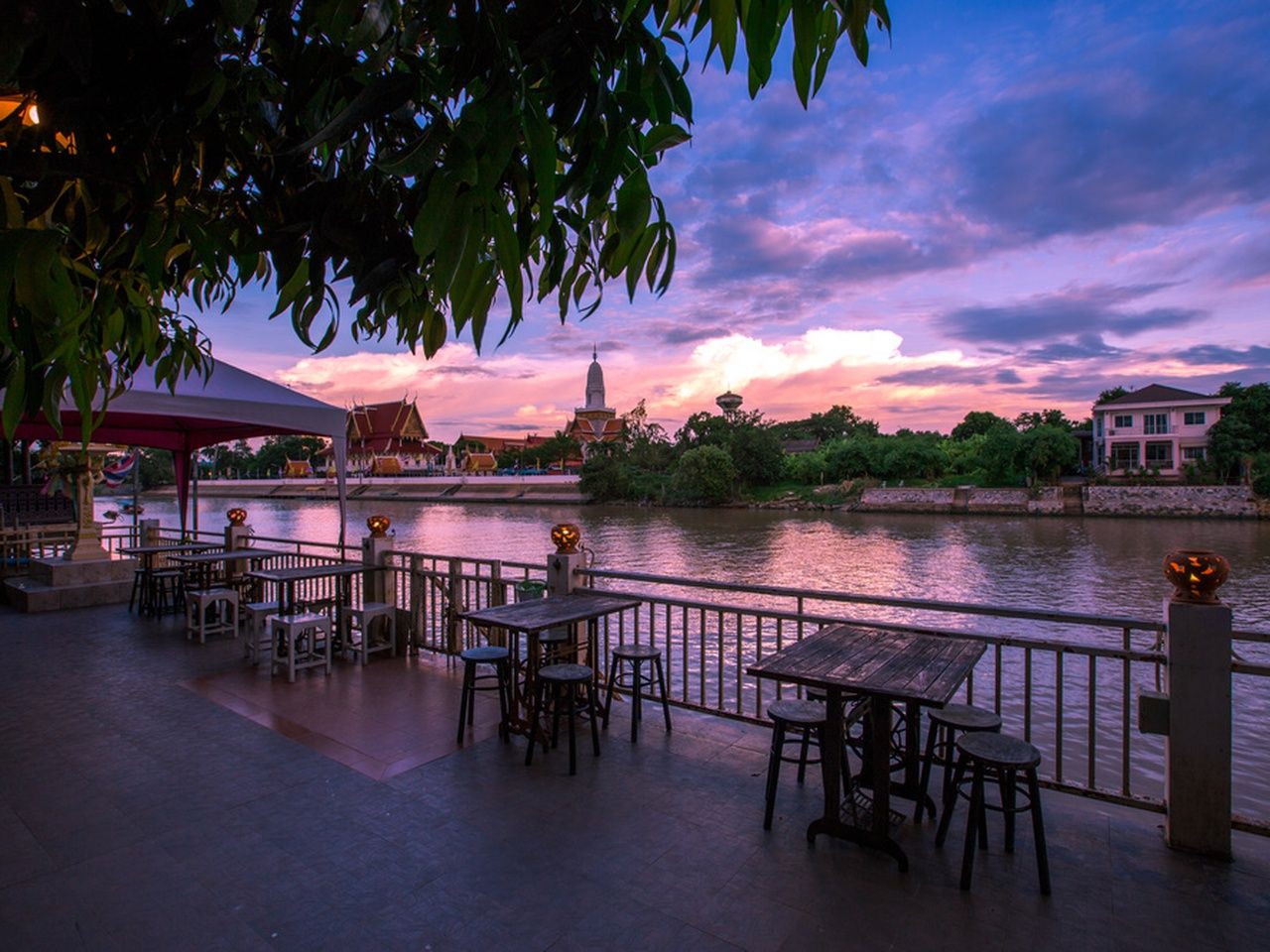
Hua Ro market is the smaller evening row by the river, at the northeast corner of the island. It is not Bang Lan. Eat here when you want a table by the water after the boat, or instead of the ride. Stalls are fewer than at Bang Lan. Come before the row thins out.

Krungsri Weekend Market

Friday to Sunday · Near the palace

Krungsri Weekend Market

A weekend market sets up near Wat Phra Si Sanphet on Friday, Saturday, and Sunday evenings, with food, cloth, and small crafts. Those are the nights the listings agree on. On other evenings, eat at Bang Lan or Hua Ro. This is not a night market that runs all week.

The ruins close before a real night out. Dinner is a market. The river is the evening that needs a clock.

05

The Shape of the Day

One morning belongs to the island. The palace downstream takes a different half day. Lopburi is a different city to the north, and it does not fit either.

Bicycle the Island

Bicycle · Flat island

Bicycle the Island

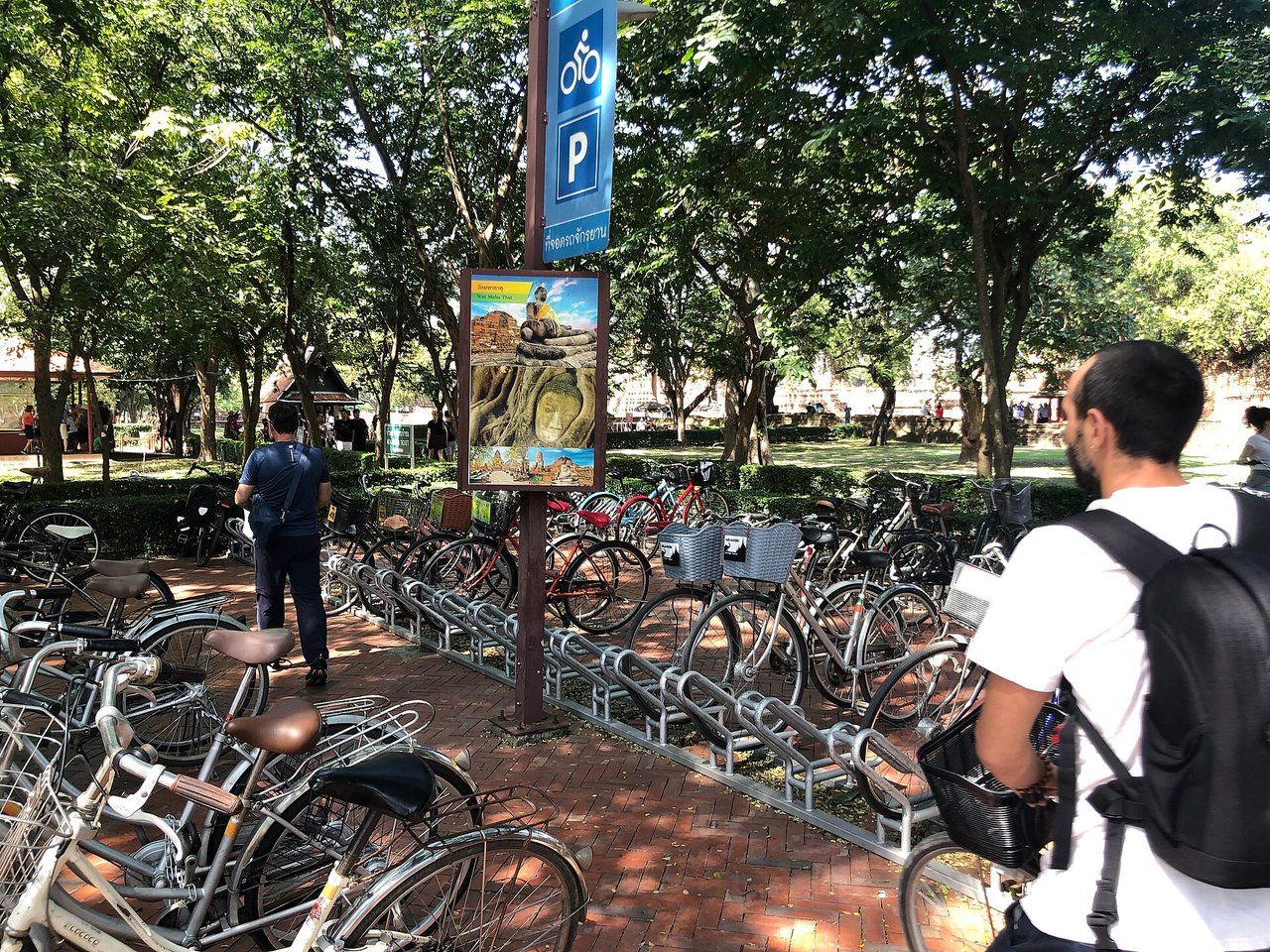
The old city is flat, and a bicycle is the way through it. One morning fits Wat Phra Si Sanphet, Wat Mahathat, and Wat Ratchaburana if you start at opening and carry water. Rent the bicycle on the island. The train station is east of the river, outside the walls, so do not expect to walk off the platform into the ruins. Each Fine Arts ruin has a ticket window, and a combined ticket covers a set of them. Pay the figure on that morning’s board. Wat Phra Ram is a smaller ruin on that same circuit if the morning is still cool. The temples across the river are a second loop.

Bang Pa-In Palace

Summer palace · Later buildings

Bang Pa-In Palace

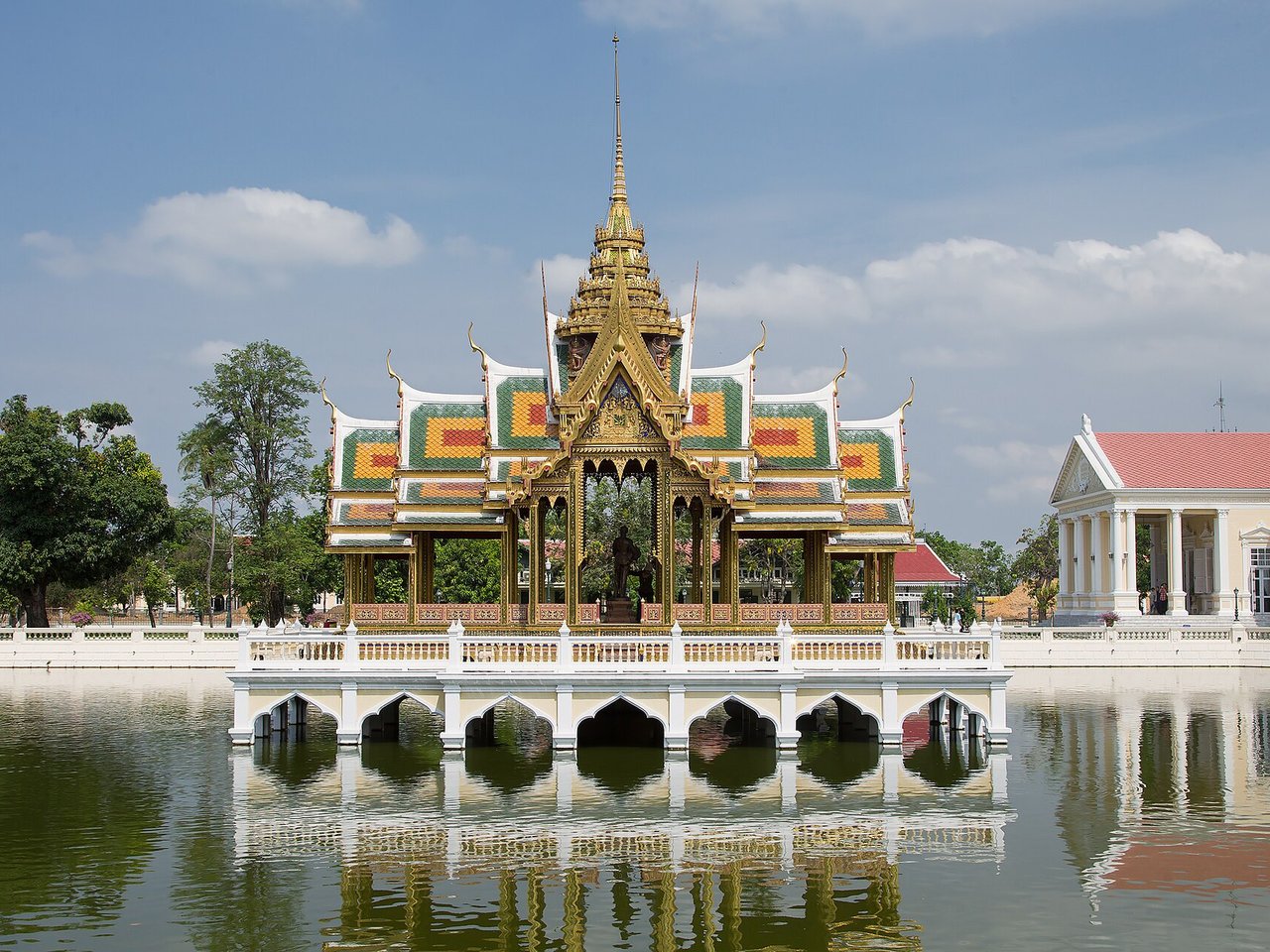
Bang Pa-In lies about 20 kilometers south of the old city. Kings kept a retreat here in the Ayutthaya period. What you walk through today is the summer palace rebuilt in the reigns of Rama IV and Rama V: a Thai pavilion over the water, a Chinese residence, and European halls. It is not a ruin of the 1767 city. Cover shoulders and knees. Give it a half day of its own. It does not share a morning with the three chedis. The ticketed floating market on this road is a built attraction. It is not an old market of the royal city.

A Tuk-Tuk off the Island

Tuk-tuk · Second loop

A Tuk-Tuk off the Island

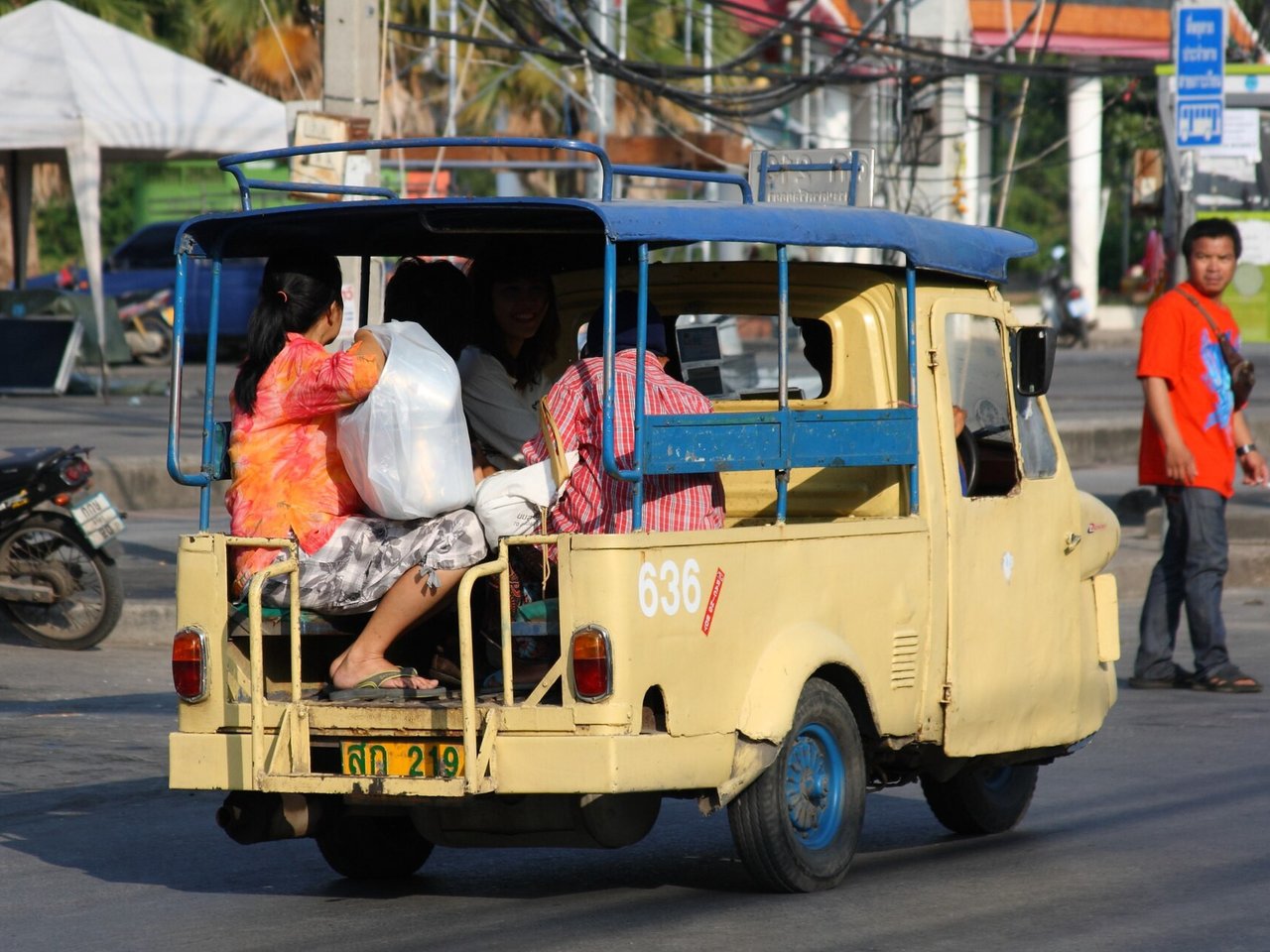
The temples outside the walls do not fit the bicycle morning. Wat Chaiwatthanaram is on the west bank, Wat Na Phra Men is on the north bank, and Wat Phanan Choeng and Wat Yai Chai Mongkhon sit east of the old city. Hire a tuk-tuk for that loop. Agree on the temples and the price before you sit down. A boat from Hua Ro is the short, late version of the west bank, not an extra stop on the same afternoon. Bang Pa-In stays a separate half day.

Want Ayutthaya in your outline?

Tell us your month and nights. We’ll place this destination where it actually fits.

Contact us