An East Marvel guide. Updated November 2026.
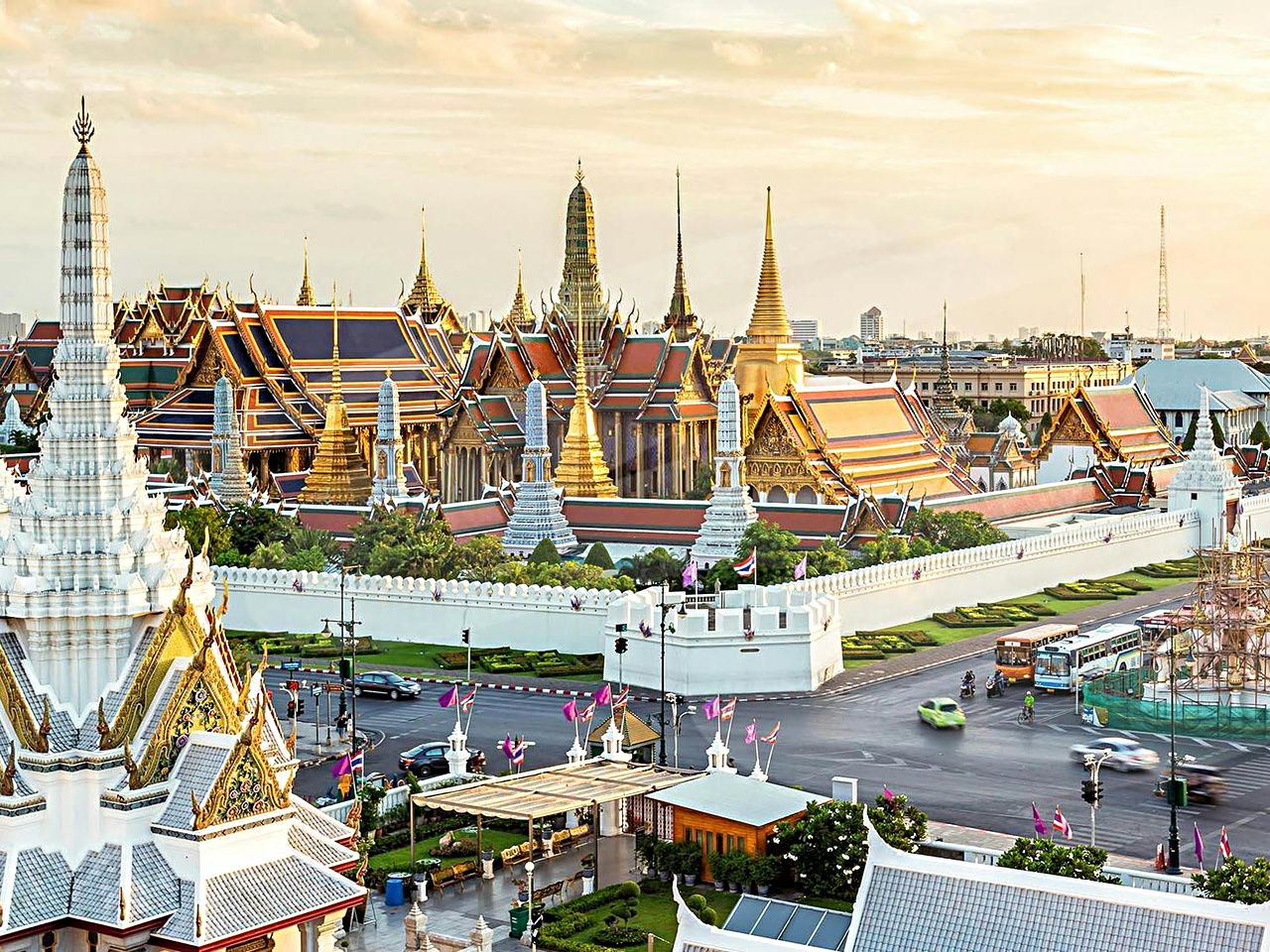
November to February is the window we try to book first. You can stand in the Grand Palace courtyards through the morning and still want a night market after dinner. If those months are already full, the choice is April's heat or a heavy afternoon shower. Thailand runs all year. The same palace feels different in February and in April.
The Bangkok figures are Thai Meteorological Department normals for the Bangkok Metropolis station, 1991–2020. A single week can sit either side of them.
November to February
Daytime highs sit around 32–34°C. Nights fall to about 23–25°C, and December is the coolest, with a normal low of 23°C. Rain in these four months runs from about 12 mm in December to about 45 mm in November. December has one or two rainy days. November has about five.
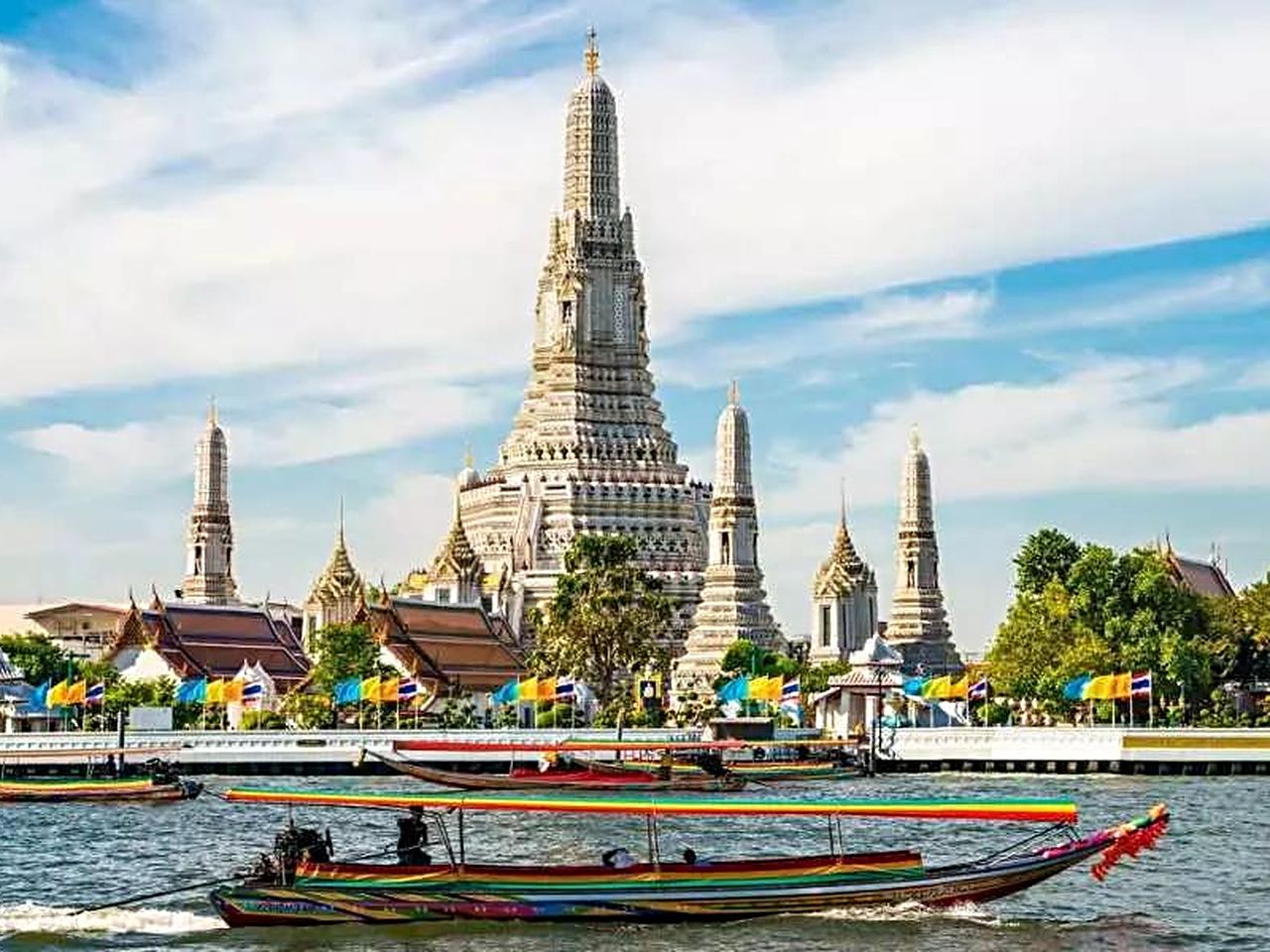
That gap between afternoon and evening is why this window comes first. You walk Wat Pho, the Grand Palace, and Wat Arun in the morning, eat lunch with an appetite, and still go out after dark. On a longtail across the Chao Phraya, the river wind takes the edge off the sun.
This is also the crowded, expensive window. Loy Krathong, Christmas, and New Year sit inside it. Riverside rooms, and rooms beside a BTS station, are the ones that go first.
Choose the hotel before the day-by-day. A room on the river or on the BTS is a morning at the palace. A room off those lines is a morning in traffic.
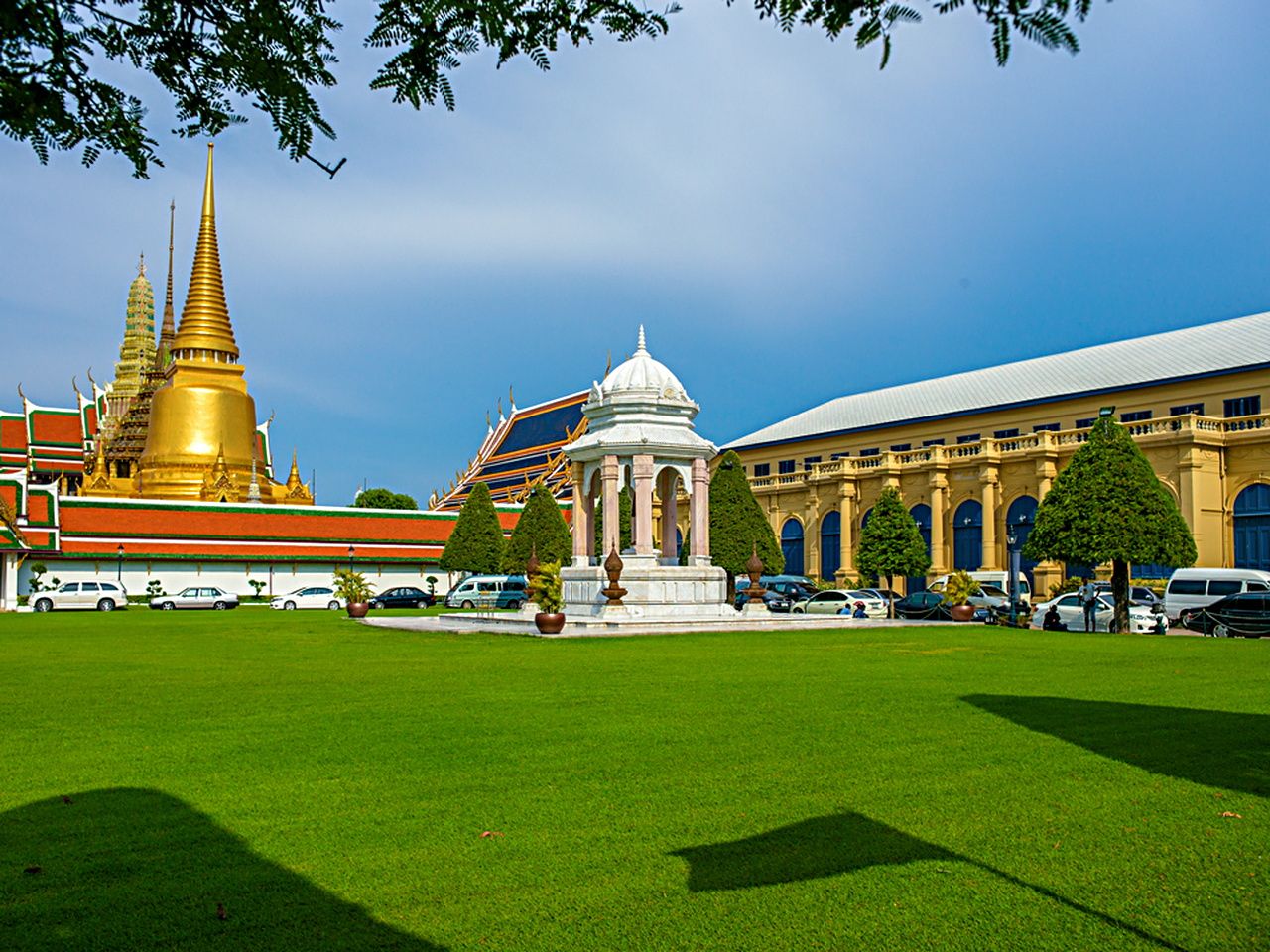
Put the Grand Palace at opening. The published opening is 8:30. The English notice on the palace site currently says the day runs until 15:30. The Chinese calendar on the same site says 16:30. Royal ceremonies change single days. Confirm that day's hours on the official calendar before you leave the hotel.
March to May
March, April, and May are the hot months. April afternoons average about 36°C, and nights through these three months stay around 26–27°C. The highest reading in that 30-year set is 40.1°C, in March. April and May both reached 40.0°C. Those are record afternoons. A normal April day is the one around 36°C, and the humidity makes the sun feel hotter than the number.
Songkran sits in the middle of it. The water festival centers on 13–15 April. Check that year's public-holiday dates before you lock the flights. Streets in several districts close while the water is running, and a twenty-minute drive becomes an hour. Put that into the day. Keep the phone, the passport, and the cash in something waterproof.
If the trip only passes through Bangkok in this heat, split the day. Temples from seven to ten in the morning. A hotel or a mall through midday. Out again at dusk. The malls run cold air all afternoon. That is how the city spends the middle of a hot day.
May to October
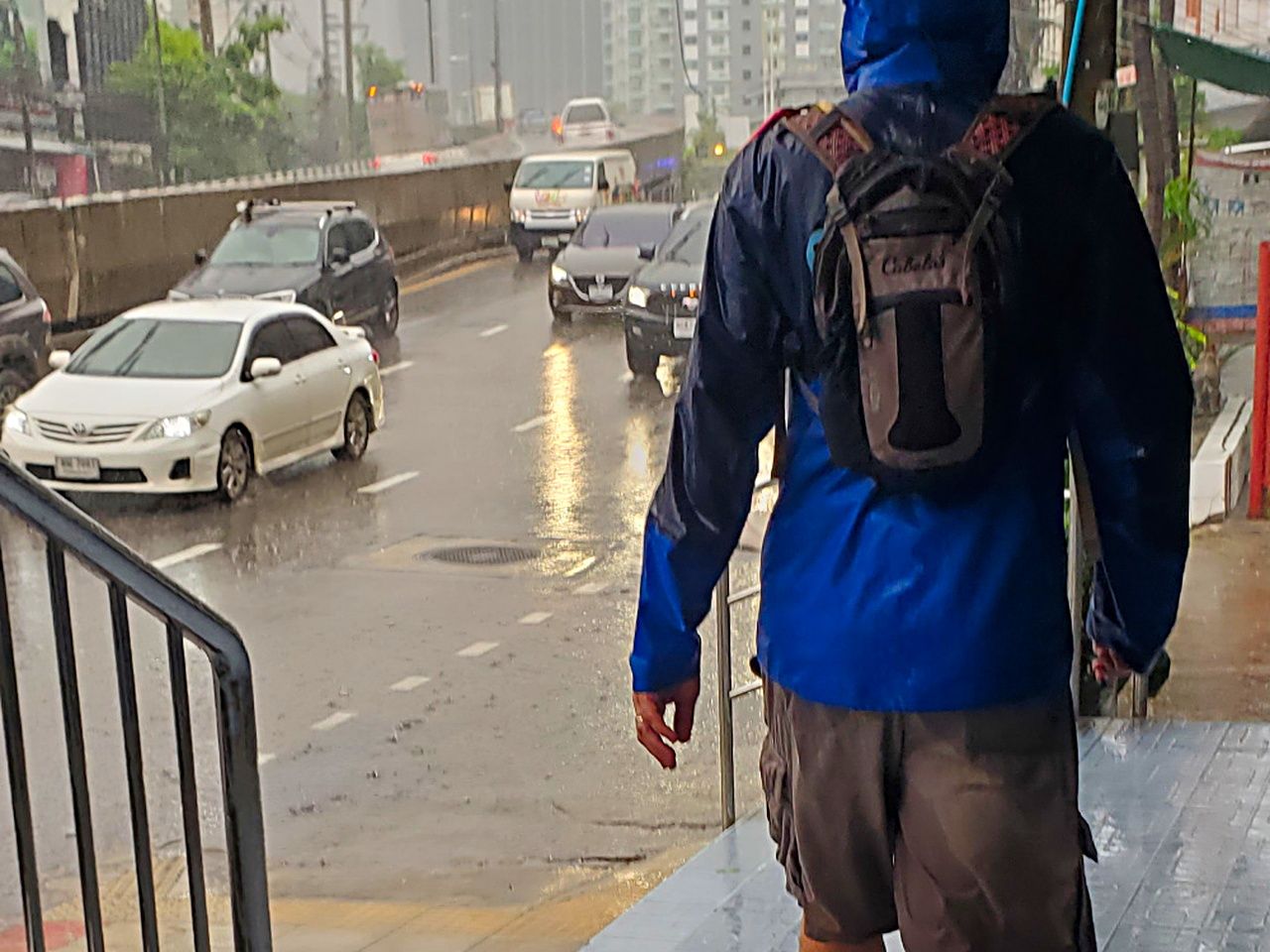
Rain is the season, and the heat does not leave. Highs still sit around 33–35°C. May already brings about 217 mm, on about 15 days. September is the heaviest month, about 336 mm on about 21 days. October is still very wet, about 289 mm. A rainy day in that record can be a short fall of 0.1 mm, so the useful picture is a heavy shower, often in the afternoon, and an evening you can still use.
Hotels and flights are usually at their lowest when we quote these months. The big malls, CentralWorld among them, run mid-year sales from about June into August.
Low streets flood. Wear shoes that can take water.
The dates that change a booking
Loy Krathong. It falls on the full moon of the twelfth lunar month, usually in November. Krathongs go into the Chao Phraya. In Chiang Mai the same nights bring Yi Peng, the lantern festival. They share a moon and they are two different festivals. If you want both, they need two cities.
December and early January. The lights at CentralWorld and Siam Paragon, and the fullest hotels of the year.
13–15 April. Songkran.
June into August. The mid-year shopping season.
Routes we actually sell, by window
Bangkok and Chiang Mai Highlights, 7 days and 6 nights. Best in November to February. Day 2 is Wat Pho, the Grand Palace, and a longtail to Wat Arun, then Chinatown. Day 3 is the train through Maeklong and the boats at Damnoen Saduak. You fly north for Doi Suthep, an elephant visit with no riding and no stop to bathe an elephant for a photograph, and Doi Inthanon. Breakfast runs from the second morning through departure. Rain disrupts the Maeklong morning. The Doi Inthanon summit in this season needs a jacket. The email quote is the price.
Bangkok, Chiang Mai, and Phuket, 10 days and 9 nights. Best in November to February, with the boat day checked against the sea. Bangkok covers the Grand Palace, Wat Arun, Wat Pho, Damnoen Saduak, and Maeklong. You fly to Chiang Mai for the old city and Doi Suthep, then a day to Chiang Rai and the Golden Triangle, then an elephant sanctuary day. That day sheet includes a walk with the herd and a bath. It is not the no-bath visit on the 7-day route. The flight south is to Phuket. Day 8 is a shared speedboat to Maya Bay and Koh Khai. The day sheet marks it optional, and that is the morning we move when the sea is rough. Phuket Town still works in the rain. Day 10 flies back to Bangkok.
Phuket, Phi Phi, and Krabi, 9 days and 8 nights. Best in November to April. Three nights in Phuket include a boat through Phang Nga Bay. Two nights on Phi Phi Don. Three nights in Krabi include a four-island speedboat: Koh Tub, Chicken Island, Poda, and Phra Nang. Those two boat days are the ones the sea can cancel.
At the Phuket station, May through October averages about 237 to 350 mm a month, with west winds. November still brings about 178 mm, so a boat in early November waits on that week's forecast. On these routes we keep a spare day, so a rough-sea morning can trade places with a town morning.
Bangkok, Koh Samui, and Chiang Mai, 12 days and 11 nights. Best from February through September. Bangkok, then Samui, with snorkeling at Ko Tao and Ko Nang Yuan, then Chiang Mai. Samui's heaviest rain is October through December. November at the Ko Samui station averages about 445 mm. January is already drier than that, and February is the month we would rather start.
Romantic Northern Thailand, 7 days and 6 nights. Best in November to February. The route is Chiang Mai and Doi Suthep, Doi Inthanon on the drive to Mae Sariang, Mae Hong Son, Pai, and Lampang on the way back to Chiang Mai. Doi Inthanon is 2,565 meters. Mountain mornings are cool, and the summit needs a jacket.
If the trip includes the Andaman, aim for November to April and still read the forecast. Cities and the north still run well in the rains, and the quotes are lower. When the west coast is rough, the Samui route, or a Khao Sok stretch before the beach, is the swap we use.
How far ahead
For November through February, write two to three months out. For Loy Krathong, Christmas, or New Year, count on three to four. Outside those dates, four to six weeks is usually enough, and the well-placed rooms still go first. Bangkok has many hotels. It has few in the right place.
What to decide first
Ask what this trip cannot give up. If heat is the problem, stay out of April. If crowds are the problem, stay off New Year. If the budget leads, take May to October and put the outdoor hours in the morning.
East Marvel has designed private Asia journeys since 1988. The Thailand trips are planned at our U.S. headquarters and led on the ground by licensed English-speaking guides, with private transfers and hotels chosen for the brief you gave us. Animal stops stay inside one rule: no rides, no shows, and no forced shopping. The email quote is the price for your dates.
Our guides and our proposals work in English. If someone traveling with you is more at ease in Chinese, say so when you write, and we will plan for that.
All Thailand packages are at eastmarvel.com/thailand/packages.html. Write to contact@eastmarvel.com with your dates and the cities you want.
Temperatures and rainfall follow Thai Meteorological Department normals for 1991–2020 and will differ in a given week. Boat days follow that week's sea. Palace hours follow that day's notice. This page is travel guidance for planning a private trip.