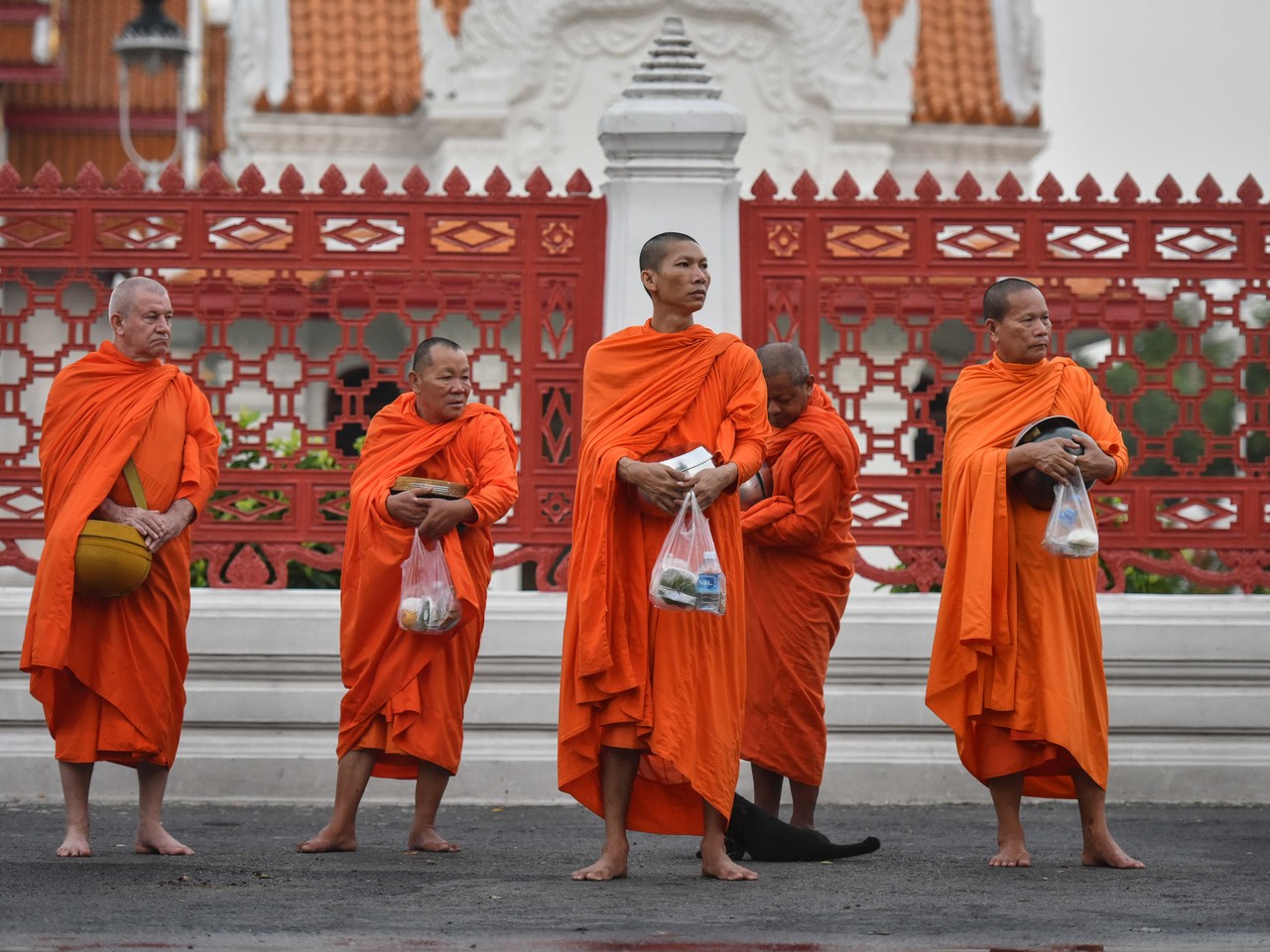
If one word could sum up Thailand, “land of the Buddha” comes close. On a Bangkok avenue or a Chiang Mai lane, a golden spire often appears within a kilometer. At dawn, saffron-robed monks walk with alms bowls while laypeople kneel to offer rice—a scene centuries old.
For Thai people, Buddhism is rarely a once-a-week religion. It shapes holidays, schooling, birth, marriage, and funerals—and often the first exchange of the day: rice placed in a monk’s bowl.
For Western travelers, the useful questions are practical: What kind of Buddhism is this? How does it shape a day and a lifetime? Which festivals might land on your dates? What should you do inside a wat so you are respectful, not disruptive?
East Marvel’s default: temples on a private itinerary are living faith spaces, not photo sets. We write dress codes into the day plan, separate cultural participation from pure sightseeing, and only arrange dawn alms when guests want it—and can do it without crowding the ritual.
Thai Buddhism at a glance: Theravada and the de facto state faith
Around 94–95% of Thai people identify as Buddhist—one of the world’s largest Buddhist populations. The country has on the order of 40,000 temples and about 300,000 monks; almost every village has a wat. (Counts move with official updates.)
Thai Buddhism is Theravada (“Way of the Elders”). It rests on the Pali Canon, stresses discipline, meditation, and personal liberation, and follows a Middle Way—neither indulgence nor extreme asceticism. In Chinese discourse it is often labeled “Hinayana”; with Western guests we simply say Theravada.
How it differs from Mahayana (including much of Chinese tradition) Canon. Theravada: Pali Tipitaka. Mahayana: Chinese Tripitaka translations and more.
Focus. Theravada: ethics, concentration, insight; toward arahantship. Mahayana: the bodhisattva path; aiding all beings.
Diet. Theravada: “threefold pure meat” is allowed (not seen, heard, or killed for you); monks often eat what is offered. Mahayana: many temples emphasize vegetarian food.
Monastic day. Theravada: alms rounds; traditionally no solid food after noon. Mahayana: many temples cook on site.
Temple role. Theravada: a community hub for schooling, festivals, and funerals. Mahayana: more often a distinct religious compound.
Common misunderstanding: Thai monks may eat meat when the offering meets the purity rules. They are not required to be vegetarian.
Strictly speaking, the constitution does not always name an official state religion in the way visitors expect. In practice Buddhism holds de facto primacy: the King must be a Buddhist and protector of the faith; royal ceremony and national education lean on Buddhist norms; monks are widely respected. Monarchy, nation, and Buddhism form a familiar triad. For travelers, that means temple manners are close to public manners.
How Buddhism runs through a Thai day
Monks leave the wat barefoot with bowls. Devotees kneel and place rice, dishes, sometimes fruit. The monk chants a short blessing and dedicates the merit. Feeding the Sangha is seen as one of the simplest ways for laypeople to make merit.
Temples once were schools; Buddhist colleges continue; many rural children still meet learning through the wat. Songkran, Loy Krathong, and many others orbit the temple. Blessings, housewarmings, and village funerals usually need monks. Before a move, a shop opening, or a new car, chanting and holy water remain common.
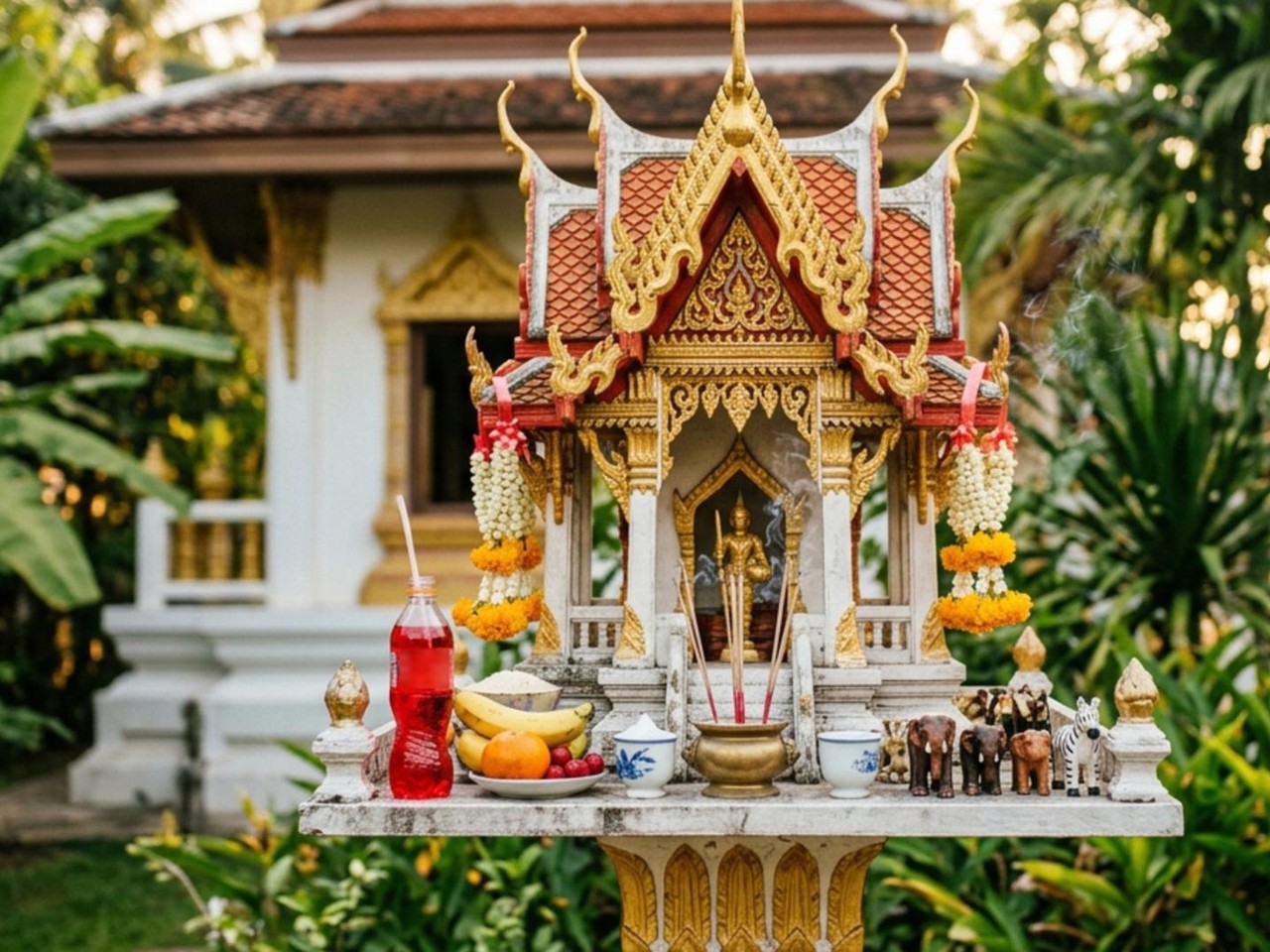
Spirit houses: small shrines outside buildings honor local spirits—Buddhism braided with older animism. Many people greet the spirits before the household Buddha shrine.
Amulets (Phra Khreuang): worn as devotion and protection; pieces blessed by revered monks carry special weight.
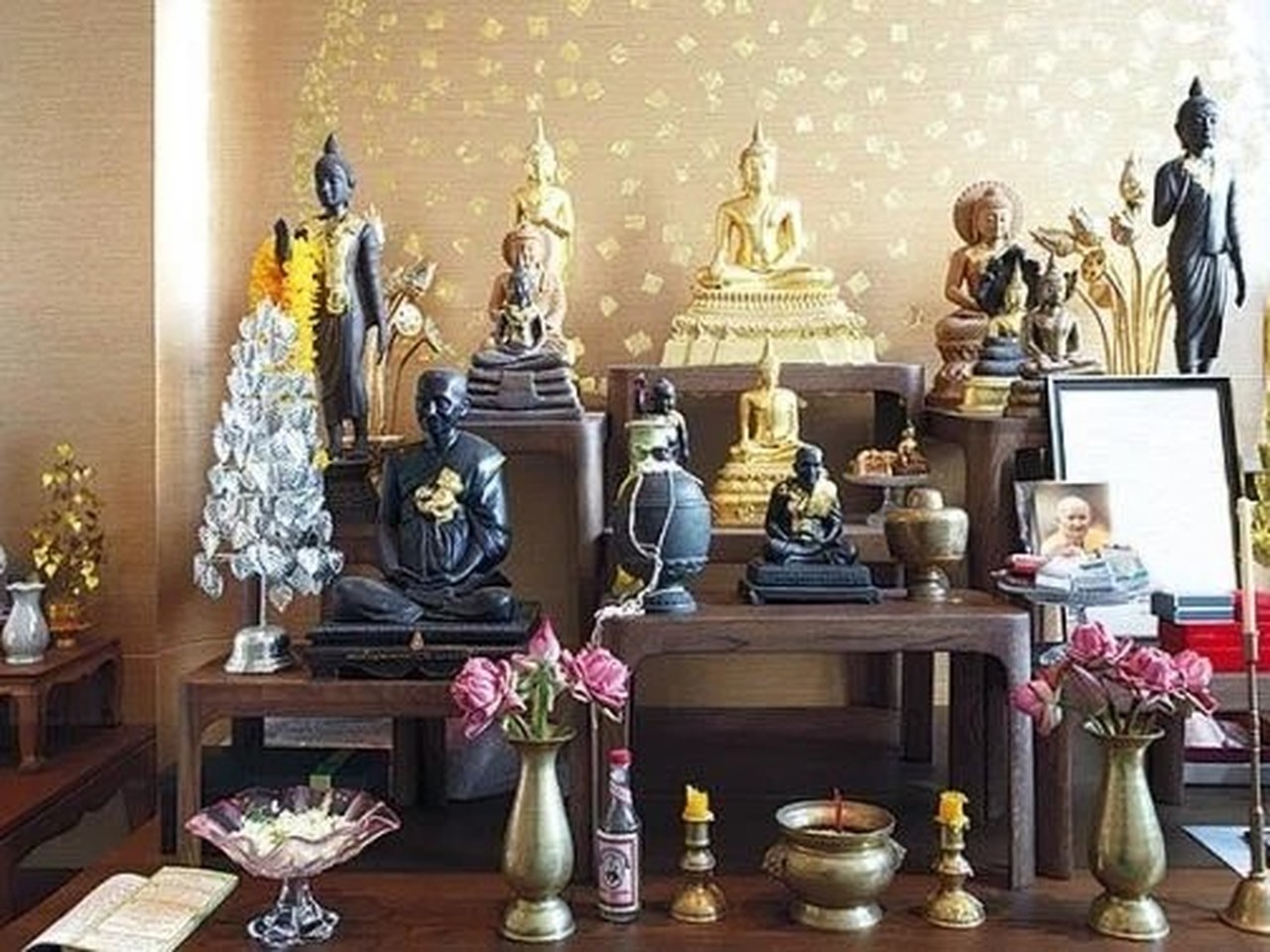
Flowers, incense, candles: lotus and jasmine for impermanence and purity; incense and light for reverence.
Gold leaf: pressed onto images and chedis as family blessing until surfaces shine.
Women must not touch a monk; hand items through a man when needed. Offer seats on buses and planes. Many Thai men ordain for a period once in life (often one to three months, sometimes a week)—at adulthood, before military service, or to honor parents. It is both merit and a rite of passage.
Life milestones: birth, ordination, marriage, death
Birth: monks chant blessings; names often carry Buddhist meaning.
Ordination (Buad Nak): one of the biggest family events—shaved head and brows, white-cloth procession, precepts at the wat, drums and a feast that can rival a wedding.
Marriage: early-morning chanting and holy water; the couple kneels before the Buddha; elders tie sacred threads on wrists.
Funeral: lying in state for several days with rotating chants; after cremation, ashes often rest in a temple stupa.
At home: a household shrine, flowers and incense morning and evening—a quiet daily anchor.
Festivals and a year of merit-making
Makha Bucha. About February, on the full moon. Candle circumambulation (Wian Tian); expect temple crowds at night.
Visakha Bucha. About May. Birth, enlightenment, and passing of the Buddha; nationwide merit days.
Asalha Bucha and the rains retreat. About July. First sermon; monks enter roughly three months of rains retreat.
Ok Phansa. About October. End of retreat; Kathina robe-offering season follows.
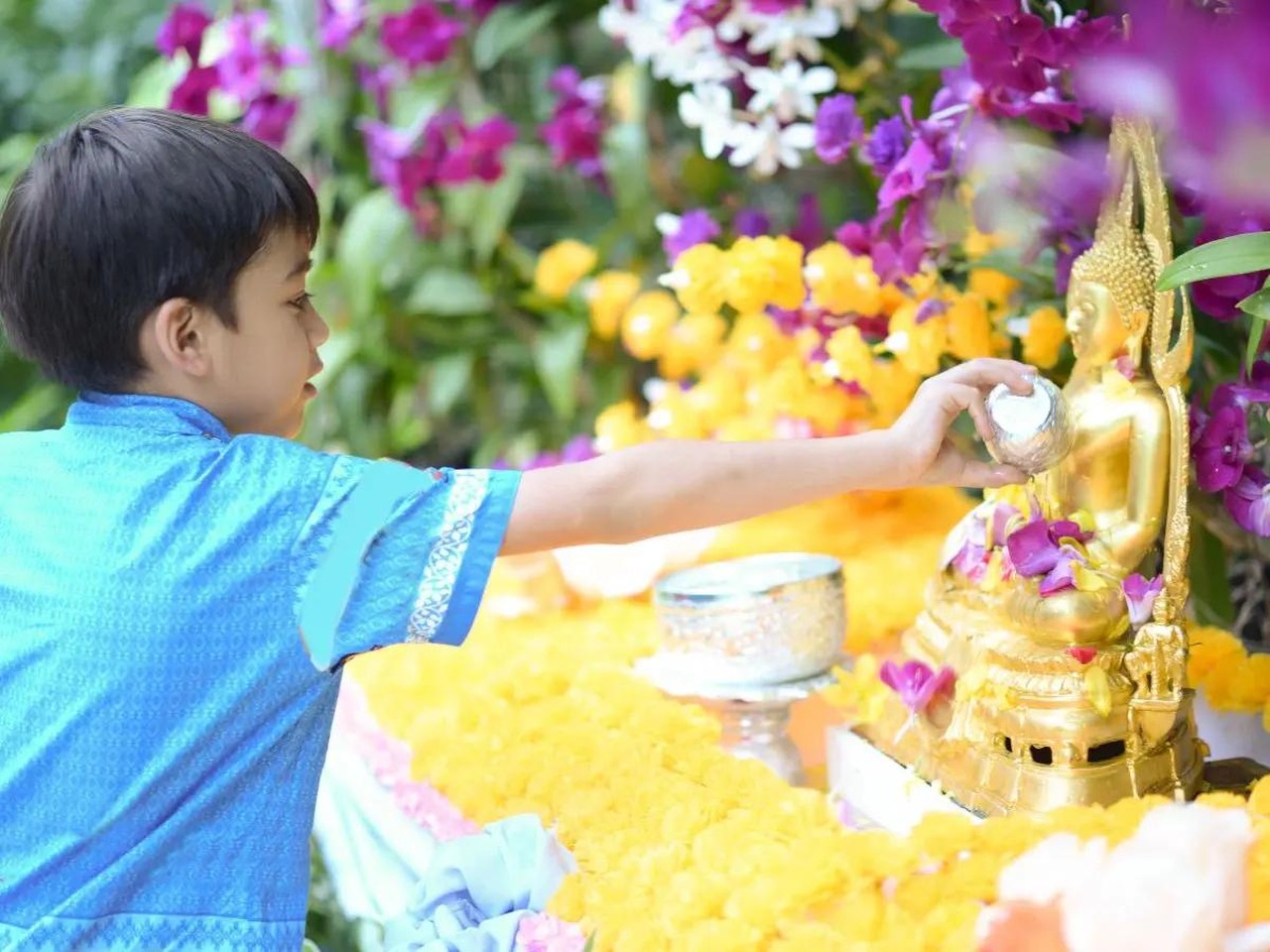
Songkran. About April 13–15. New Year: Buddha bathing and elder blessings first—street water fights second.
Loy Krathong and Yi Peng. About November; lunar dates move. River floats nationwide; Chiang Mai sky lanterns need early tickets and date checks.
Songkran under the splash: the viral layer is water fights; the Buddhist core is dawn bathing of images, water poured on elders’ hands, and sand stupas. On a private trip, split “culture morning” from “street afternoon.”
Loy Krathong and Yi Peng: floating a krathong is gratitude and release, not only romance. Chiang Mai lanterns (Khom Loi) are a Lanna release ritual—spectacular, ticketed, and easy to confuse with February’s Flower Festival. Confirm the calendar.
Ok Phansa in Isan: places such as Nakhon Phanom stage illuminated Mekong boat festivals—community merit on a grand scale. The day-and-night shape of each region is in Thailand Has Two Faces: Day and Night, Region by Region.
Regional differences: one Theravada base, different temperatures
Central. Bangkok, Ayutthaya. Royal Buddhism. Emerald Buddha, Grand Palace ceremonial weight; formal, urban; strong amulet culture.
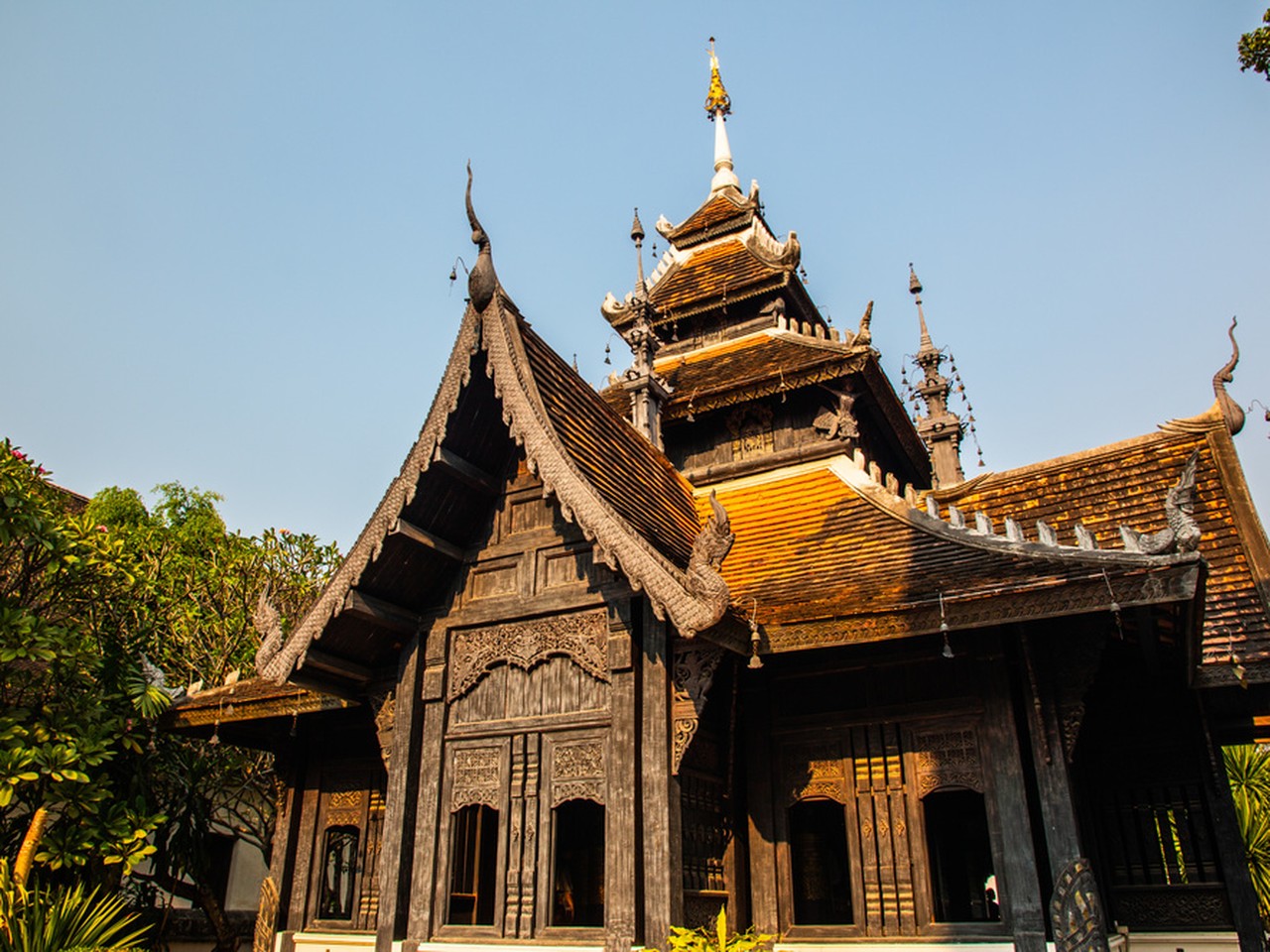
North. Chiang Mai, Chiang Rai. Lanna Buddhism. Wooden roofs, layered eaves, local guardians beside the Buddha; Yi Peng nights Bangkok never matches.
Northeast (Isan). Khon Kaen, Nakhon Phanom. Animism deeply braided in. Music and dance at festivals; huge merit feasts at Ok Phansa.
South. Phuket, Hat Yai. Plural coexistence. Islam is about 5 percent of the country, and a far larger share of the South than of the other regions. Mosques and wats share streets. Chinese Guanyin devotion appears in places like Phuket.
Bangkok / Central: expect stricter dress checks and national-symbol temples—plan early slots and covered shoulders.
Chiang Mai / North: Lanna warmth and architecture; lantern season needs its own lodging and ticket plan.
Isan: richest “folk mix”—best for guests who want community depth, not a checklist dash.
South: two etiquette systems in one region—mosque and wat rules both deserve respect. Phuket is one place you will see both.
Temple etiquette every visitor should know
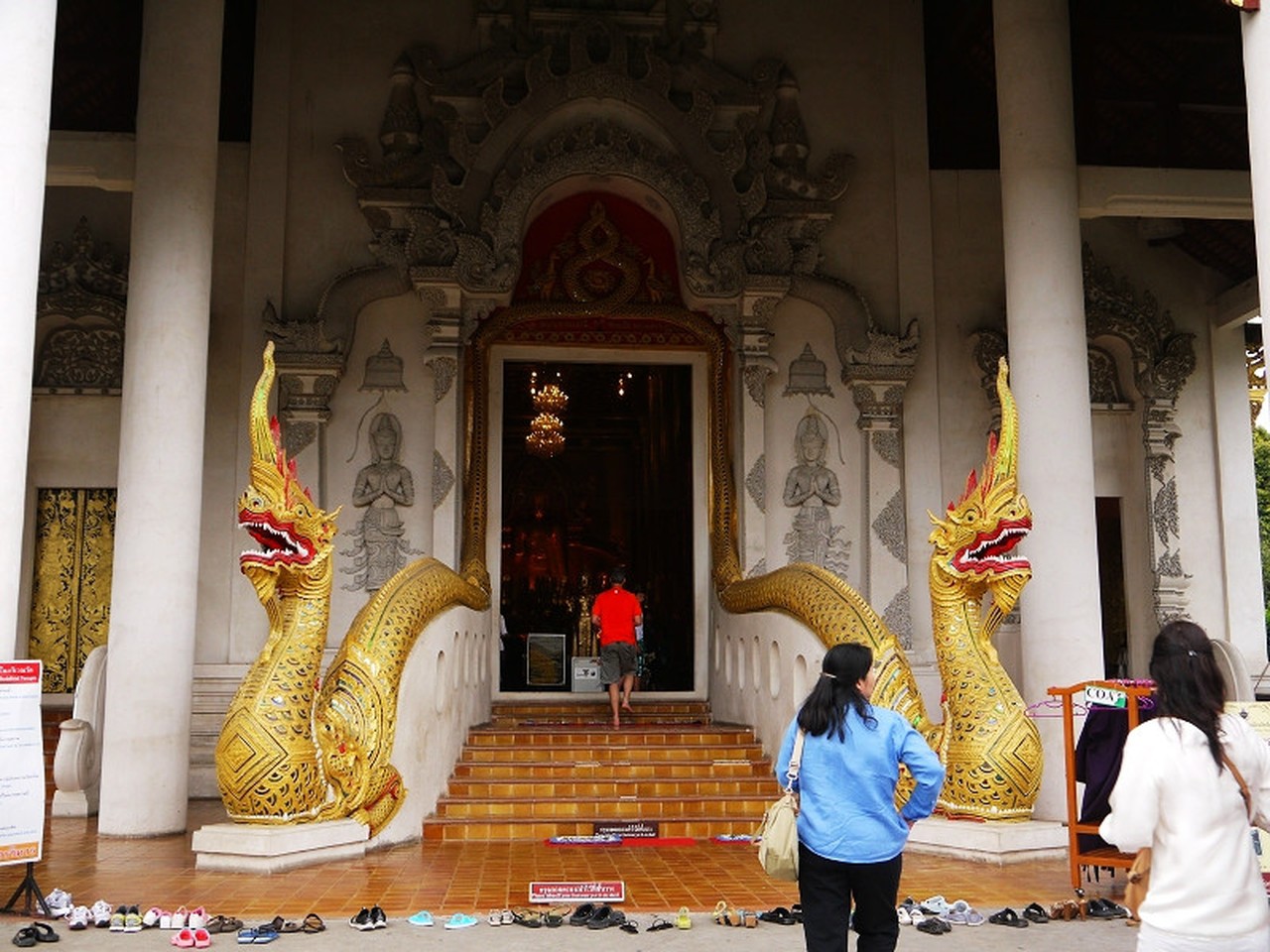
Enter: shoes and hats off; cover shoulders and knees; do not step on the threshold.
Worship: a wai (palms together) is enough; you need not force a long kneel; keep soles of feet away from Buddha images.
Never point a finger at or climb on images—gesture with an open hand.
With monks: women do not touch or hand items directly; do not sit “above” a monk.
Alms round: optional. Prepare food, kneel, offer with the right hand or both, do not rummage in the bowl or touch it; receive the blessing with a wai.
Temples are alive: stay quiet during chanting; check photo rules; skip flash and selfie sticks when people are praying.
About East Marvel
East Marvel plans private trips for Western and international guests. On temple days we default to off-peak timing at major wats, clear dress notes in writing, and a clean line between joining a ritual and treating it as a backdrop.
Easiest start: tell us your month, whether you want Buddha bathing, an alms round, or Yi Peng, whether women and children are in the party, and whether early starts are acceptable. We will mark suitable cities and temples, which festivals need advance tickets, and which days should stay light.
Related reading: East Marvel’s Thailand Songkran 2027, Chiang Mai Flower Festival 2027, How to Plan a Multi-Generational Family Trip to Thailand, and the Thailand 2-Week Itinerary.
FAQ
Is Thailand a “Hinayana” country?
Say Theravada. That is accurate and clearer for Western readers.
Can I take photos in temples?
Often yes outdoors; indoors and during ceremonies, follow signs and common sense. People praying come first.
What must women travelers remember?
Covered shoulders and knees, and no physical contact with monks. Pass items through a man or as the temple directs.
Must I join the alms round?
No. If you join, rise early and stay brief and respectful. A quiet wai as you pass is also fine.
Does this explain the “Land of Smiles”?
Popular culture links Thai warmth to everyday ideas of tolerance, contentment, and merit. Understanding that beats memorizing temple names.
Closing
Thai Buddhism is not a museum piece. It is rice in a dawn bowl, incense at a spirit house, drums at a son’s ordination, and a blessing inside Songkran’s water. See that, and the gold spires stop being only scenery—you are looking at a civilization still turning gently on faith.