An East Marvel guide. Updated November 2026. Check the rate, and the fee on the ATM screen, once more before you fly.
The money you waste in Thailand is rarely lost on the exchange rate.
It leaves by three doors. The ATM charges by the transaction. The card terminal offers you your home currency. And at seven in the morning the note in your hand is a thousand baht, and the vendor cannot break it.
Taken together, that is a decent meal. On a large bill charged in the wrong currency, it can be a night's room.
You can count the fee
You cannot forecast the rate. On 5 November 2026 the Bank of Thailand's reference rate was 33.43 baht to the dollar. On 11 November the same table showed 33.61. It will move again. Do not build the budget on it.
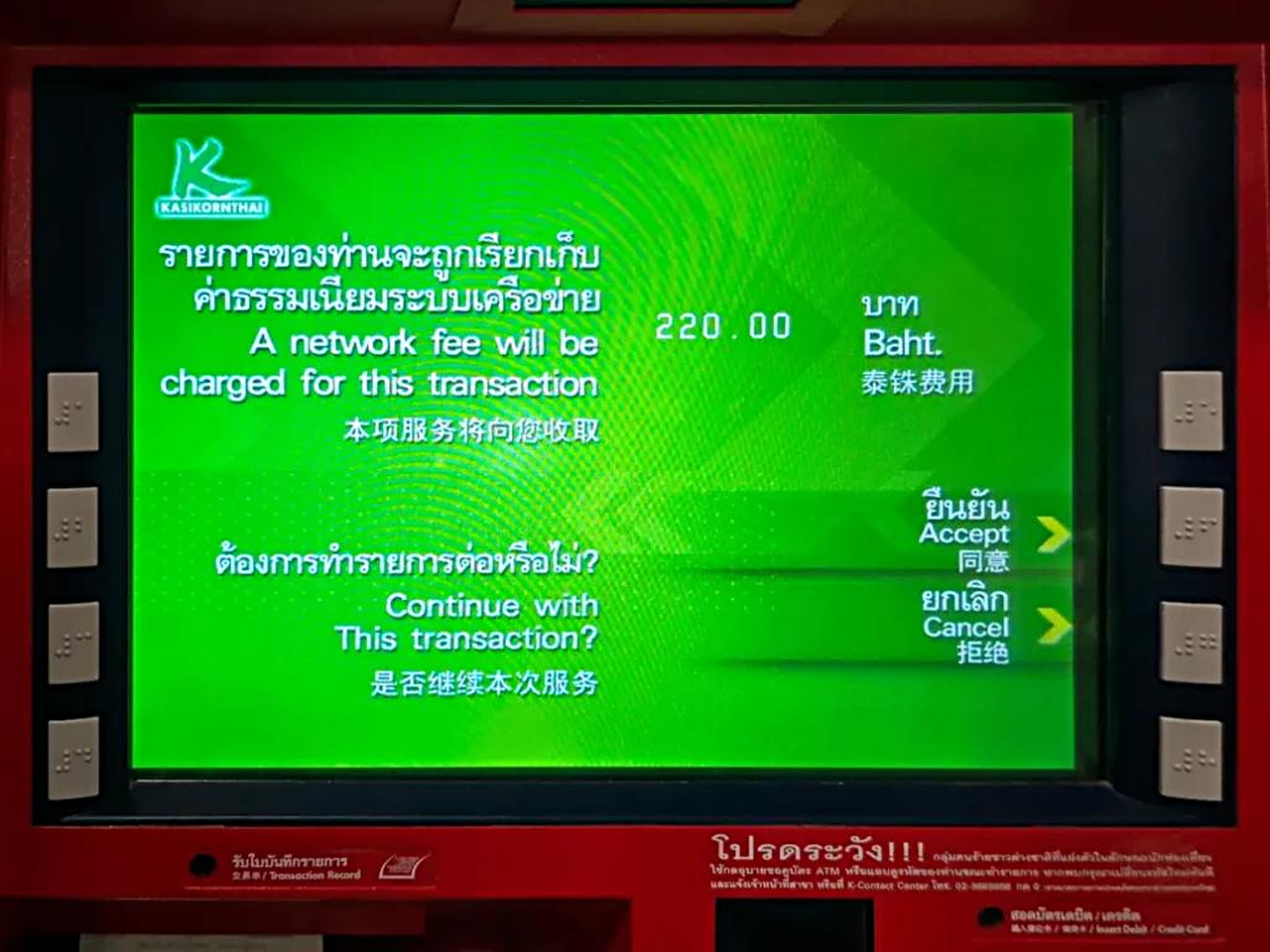
What you can count is the fee on the screen. Siam Commercial Bank's own schedule, in force since 26 March 2026, charges a foreign Visa card 250 baht and a foreign Mastercard 350. On that same table a foreign American Express card is 50 baht. Another machine can show a different number, including 220 or 150. Read the screen before you confirm. If the number is wrong, cancel. If it says 150, use it. Some airport machines charge more.
The fee is a flat sum. The less you take, the more of it the fee eats.
2,000 baht on a 250-baht Visa fee. 12.5 percent.
10,000 baht on that same 250. 2.5 percent.
2,000 baht on a 350-baht Mastercard fee. 17.5 percent.
10,000 baht on that 350. 3.5 percent.
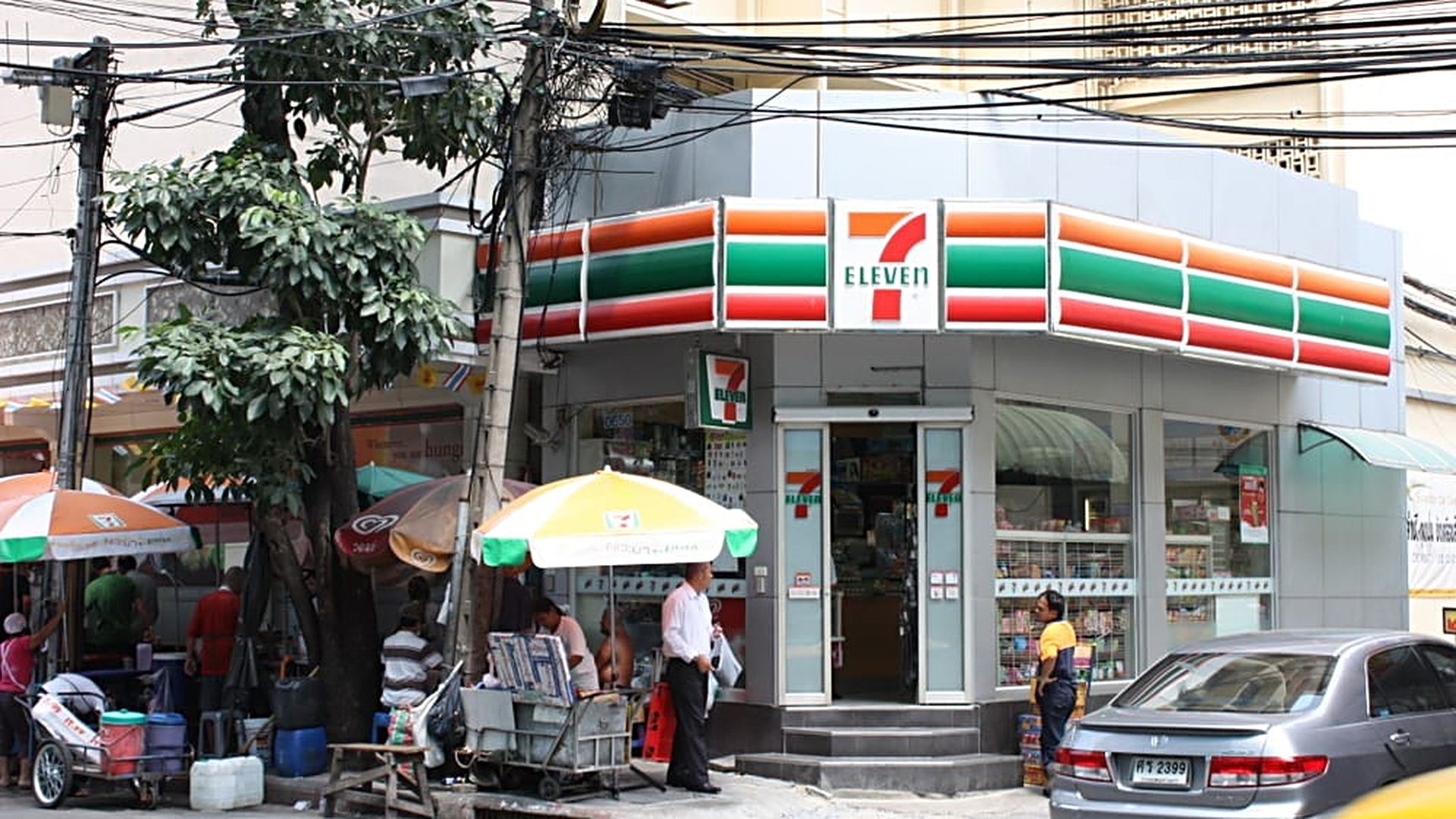
Same machine, same card. Take enough at once. Not 2,000 outside a 7-Eleven. Five days of pocket money for two, for boats, songthaews, markets, tips, and a plate at the roadside, runs about 3,000 to 4,000 baht. That is a size, not a quote. One withdrawal of 10,000 covers that pocket money for ten days or so. If your card will not allow 10,000, take the maximum it allows. Do not drop to 2,000 to feel safe. Your own bank may add a charge on top. Read that line before you leave.
Withdraw on a debit card. A credit card at an ATM is a cash advance. The issuer's own fee and interest apply, and on many cards the interest starts at once.
The card comes out last. Wait for it. In many countries the machine returns the card first. Here it often does not, and a card left behind is swallowed.
Choose baht
The ATM and the card terminal ask the same question: baht, or your home currency. It is not a courtesy.
Choose the home currency and you have accepted dynamic currency conversion. The rate sits off the market, and your bank may charge you again when the bill arrives. The screen may show dollars, pounds, or euros. It may not say DCC. Always choose baht. At home, the charge should be in baht.
Some shops add a few percent for a card. It is on the bill, or on the screen, before you pay. That is not a swindle. Visa and Mastercard work in hotels, malls, hospitals, and airlines. Stalls, markets, and boatmen take cash.
Small notes
The room, the flights, the mall, the hospital: card.
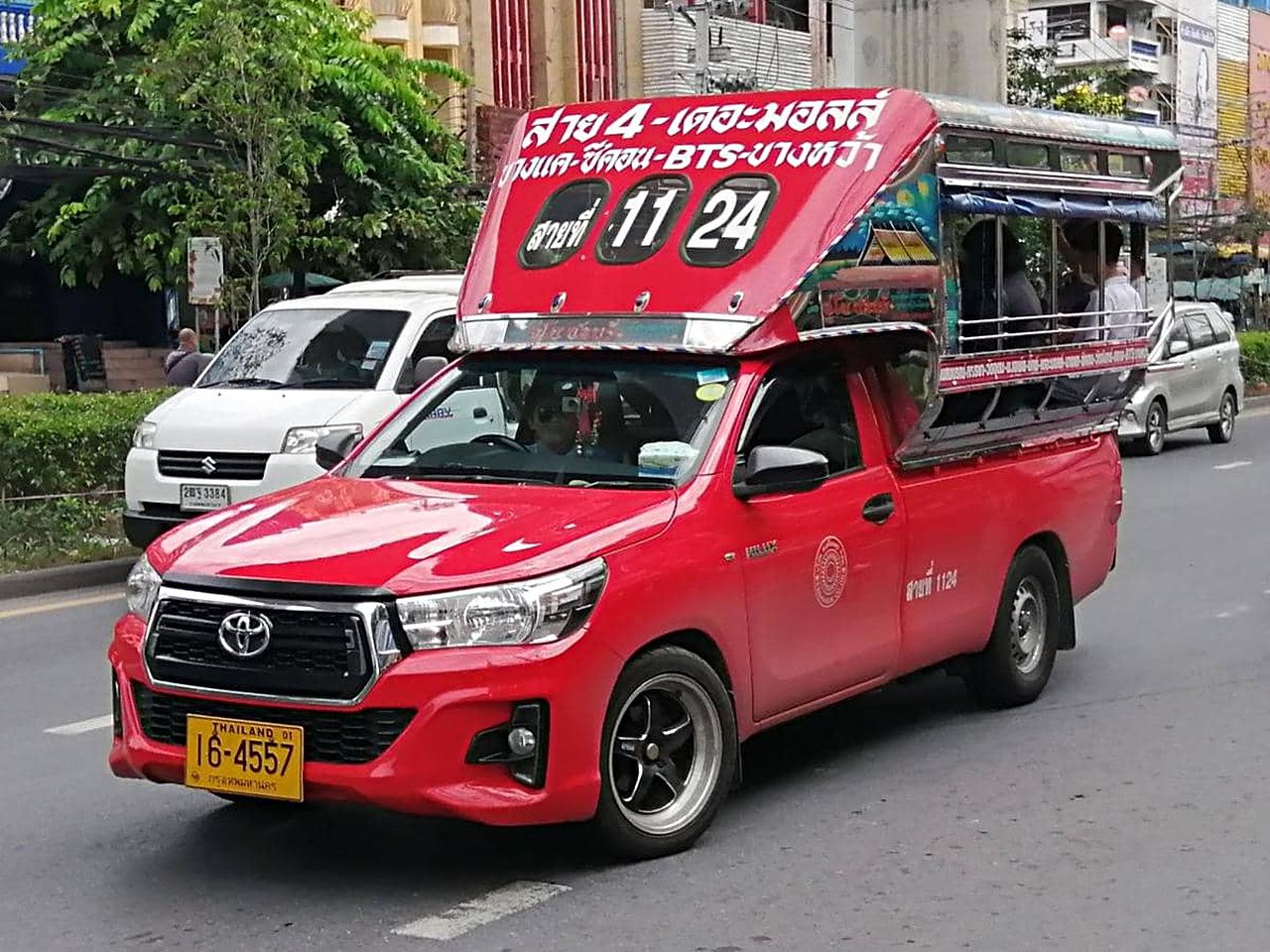
The boat, the songthaew, the night market, the tip, the plate at the roadside: cash.
A thousand-baht note does not spend at seven in the morning. The vendor breaks it from the day's float, and usually cannot. Keep a few 100s, 50s, and 20s.
A satang is a hundredth of a baht. Street prices are in whole baht. The 25- and 50-satang coins are of no use to you. Do not argue over them, and do not save them up.
Change money after you arrive. A counter in the airport or the hotel is the easy one, and the worst rate. The plan is still one bank ATM, for enough. For a small exchange, use a bank or a licensed changer, and take your passport. Do not change a thick stack on the first morning.
What it costs, in baht
These are sizes, not quotes. The season, the place, and the week of Christmas push the room and the meal up. For a dollar figure, use the rate on the day. When the rate moves, the dollars move. Leave the baht alone.
A room. Often starts around 600 baht. A four-star sits mostly at 1,500 to 3,000. Five stars and resorts start at 3,000 and do not stop.
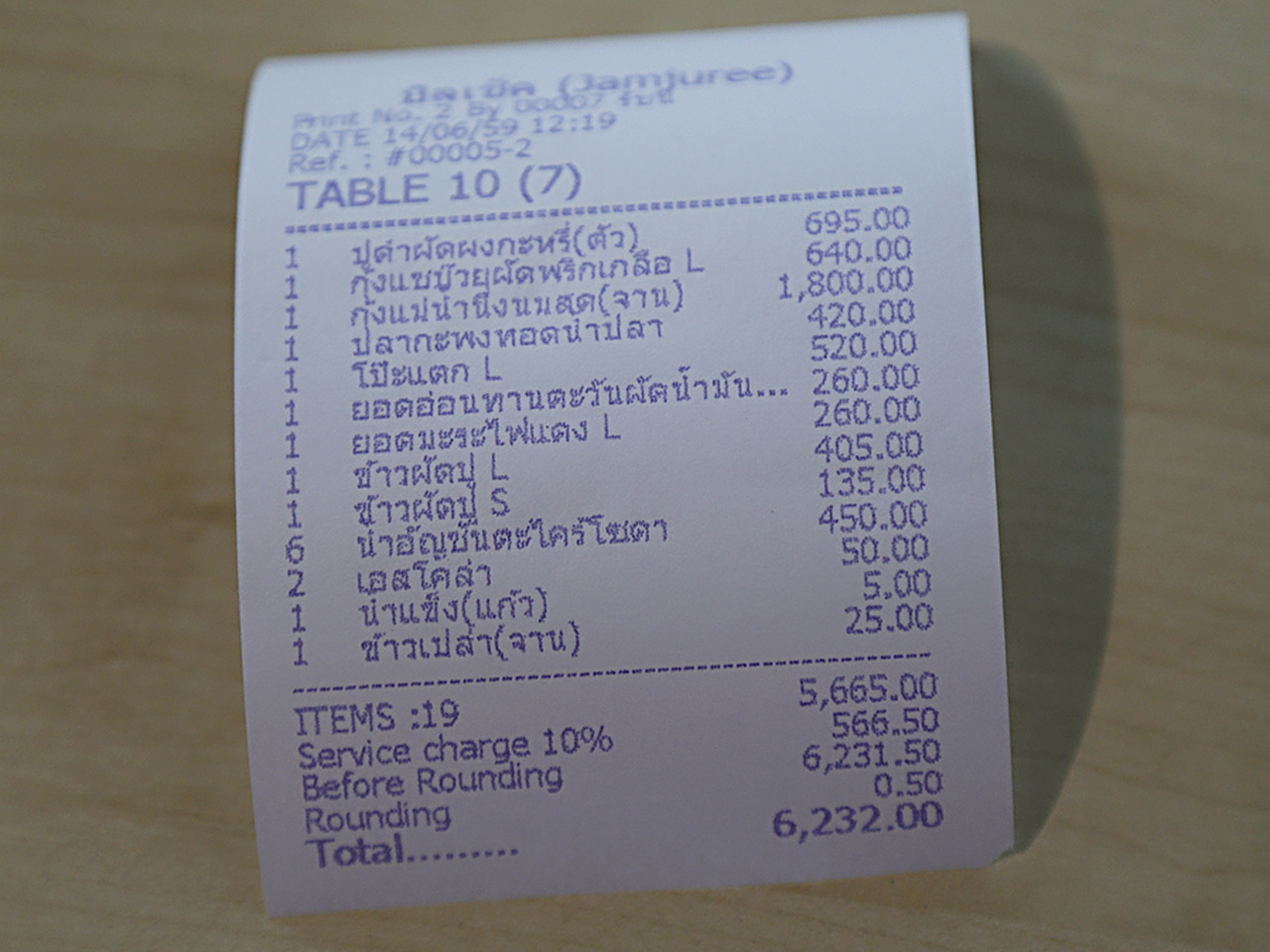
A meal. A roadside plate is often 60 to 120 baht. An ordinary restaurant, 150 to 400 a head. Two people, mid-range, 500 to 2,000. A bottle of wine in a restaurant, 350 to 900. Local beer, 40 to 80. A tourist bar is more.
A train in Bangkok. A single BTS ticket runs about 17 to 65 baht, by distance. The MRT Blue Line is 17 to 44 baht, the fare in force since 3 July 2026. The board at the station is the price. Bangkok to Chiang Mai is one price for a seat and another for a berth. Use the railway's own page for that day.
A day for two starts at 2,500 baht: a decent room in the low season, two meals, short hops, water. Activities are not in that figure. At the 5 November reference rate, 2,500 baht was about 75 dollars. One activity a day, on top.
The draft entry fee is 450 baht a person. On 11 November 2026 the tourism ministry still described it as a draft. It was not being collected. Air arrivals would pay first, and only after Cabinet approval, publication, and 180 days. The earliest date then being discussed was June or July 2027. Put it in the budget. Do not pay anyone who asks for it now. If it never appears, you have paid for another meal.
Three things that have nothing to do with the rate
The king's portrait is on the note. Do not carry it in a back pocket. Do not step on a coin that falls. Do not toss a note onto the table as a tip.
A tip fills a gap. If the bill already has a service charge, do not add another ten percent. If it does not, ten percent is the ordinary add. Drivers, guides, and porters: 50 or 100 baht. No percentage.
An officer may ask to see funds, in cash or the equivalent. For a visa-exempt stay the notices do not agree: 10,000 baht a person or 20,000 a family in one, and 20,000 and 40,000 in another. Children under 12 are outside the check on the lower notice. The higher notice does not say so. It is not asked every time. Do not arrive with nothing. Tell your bank the card will be used in Thailand, and carry a second card. A frozen card is hard to fix once you are there.
Thai money is not hard. The hard part is taking 2,000 baht outside a 7-Eleven, every time.
Three things to keep: take enough at once, choose baht, keep small notes.
What we recommend
The fee is the number on the ATM screen, not a figure in another guide. The papers, and where the fund question sits, are in Before You Fly. The season that moves the room is in When to Go. The trip itself is priced on its own page.