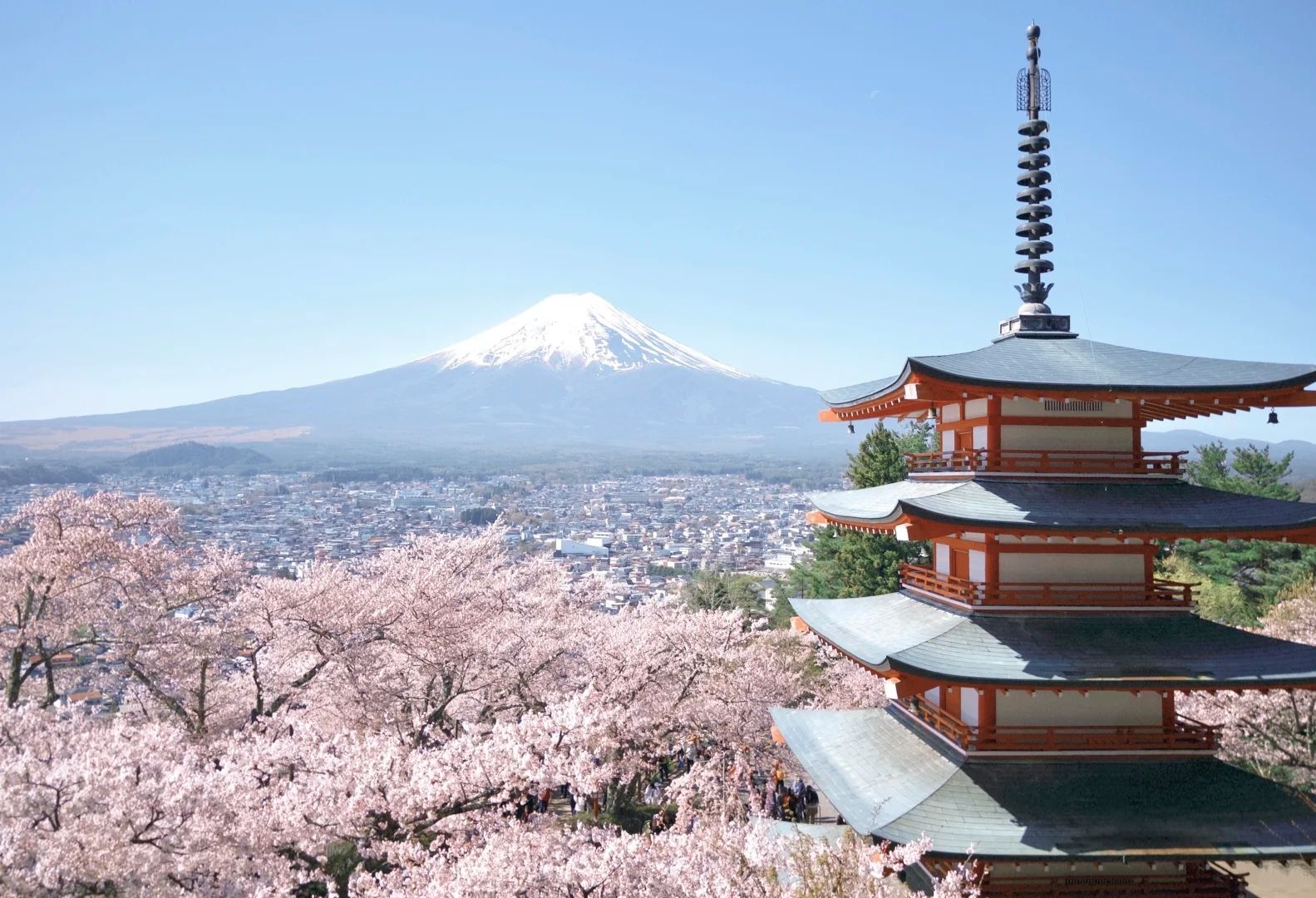
East Marvel · Japan Checked November 10, 2026. No 2027 bloom dates exist yet. The Japan Meteorological Corporation's first forecast usually lands in mid-to-late December. The Japan Weather Association's lands in late January. Every date below carries its year. Normals are the Agency's 1991–2020 averages for one specimen tree in each city.
The guides give you one sentence: late March to early April.
The trees do not give you one gap. In 2026, Tokyo's specimen was full on March 28, Kyoto's on March 30, Osaka's on April 3. Tokyo to Kyoto was two days. Kyoto to Osaka was four. On the normals, Tokyo is March 31, and Kyoto and Osaka are both April 4. The four-day hole between Kyoto and Osaka was a 2026 hole. It is not the shape of every spring. Five of the last six years, Tokyo was full in late March. The exception was April 4, 2024.
Replay 2026 on the 2027 calendar and the weekdays fall like this: Tokyo full on March 28, which is Easter Sunday; Kyoto on March 30, a Tuesday; Osaka on April 3, a Saturday. That is a rehearsal. It is not a forecast. Until mid-December, fix the window, the order, and the rooms; see how to lock in the week of full bloom a year ahead. Do not fix the day.
If 2027 repeats 2026
Tokyo. First bloom, 2026: March 19. Full bloom, 2026: March 28. Full bloom vs Tokyo, 2026: same day. Normal full bloom: March 31.
Kyoto. First bloom, 2026: March 23. Full bloom, 2026: March 30. Full bloom vs Tokyo, 2026: +2 days. Normal full bloom: April 4.
Osaka. First bloom, 2026: March 26. Full bloom, 2026: April 3. Full bloom vs Tokyo, 2026: +6 days. Normal full bloom: April 4.
Full bloom here means the Agency's rule: the first day about 80 percent of that one tree is open. A garden on a hill can be a few days off it. Read the routes below as "if 2027 repeats 2026," and slide the whole block when the March forecast says the year is early or late. Leave the order alone.
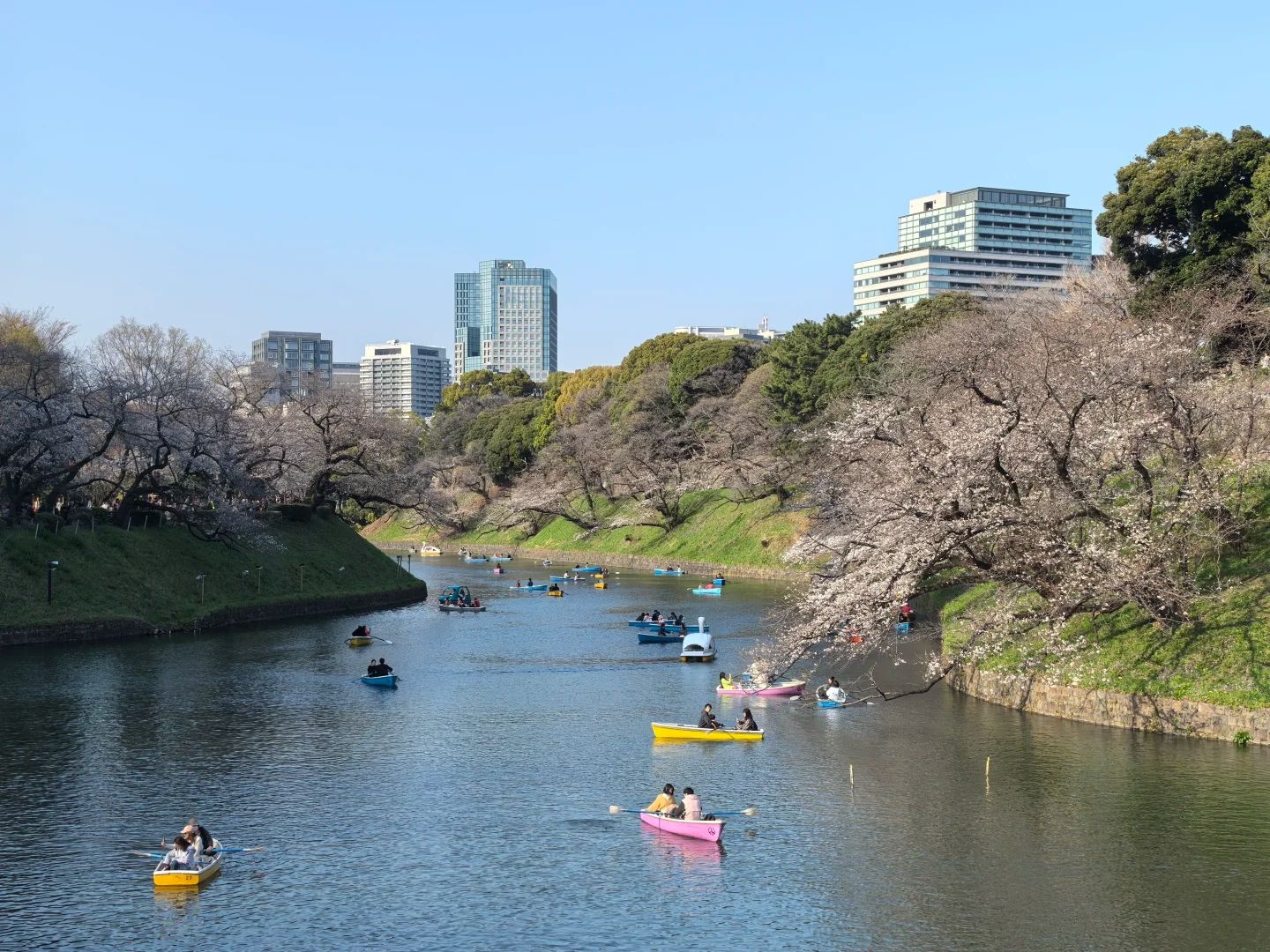
Route A — into Tokyo, out of Osaka, seven days, March 27 to April 2
This is the one we run when all three cities have to happen.
March 27–29, Tokyo. On the rehearsal, full bloom is the 28th, and the 28th is Easter Sunday. Three days, two gardens: Chidorigafuchi or Shinjuku Gyoen, and Ueno only if you are on the avenue before 8 a.m. By noon Ueno has stopped moving. Much of Europe is off from March 26 through March 29, and Tokyo public schools are out from March 26 through April 5. These are the expensive rooms. They are also the rooms that put you under the trees.
March 30–April 1, Kyoto. On the rehearsal, Tokyo has just gone over and Kyoto is on its day. The Philosopher's Path at 7. Kiyomizu-dera before 8, on a different morning. Maruyama Park at dusk, if that year's lights are posted. Three temples in one day is how the morning gets lost.
April 2, Osaka. On the rehearsal this is the day before full bloom, not the day itself. On the normals, April 2 is also before Osaka's April 4. Say that in the itinerary. A guest who expects Tokyo's March 28 again will think the city failed them. Nishinomaru, if the night opening is on, is this evening only if the flight is not. In 2026 last entry was 8:30 p.m. and the garden closed at 9. The 2027 hours are not posted.
The order is the point. You walk in the direction the trees usually open. The cost is Osaka's full day. A seven-day line that keeps Tokyo's full day does not also keep Osaka's, in 2026 or in a normal year. If you want to review longer versions of this classic route, compare our Japan tour packages. Catching both full days, with a flight on either end, is a longer trip.
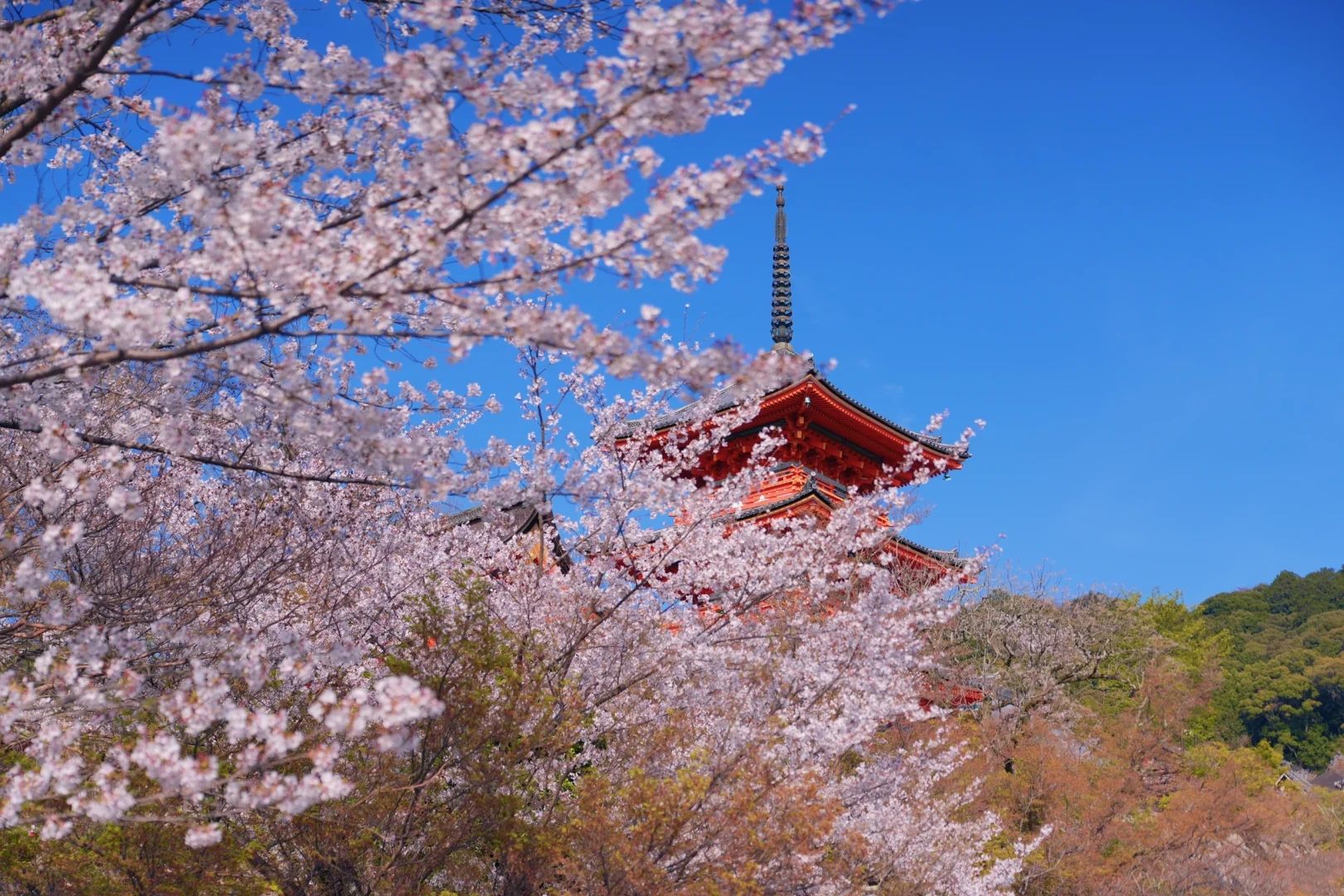
Route B — the same line reversed, seven days, March 30 to April 5
For the traveler whose reason is Kyoto, and who has already agreed to miss Tokyo's full day.
March 30–31, Osaka, on the way in. On the 2026 rehearsal the city is still short of April 3. Eat, walk, sleep. Do not sell it as the garden.
April 1–3, Kyoto. On the rehearsal this is two to four days after Kyoto's full bloom. Color can still be on the trees. It is also the side of the peak a storm finishes. Our own rule is to aim before the peak. This route breaks that rule on purpose, and only for someone who wants the days in the temple city more than they want the opening.
April 4–5, Tokyo. On the rehearsal the Somei-yoshino are coming down, not opening. Shinjuku Gyoen's later varieties can still be a morning. The avenue that was full on March 28 is not waiting for you.
We would book Route A when the traveler can choose. Route B spends Tokyo's full bloom and, in a year like 2026, arrives in Kyoto after Kyoto's as well. A temple garden and a city park do not peak on one day. They also do not peak better once the petals have started to fall.
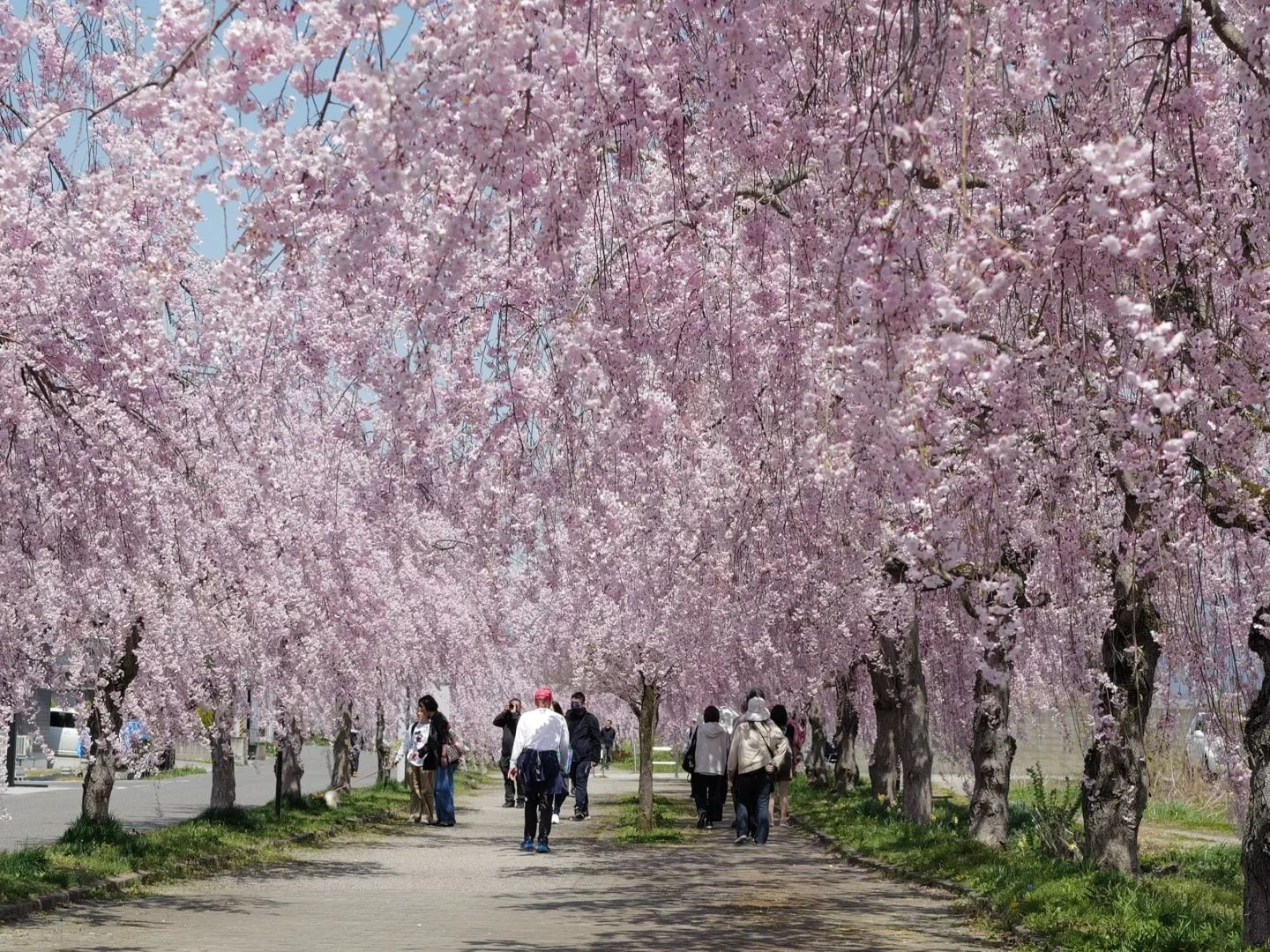
Route C — the late line, eight days, April 9 to 16
For people who have already walked the three cities, or who can only travel in mid-April. This route gives up Tokyo and Kyoto. In an average or early year the city Somei-yoshino are finished or falling by then. Double cherries at Shinjuku Gyoen and Kyoto Gyoen can still be a morning in the first days of April. They are not why you book this week, and going back for them after April 10 is how you pay for a train to the wrong trees.
April 9–12, Kawaguchiko. One base. The picture is the pagoda at Arakura Sengen, the cherries, and Fuji, and Fuji is a morning before 9. In 2026 the lake and the pagoda slope were about full on April 6, nine days after Tokyo, and a report on April 13 already called Arakura leaf. The usual window is early to mid-April. It is not a standing two weeks behind Tokyo. In a year like 2026, April 9–12 is the tail. Hakone does not give you that frame, and adding it spends the morning the pagoda needs. The park's own blossom-festival events were cancelled in 2026. The trees were not. Do not build the day around stalls.
April 13, into Takayama. Sleep there. The lake to Takayama is most of a day. April 14 is not a travel morning.
April 14–15, the Spring Festival. The dates are fixed: Wednesday and Thursday in 2027. Floats in the old streets. On the 2026 timetable the lantern night was the 14th only, 6:00 to 8:30 p.m. The 2027 hours were not posted as of November 10. Rain cancels the procession, the floats, the puppets, and the night, and nothing is postponed. If both days are wet, the reason for this route is gone. There is no rain date.
April 16, out.
If the March forecast says the lake will be early, slide the lake. Do not slide the festival. In a year like 2026 those two no longer share these eight days. The festival stays on the 14th. The cherries do not.
The one we won't book
Tokyo's full bloom and the Takayama festival inside one ten-day trip.
On the 2026 rehearsal, Tokyo is full on March 28 and Takayama is April 14. That is seventeen days. Ten continuous days can hold the three cities, in the order of Route A, with Osaka short a day. They cannot also hold the festival. Leave on April 10, see Takayama, then go back to Tokyo for the Somei-yoshino, and those trees are already down. The later varieties are not the trip you think you booked.
Ten days for the three cities is a different route. It is not this refusal.
Five details that get copied wrong
All five are the 2026 record. Whether 2027 repeats them is the organizers' notice, not ours.
One. Ueno Park holds about 1,200 trees. The 800 is the lantern count during the festival. English pages have swapped the two numbers for years.
Two. Nakameguro is one river on three clocks; see our full breakdown on Nakameguro and the Meguro River: One River, Three Clocks, and the Date Most Visitors Get Wrong.
The stalls and the stage were March 28–29 only.
The lanterns, about 3,500, were announced for fifteen days from the day Tokyo's first bloom was announced, 5 to 8 p.m., from Ikejiri-Ohashi to Nakazato Bridge. Meguro Tourism Association, quoting the organizer, said they ended on March 31.
The riverside lighting from Nanbu Bridge to Saikachi Bridge ended March 31.
The arcades' closing note still calls the festival March 19 to April 2. That span is not a promise the lights stayed on. A night in the first week of April, booked against "early April still has lights," is the dark river.
Three. At Osaka Castle's Nishinomaru Garden, 2026 last entry was 8:30 p.m., and the garden closed at 9. The lights ran from about 6 p.m. Many English pages still say last entry is 8. That half hour is the difference between the gate and a closed door. The 2027 hours follow that year's notice.
Four. Yoshino is four bands. In 2026 full bloom was Shimosenbon on April 1, Nakasenbon on April 2, Kamisenbon on April 4, and Okusenbon on April 9. Okusenbon fell inside an April 8–15 window, on the second day of it. It was not a week ahead of that window. The three lower bands were already full before April 8. A slower year stretches the gap toward a month. One arrival date is one band. Sleep on the mountain if you want more than one. A day trip chooses.
Five. Takayama does not sit "a week after Tokyo." For more regional timing tips, read our analysis on six cherry blossom festivals in Japan. In 2026 it sat seventeen days after Tokyo's full bloom. The festival does not move. The trees do. An itinerary that calls April 14 "on the way" from a late-March Tokyo peak is joining two dates that do not share a trip.
Three calendar traps in 2027
Easter is March 28, a Sunday. On the rehearsal it lands on Tokyo's full bloom. Much of Europe is off March 26–29. Tokyo public schools break March 26 to April 5. That is the standing metropolitan rule, and ward boards, including Adachi, have published those dates for spring 2027. Other wards can differ by a day. The European weekend is the tightest four nights. The schools are still out through April 5, so the rooms do not loosen on Easter Monday.
Golden Week is April 29 to May 5. It is not a Golden Route blossom week. Tokyo and Kyoto's Somei-yoshino are long gone. Sapporo's normal full bloom is May 6, and the last six years fell between April 21 and April 27, so Golden Week is late for a recent Sapporo. Hirosaki's festival is the Tohoku date that actually covers Golden Week, and it has its own line below.
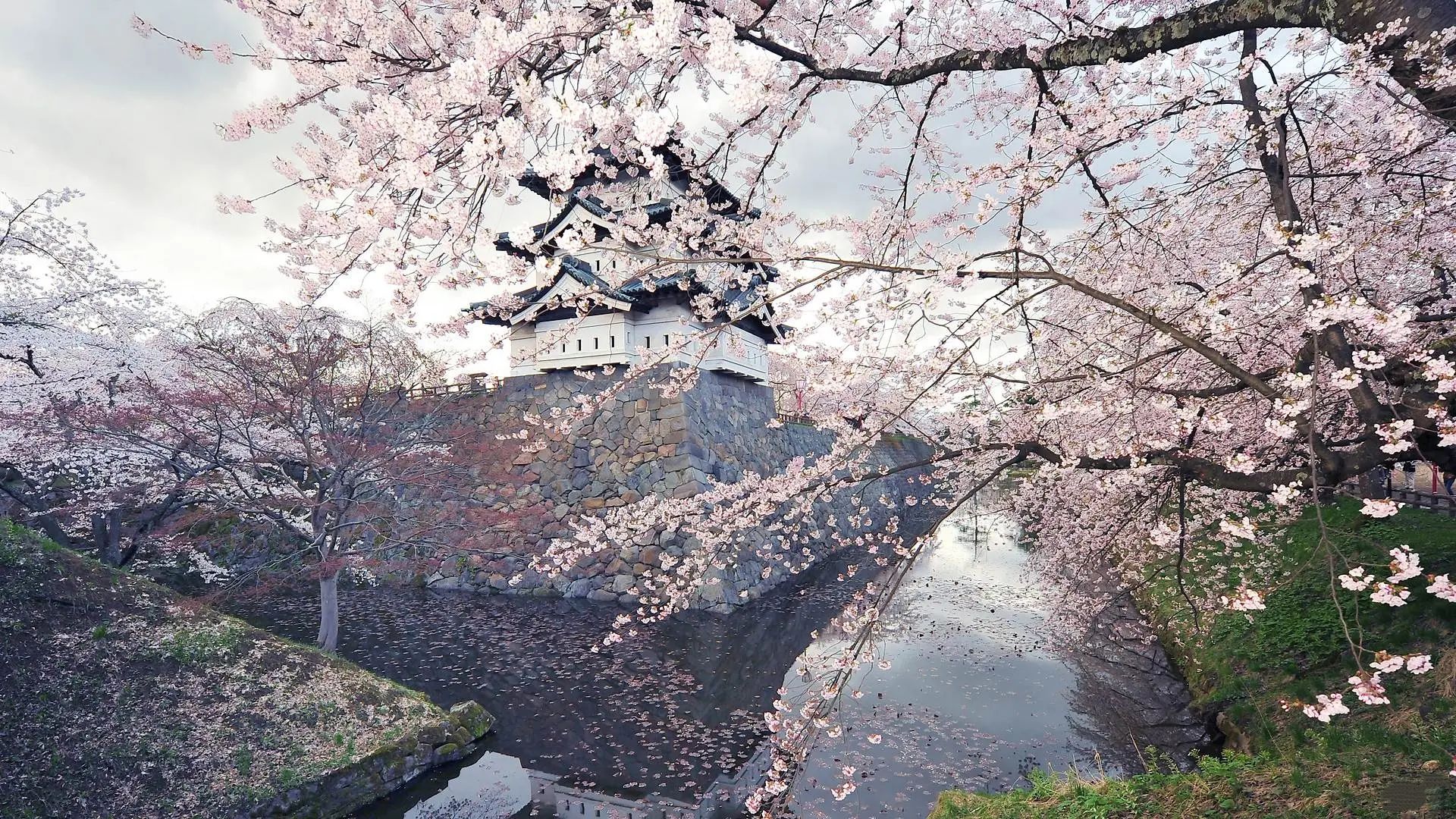
Hirosaki's festival is posted for April 16 to May 5, 2027. The organizers can pull the start earlier if the bloom is early. They did in 2026, to April 10. It is not Takayama. The dates move. The keep does not open inside. Interior visits ended on November 23, 2025, and they are not part of the 2027 festival. You see the outside. Do not sell a tower climb, and do not sell the old photograph of the keep reflected in the inner moat. That moat is still part of the works.
Crowds, and what they cost
Busiest: March 26 to April 5. Easter, the school break, and, on the rehearsal, the full bloom, stacked.
Next: the first weekend of April. In 2027 that is April 3–4. On the 2026 pattern the Nakameguro lanterns are already off, and the crowd still arrives on the sentence "early April."
Quieter: the late line, after April 9, if what you wanted was the cities. You have traded the cities for the lake and the festival. That is a different crowd, not a discounted version of the same trip.
Blossom is one of the two most expensive stretches of the Japanese year. We do not quote a percentage and we do not quote a room. A rate written into a page is wrong the next morning.
Questions we get
When will the 2027 dates be fixed? The Corporation in mid-to-late December, the Association in late January, and the early-March update is the one that moves a trip. Until then, a page that prints "Kyoto peaks March 30, 2027" is running 2026 again and calling it a forecast.
What if we cannot get the full-bloom days? Aim before the date, not after it. A few days early still has color. A few days late, one storm takes it. Petals fall faster than they open.
With children? Route A. Tokyo's parks forgive a stroller. Kyoto wants two mornings, not five temples.
Can you guarantee full bloom? No. What we book is a window, an order, and the right to move the stops in the last week. The hotels stay where they were booked.
If it rains? The temples stay open, and the path thins. Use the next clear morning for the garden you came for. Do not push it to the end of the week.
Where we draw the line
We do not promise a peak date, and we do not pass 2026 off as 2027. The 2026 dates are the Agency's specimen trees, plus the local records named below. The 2027 weekdays, Easter, the school break, Golden Week, and the Takayama dates are the calendar. They do not move with the flowers. Hirosaki's start date can.
What we do is put the cities in the order the trees usually open, spend Easter week on purpose when the trees are the point, write Nakameguro, Nishinomaru, and Yoshino the way the 2026 record actually ran, and then change the mornings against the reports before you fly.
Sources
Checked November 10, 2026.
Japan Meteorological Agency, 2026 specimen dates: Tokyo first bloom March 19, full March 28; Kyoto March 23 and March 30; Osaka March 26 and April 3. Normals, 1991–2020: Tokyo March 31, Kyoto April 4, Osaka April 4. Full bloom is the first day about 80 percent of the specimen tree is open. Tokyo's full bloom fell in late March in five of the six years 2021–2026. The exception was April 4, 2024. The Agency has not forecast the bloom since 2009. City forecasts are private. The Corporation's first call for the 2026 season was December 18, 2025.
Easter Sunday 2027 is March 28. Tokyo public-school spring break, March 26 to April 5, is the metropolitan school rule. Adachi Ward has published the same dates for spring 2027.
Ueno: Taito City, about 1,200 trees in the park. The lantern count during the festival is about 800.
Nakameguro: the shopping arcades' 2026 notices, including the closing note that calls the festival March 19–April 2 and about 3,500 lanterns; Meguro Tourism Association, the lighting and the lanterns inside the ward ended March 31.
Nishinomaru: Osaka Castle Park, 2026 night opening, last entry 8:30 p.m., close 9 p.m. The 2027 hours were not posted on November 10.
Yoshino: the town record, updated November 9, 2026. Full bloom Shimosenbon April 1, Nakasenbon April 2, Kamisenbon April 4, Okusenbon April 9.
Kawaguchiko and Arakura Sengen: local 2026 reports, about full on April 6; Weathernews listed Arakura as leaf on April 13. The park's 2026 blossom-festival events were cancelled. Fuji Yoshida ran traffic controls from April 1 to April 19.
Takayama: Gifu Prefecture tourism listing, Spring Festival April 14–15, 2027, with the note that 2027 details come later and that the schedule printed there is 2026. Rain cancels the outdoor events. No postponement. On the 2026 timetable the night festival was April 14, 6:00–8:30 p.m.
Hirosaki: the festival is posted April 16–May 5, 2027, and the organizers can change it if the bloom is early. The 2026 festival was pulled forward to April 10. Hirosaki Park: interior visits ended November 23, 2025, and are not offered for the 2027 festival. The outside of the keep is what 2027 shows.
Sapporo's 2021–2026 full blooms, April 21–27, against a May 6 normal, are the same Agency series. Golden Week 2027 is April 29–May 5.