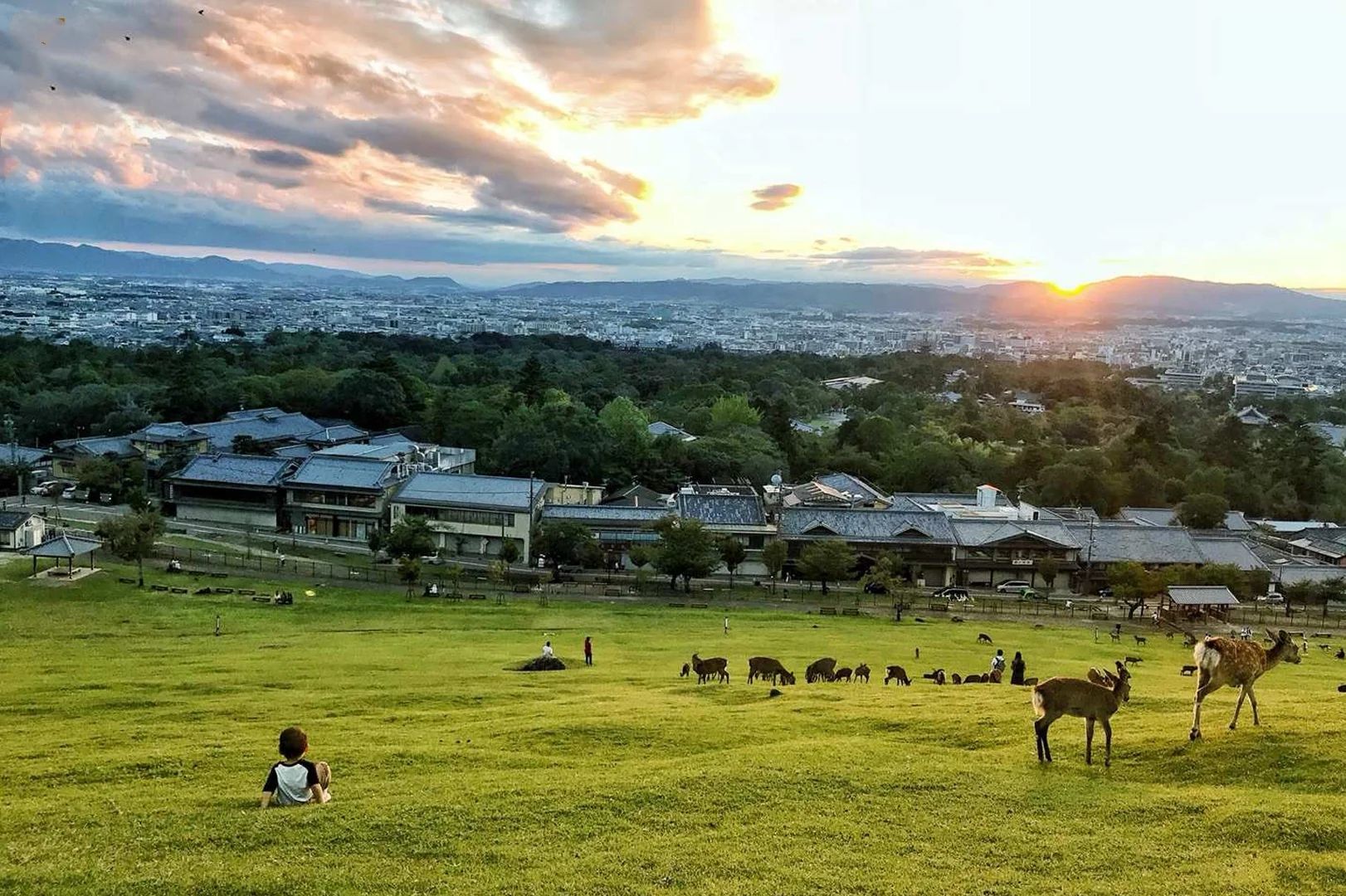
Most first-time Kansai plans treat Nara as a checkbox between meals: leave Osaka after a late breakfast, feed crackers to deer for twenty minutes, photograph the Great Buddha through a tour wall, race back for Dotonbori or a Kyoto check-in. The ancient capital was on the map. The ancient capital was not in the trip.
That is enough to pass through Nara. Not enough to enter it.
Nara opens on a quieter clock than Osaka nights or Tokyo layers: Nandaimon and the Daibutsuden when the loudspeakers have not yet stacked; deer moving through oak shade instead of a cracker scrum; Kasuga's stone-lantern approach when you still have walking budget; Naramachi lanes after the park day softens; a next-morning gate if, and only if, you slept in town. All of that needs a full day, or one night when dawn is the product. Not a half-day raid treated as Kansai's free appetizer.
East Marvel's default: on a first Kansai visit, a full day from Osaka, Kintetsu from Namba, or from Kyoto. Todai-ji, the park, and Kasuga clustered, one lunch, back for a soft evening. Easy on a 3-night Osaka as the day-3 regional pick, instead of a Kyoto daytime sampler or Kobe. Pick one. One night in Nara when you want Todai-ji at opening, a quieter park, or a clean next morning for Horyu-ji, without pretending one hotel does every Kansai face. Two nights only when Yoshino, the blossom or foliage mountain, or a deeper Yamato loop is on the brief. A named add, not "Nara Park, longer." A half-day only: we mark it thin on the quote. Deer and one hall. Accept what you skip.
Same method as the Osaka, Tokyo, and Hokkaido guides: layers, not landings; one heavyweight per day; geography before the photograph. On a Golden Route, Nara is Kansai's ancient-capital day, or a dawn overnight. It is not a substitute for Kyoto's early gates, and not a reason to delete Osaka's food nights. Sleep Kyoto when Fushimi or Higashiyama at dawn matters. Sleep Nara when Nara's opening bell matters. Sleep Osaka when neon and late returns matter.
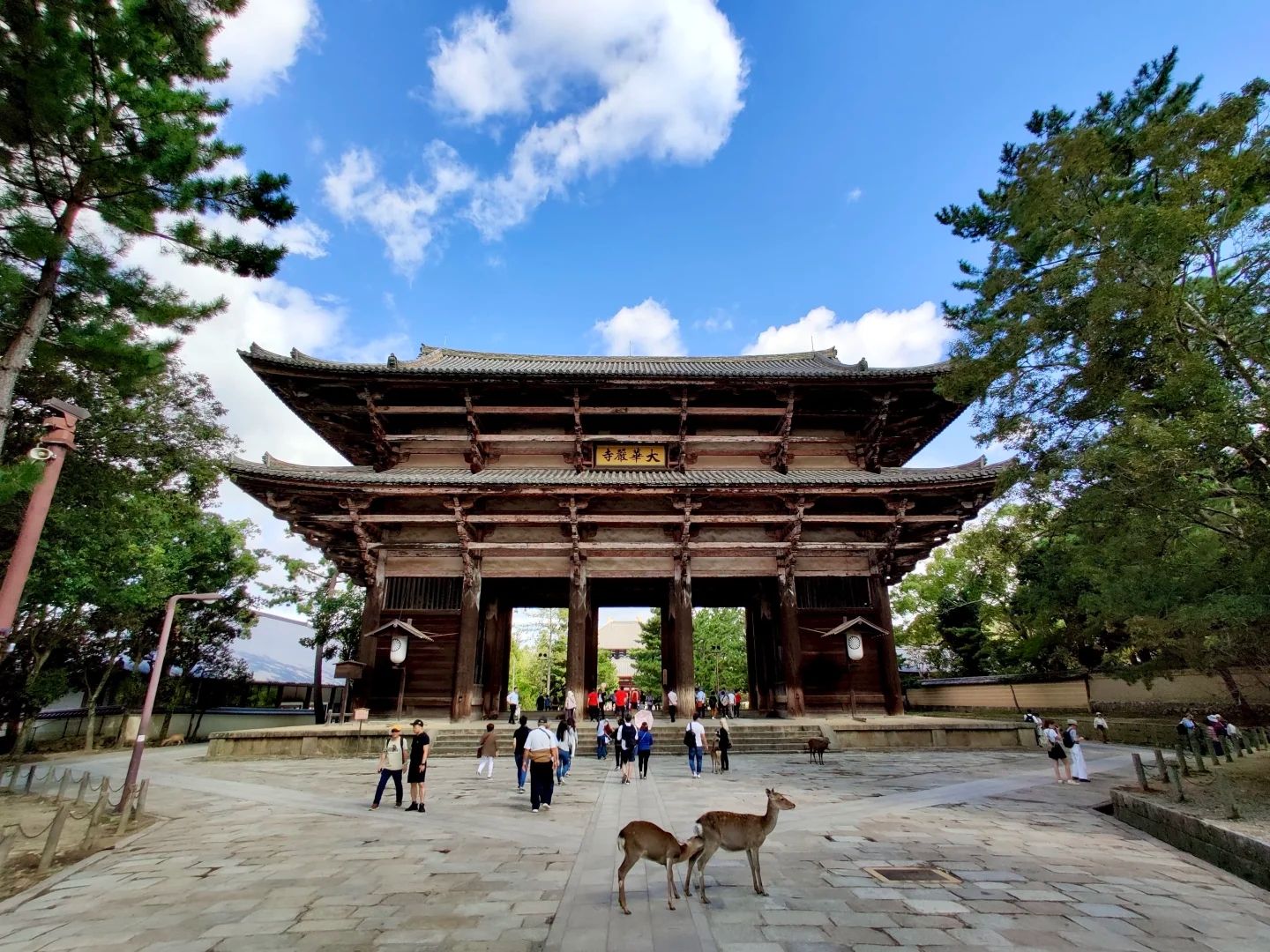
What Nara is: an ancient capital misread as a deer stop
Nara was Japan's capital before Kyoto took the court: temple roofs, shrine forests, and a park where sacred deer still walk like civic co-owners. It is not Kyoto, smaller. It is a place where scale and stillness share one bowl: the Great Buddha's hall, lantern paths under cedar, museum-grade sculpture, and a town that closes temple doors earlier than Osaka's neon starts.
It is usually treated as a bolt-on: a deer selfie, the Daibutsu, the exit. But if Kansai reads as Osaka appetite, Kyoto silence, and Nara deer, Nara is the capital layer you skipped while photographing the antlers.
For Western guests who know Rome's old stones or an English cathedral close more than anime districts, Nara's familiar strangeness hits hard: UNESCO weight without Tokyo's density ritual, animals in the civic park, faith that still collects a noon tour crush if you arrive late.
Osaka asks you to move into nights and trains. Kyoto asks you to move into quiet mornings. Nara asks you to give the park a whole day, or a night, so the Buddha hall is not a luggage conveyor.
Full day vs 1 night
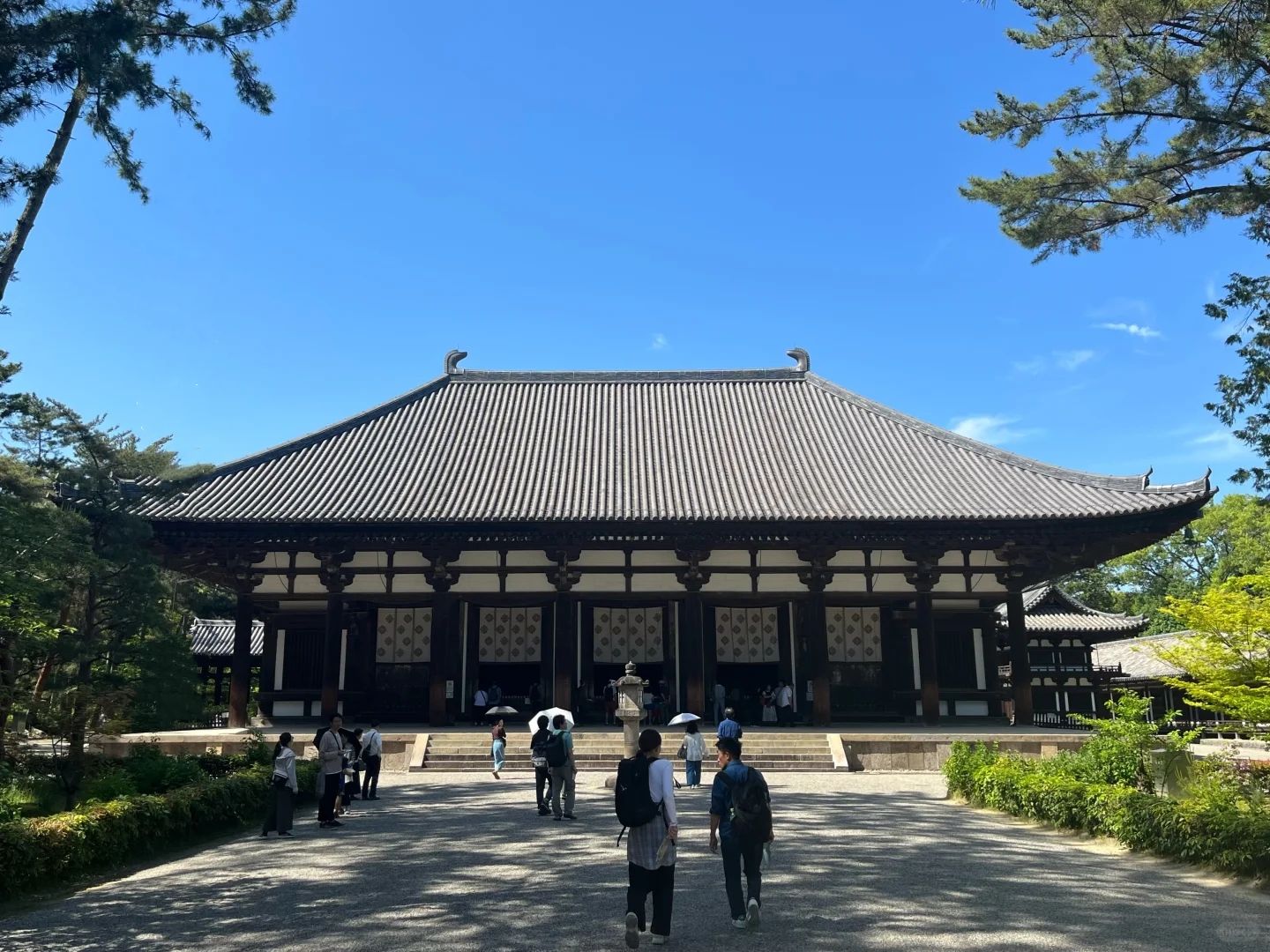
A full day is the default. Arrive mid-morning. Leave before the last admissions punish you. Halls often stop new entries in the late afternoon, roughly 16:00 to 17:30 by site and by season. Confirm that day's notice. A full day fits Todai-ji, a park walk, Kasuga, and one lunch, without diagonal panic.
One night does not magically lengthen the afternoon hall hours. What it buys is the morning. Todai-ji's Great Buddha Hall often opens about 7:30 from April through October, or about 8:00 from November through March. Confirm it live. Kasuga's grounds open even earlier in many seasons. A night also unlocks a calm evening in Naramachi, and a second-day move to Horyu-ji, without raiding the park clock.
Two nights fund Yoshino, or a second Yamato day. Not the first-timer default.
Two clocks, one park. That is why Nara deserves a full day on most Osaka calendars, and one night when dawn or Horyu-ji is the ask. With a half-day you get deer and little else. With a full day you fold in the Buddha, the shrine forest, and lunch. With a night you buy the opening bell.
Nara Park core: Todai-ji, deer, and Kasuga
This is the operable first product. Cluster it. Do not invent a second mountain on the same legs.
Todai-ji and the Daibutsuden. The required course, and the park's densest human wall after the mid-morning buses. Go with time to sit, not only to shoot. Same-day greed, every sub-hall plus the museum plus a deep Kasuga plus shopping, wrecks one heavyweight. Deepen the Great Buddha. Add the museum or the secondary halls only if the clock and the legs agree.
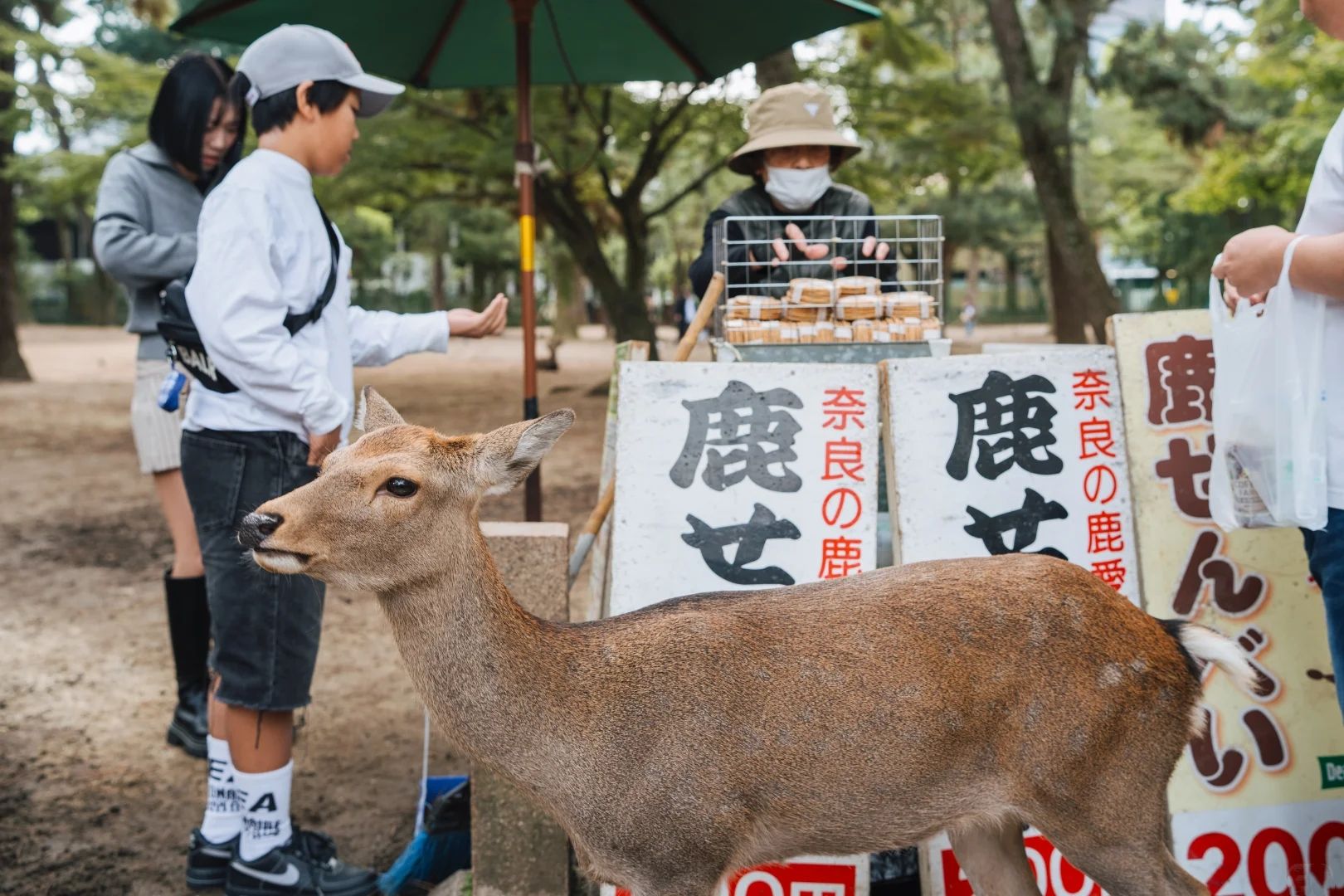
Deer in Nara Park. Part of the civic landscape, not a petting zoo. Buy crackers only where they are sold. Do not tease, chase, or block paths for photos. Guests uneasy with animals keep their distance and still walk the park axis.
Kasuga Taisha. The lantern approach and the shrine forest. An afternoon rhythm after Todai-ji works if you protect the walking budget. An inner special visit is a separate fee and a separate hour. Print it only if the brief wants it.
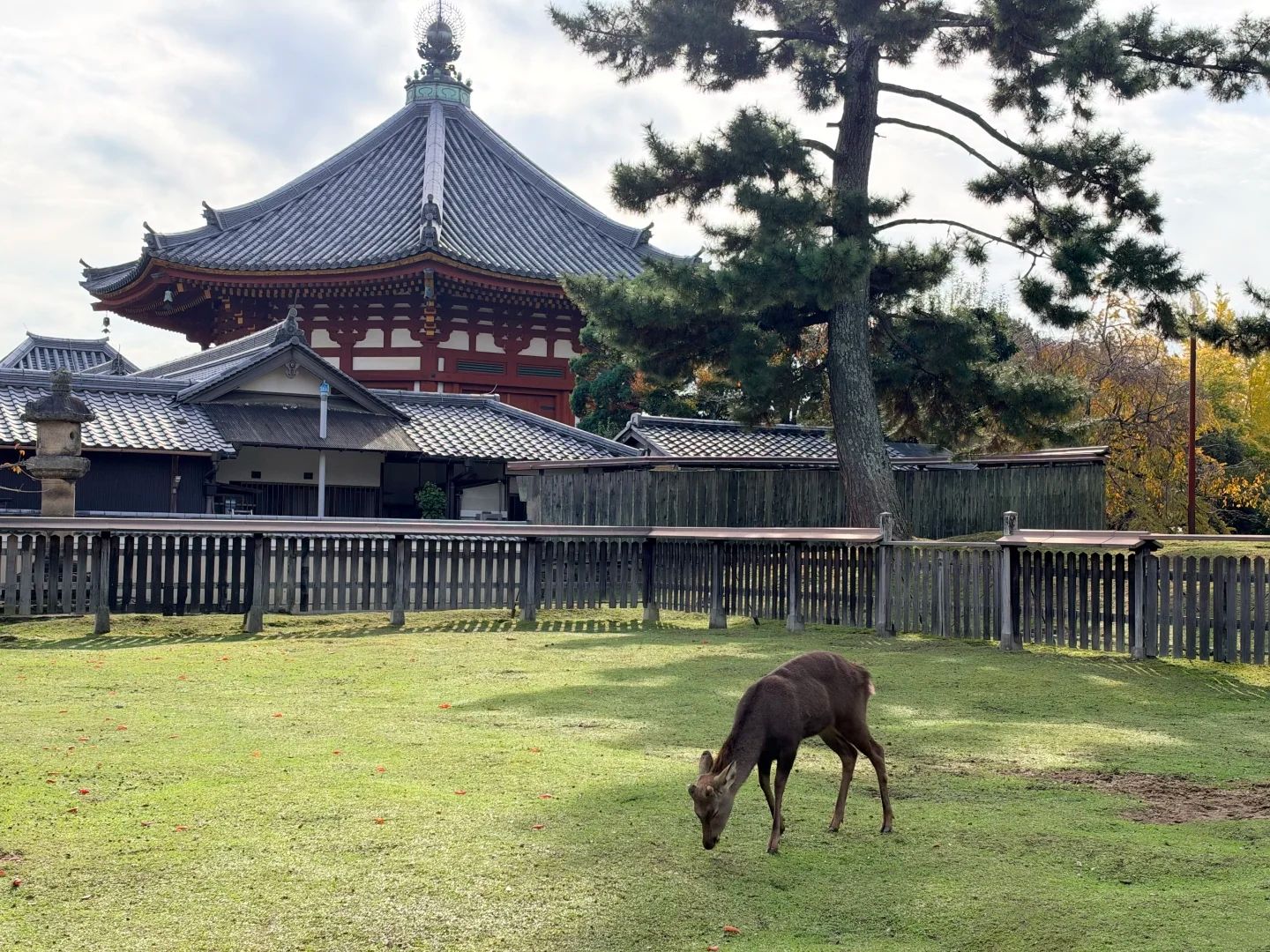
Kofuku-ji. Useful near Kintetsu-Nara as a short deepen, or a rain reshape. Not a third must-climb stacked after a spent park day.
East Marvel pacing: the park day is Todai-ji from morning into midday, then lunch, then Kasuga or a park walk, then a soft exit. The same day does not also clear Horyu-ji and Yoshino.
Best for almost every first Kansai visit that wants the ancient-capital face. Crowd-averse guests lean on one night for the opening hour, or keep Todai-ji and a shorter Kasuga and skip the cracker scrum.
Food and Naramachi
Nara's eating is not Osaka's kuidaore. It supports the park day.
Near the park or the station: kakinoha-zushi, Miwa somen, a simple teishoku. Lunch with intent, not a second pilgrimage.
Naramachi: lattice streets, cafes, small makers. Best as a late-afternoon or evening soften, especially if you sleep in Nara.
Deer crackers are for the deer. They are not lunch.
East Marvel meal rule: one sit-down lunch on a day trip. If you stay overnight, one calm dinner in or near Naramachi, not a tasting raid after temple miles. Allergies in writing. Save the big Osaka dinners for Osaka nights.
Second products: Horyu-ji and Yoshino
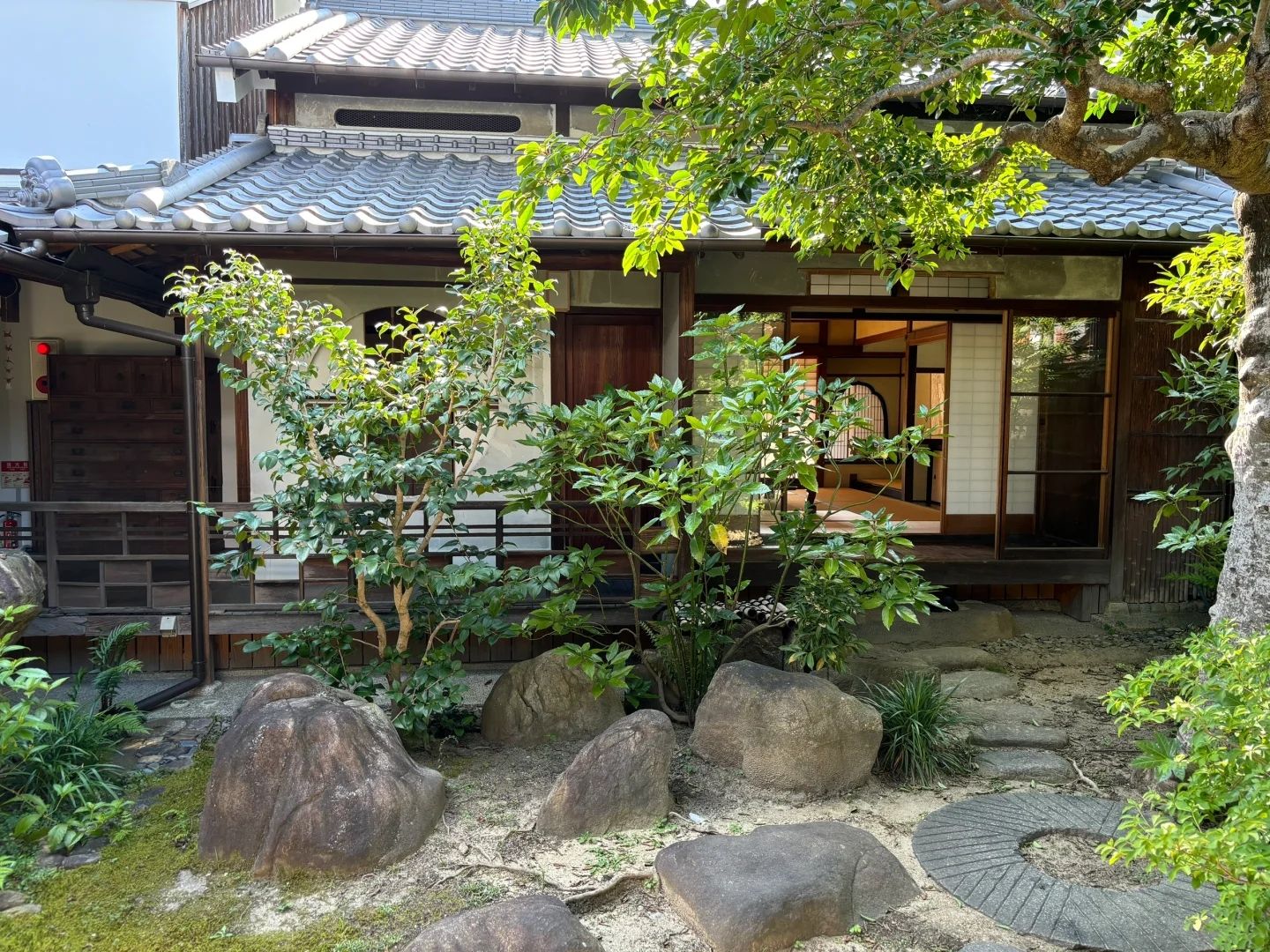
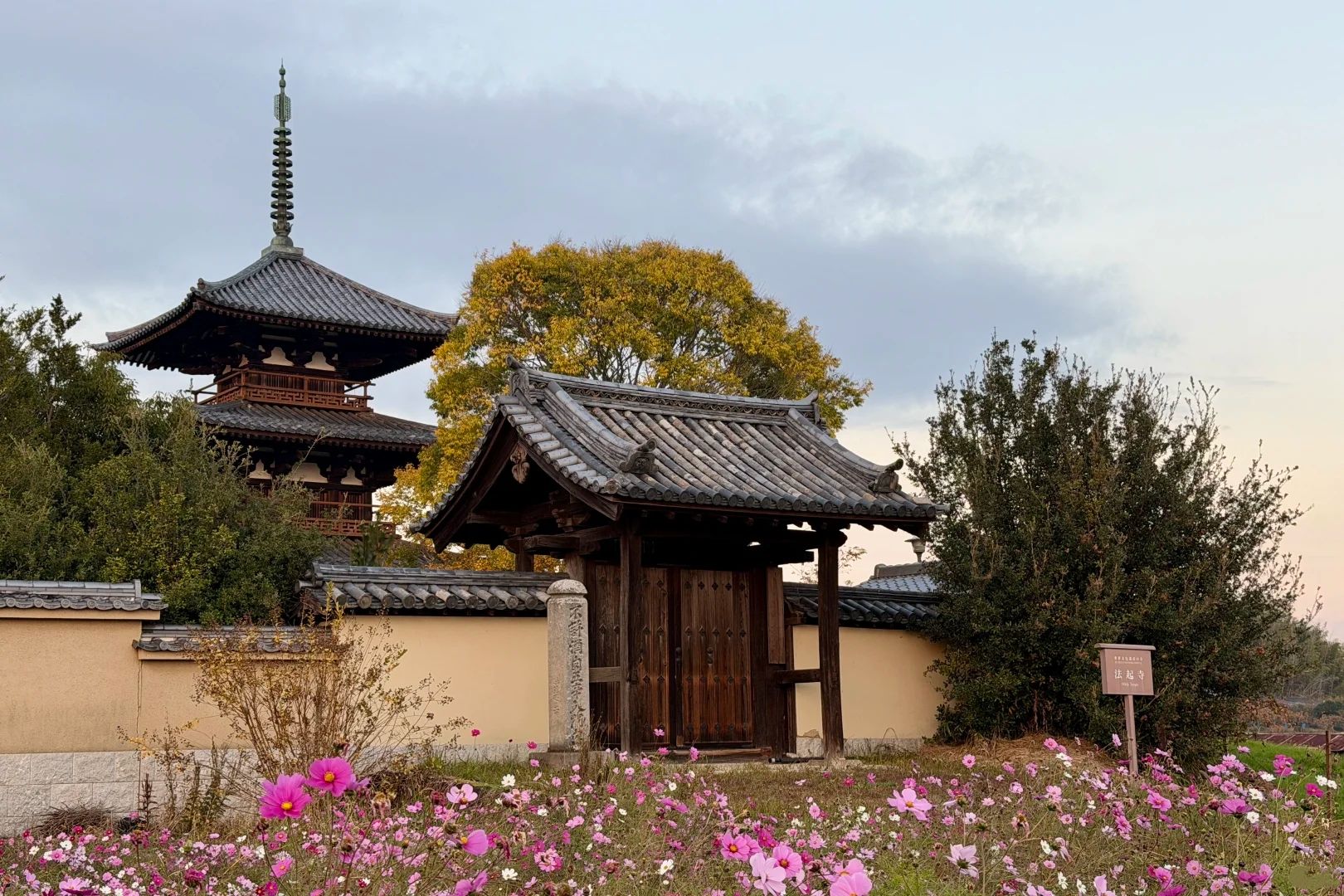
Horyu-ji, the oldest wooden temple complex. A second morning after a Nara night, or its own day from the right JR face. Not stacked inside a first park afternoon.
Yoshino, the blossom and foliage mountain. A separate full day. It often needs two Nara nights, or a dedicated base. It is not near the deer.
Asuka and a deeper Yamato day. A named cultural day, with bike or car logic. Not the default on a first full day.
Park, Horyu-ji, and Yoshino in one day. We refuse that.
Nara Park buys the ancient-capital face. Horyu-ji buys a second temple morning. Yoshino buys a mountain day. Do not sell them as one loop.
Osaka vs Kyoto base
A day trip from Osaka, the default. Kintetsu from Osaka-Namba to Kintetsu-Nara is often about 35–40 minutes. A limited express can be about 33. This is the best walk to the park.
A day trip from Osaka on JR. The Yamatoji Rapid toward JR Nara is often about 50 minutes. Usable. A longer walk, or a bus, to Todai-ji.
A day trip from Kyoto. The Kintetsu limited express to Kintetsu-Nara is often about 35 minutes. The JR Nara Line, the Miyakoji Rapid, to JR Nara is often about 45 minutes.
Sleep in Osaka, Nara by day. Standard on a 2–3 night Osaka. Return for a Minami dinner.
Sleep in Kyoto, Nara by day. Fine when Kyoto is the Kansai base. Do not also demand Fushimi at dawn the same morning.
Sleep in Nara for one night when the opening bell, or Horyu-ji the next day, is the product.
Kyoto at dawn and Nara at dawn are different hotels. One night cannot honestly own both.
Kintetsu-Nara sits closer to Kofuku-ji and the park walk for most first-timers. JR Nara works. Budget the extra transfer on the plan.
When to go
The comfort default is late October through November, and late March through April for the sakura window. The park is walkable. Book early for blossom weekends.
Autumn color in the park and the Kasuga forest is beautiful, and busier. Arrive earlier. Protect the lunch reservation.
Winter, December through February, can give clearer mornings, shorter hall hours, and quieter deer paths on some weekdays.
Summer, July and August, is heat and humidity. Todai-ji early, shade or indoors at midday, hydrate. A midday park can punish.
Plan around Golden Week, Obon, year-end and New Year, and the peak sakura weekends. Coach waves at Todai-ji spike. Lock the full day and the early start, or shift the dates.
Yoshino blossom and foliage have their own peak calendar. Never assume it matches Nara Park.
How to spend a full day, or 1–2 nights
Slow first, heavyweight second, blank last. One heavyweight per day. The park stays clustered. A second temple only when a night, or a second day, pays for it.
A full day means a morning arrival and a late-afternoon exit, not a raid from 10:30 to 13:00. We print the last-admission buffer, so Todai-ji is not a sprint.
A full day from Osaka or Kyoto. One heavyweight. In mid-morning on the Kintetsu, or on JR. Todai-ji, then the park and deer manners, then lunch, then Kasuga or a soften in Naramachi. Back for a soft Osaka evening, or a Kyoto evening.
One night. Dawn, plus depth. An afternoon or evening arrival is optional. The next morning, Todai-ji at opening, a quiet park, lunch, then Kasuga or Naramachi, or the transfer to Horyu-ji. Pick the second beat. Exit toward Osaka or Kyoto.
Two nights. A named add. Day 1 is the park core. Day 2 is Horyu-ji, or Yoshino, or Asuka. One of them. Soft evenings in Naramachi.
A half-day only. The thin classic. Todai-ji and a short park. Kasuga and Horyu-ji stay off the menu. We say so on the quote.
On a 3-night Osaka, Nara is often the day-3 pick, beside a Kyoto daytime or Kobe. Not all three. Protect Osaka's food nights. Protect Kyoto's dawn sleeps when temples at opening are the Kansai point. Tokyo's 3–4 nights stay upstream. Hokkaido stays a separate island block.
What we would do, and what we would not
We would default first-timers to a full day from Osaka-Namba to Kintetsu-Nara.
We would sell one night when Todai-ji at opening, or a Horyu-ji morning, is explicit.
We would keep the deer etiquette on the plan. Not chase content.
We would print the train face, Kintetsu or JR, and the last-admission buffers.
We would keep Yoshino and Horyu-ji named when the nights allow.
We would not sell a half-day deer raid as a full Nara.
We would not stack Nara, a full Kyoto temple circuit, and an Osaka neon checklist into one date.
We would not promise an empty Daibutsuden at noon.
We would not treat Yoshino as a Nara Park footnote.
We would not tell guests that sleeping only in Osaka delivers a Nara dawn without the train.
We would not swap Osaka's 2–3 food nights for a Nara hotel and call the Kansai appetite done.
Practical information
Where to stay. The default is a day trip: sleep in Osaka, Namba helps, or in Kyoto, matching the rest of the Kansai brief. One night in Nara: near Kintetsu-Nara, for the walk to the park. Quiet streets over the loudest souvenir edge. Yoshino and the mountain: sleep on the mountain, or hold two Nara nights with an honest travel day. Not a fake "nearby."
How to move. In the park, walk first. The city loop bus when heat, seniors, or rain demand it. IC cards on the Kintetsu and JR, as elsewhere in Kansai. Confirm them live. A private car for luggage, mobility, or a Yamato day with several stops. A park-core day rarely needs a car stuck in coach traffic.
Etiquette and bookings. At temples: quiet voices, the photo rules on the signs, shoes where they are required. With the deer: no teasing. Mind the antlers and the bags. A popular lunch house near the park: reserve when the meal is the point. Hall fees and hours shift by season. We write "confirm the day's notice," not a frozen time.
How to start. Send the month, the Kansai nights and how they split between Osaka, Kyoto, and Nara, whether a Todai-ji dawn matters, whether Horyu-ji or Yoshino is in, the ages in the party, comfort with deer, the walking budget, and allergies. East Marvel locks a full day against one night first, then the park core against a second temple. Hotel romance comes after.
About East Marvel
East Marvel builds private Asia trips for Western and international guests, with the same pacing as the Osaka, Tokyo, and Hokkaido guides. We do not ask whether the deer are viral. We ask whether the brief is a full park day, the opening bell, a Horyu-ji morning, or the Yoshino mountain. Osaka clusters the food nights. Kyoto owns the temple dawns when those are sold. Nara gets a whole square on the calendar, or an honest overnight.
Related reading, as those guides are published: why Osaka wants at least 2–3 nights; why Tokyo wants at least 3–4 nights; why Hokkaido wants at least 3–5 nights; why Fuji wants at least 1–2 nights. A Kyoto city guide links when it is published. We do not point at a page that is not up.
FAQ
Is a day trip enough? Yes for most first visits, if it is a full day, not a two-hour raid. One night when you want the opening bell, or Horyu-ji, without the rush.
Osaka or Kyoto as the base? Osaka-Namba on the Kintetsu is the cleanest first-timer day trip. Kyoto works when Kyoto is already the sleep city. Choose the sleep by which dawn you are buying.
Do we need to sleep in Nara? Only if dawn, or a second temple day, is the point. Afternoon hall hours do not extend because the hotel is closer.
Are the deer safe, and are they required? They are part of the park. Keep manners, and keep distance if you are uneasy. Crackers are optional. Chasing is not.
Can we add Horyu-ji the same day as Todai-ji? We usually refuse that on a first park day. Better: an overnight and the next morning, or a dedicated day.
What about Yoshino? A separate mountain product. Blossom and foliage peaks need their own day, and often extra nights.
Good with kids or seniors? Yes, with shorter park loops, a bus option, shade breaks, and realistic deer rules. Strollers against gravel go on the plan.
Best season? Spring and autumn for comfort. Summer needs the early halls. Winter can be quietly excellent on weekdays.
Closing
Nara is not Kansai's deer hallway. It is an ancient capital with a park clock: Buddha timber in honest light, the lantern forest when the legs remain, Naramachi when you stay, Horyu-ji or Yoshino only when you name them and pay for them in time.
Protect Osaka's food nights. Protect Kyoto's dawn sleeps when temples at opening are the ask. Then give Nara a full day, or one night when the opening bell is the product.
Send the month, how the Kansai nights split, and whether dawn or Horyu-ji matters. East Marvel will recommend the version we will run, and quote it without the half-day fiction.